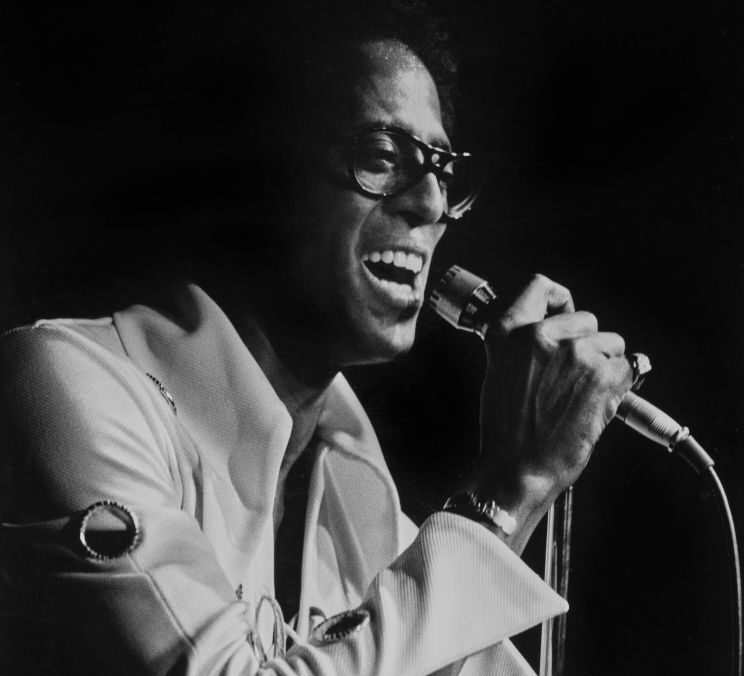
David Ruffin died on June 1, 1991, in Philadelphia. He was 50 years old. The Philadelphia medical examiner ruled his death accidental, caused by an adverse reaction to cocaine. Hours earlier, he had collapsed at a crack house in West Philadelphia after splitting ten vials of crack with a man named William Nowell. A limousine driver named Donald Brown drove him to the Hospital of the University of Pennsylvania, where emergency room staff worked for nearly an hour to save him. He was declared dead at 3:55 a.m.
That’s the clinical version. The fuller story involves a man who had just come off a successful tour, was planning his next move, and still couldn’t outrun the addiction that had followed him for decades.
QUICK FACTS
- Full name: Davis Eli Ruffin
- Born: January 18, 1941, Whynot, Mississippi
- Died: June 1, 1991, Philadelphia, Pennsylvania
- Age at death: 50
- Cause of death: Accidental cocaine overdose
- Buried: Woodlawn Cemetery, Detroit
Who Was David Ruffin?
David Ruffin was the voice of “My Girl.” He joined the Temptations in 1964, replacing Elbridge Bryant, and within a year he was singing lead on a run of songs that defined Motown’s golden era, “My Girl,” “Ain’t Too Proud to Beg,” “(I Know) I’m Losing You,” “I Wish It Would Rain.” His voice, gritty, anguished, unmistakably his, became the sound people associated with the group at its peak.
Rolling Stone ranked him among the 100 Greatest Singers of All Time. Marvin Gaye once said of Ruffin: “I heard a strength my own voice lacked.” Daryl Hall called his voice “a certain glorious anguish that spoke to people on many emotional levels.” These aren’t the kind of compliments people hand out casually.
He was also a man with a cocaine addiction that stretched back to the 1960s. He was violent with Tammi Terrell, his girlfriend in the late ’60s, hitting her with a motorcycle helmet in 1967, an incident confirmed by Terrell’s sister, Ludie Montgomery, which ended their relationship. He struggled with money, the law, and the same drug that eventually killed him for most of his adult life.
Both of those things, the extraordinary talent and the damage, are part of who David Ruffin was.
What Were David Ruffin’s Final Years Like?
By 1991, Ruffin’s peak Motown years were more than two decades behind him. He’d left the Temptations in 1968 after demanding that the group be renamed “David Ruffin & the Temptations”, a move that got him fired. His solo career produced two top-10 hits: “My Whole World Ended (The Moment You Left Me)” in 1969 and “Walk Away from Love” in 1975. After that, the music slowed, and the trouble accelerated.
He was sentenced to six months in a federal facility in Terre Haute, Indiana, in 1982 for failing to pay more than $310,000 in taxes. He served for four months. In 1987, a cocaine arrest in Detroit landed him back in court. By 1988, when he was busted for crack possession, he told a judge he was penniless and living in a friend’s mobile home outside Detroit.
But Ruffin was also staging something real. In 1989, he was inducted into the Rock and Roll Hall of Fame with the Temptations. He completed a 28-day drug treatment program at the Areba Casriel Institute in New York, and when he emerged, he told reporters: “I’m clean.” He teamed up with Eddie Kendricks and Dennis Edwards, both former Temptations leads, and the three began touring as a unit. They played the Sands in Las Vegas, the Taj Mahal in Atlantic City, and a successful month-long run in England that grossed nearly $300,000.
There were plans for a European tour. He’d just finished recording a single, “Hurt the One You Love,” for Motorcity Records.
Then came the night of May 31, 1991.
What Happened the Night David Ruffin Died?
The details come from police reports and contemporary news accounts. Ruffin had been living in Philadelphia since 1989 with his girlfriend, Diane Showers. On the evening of May 31, Donald Brown, a friend, picked Ruffin up in a limousine borrowed from a man named Linster “Butch” Murrell.
Per Newsweek, Brown drove Ruffin to a crack house in West Philadelphia between 10 and 11 p.m. Ruffin and another man in the house, William Nowell, reportedly split ten vials of crack cocaine in under half an hour, an enormous intake, even for someone with Ruffin’s history of use. Ruffin collapsed.
Brown drove him, unconscious, to the Hospital of the University of Pennsylvania, arriving around 2:55 a.m. on June 1. He told emergency room staff that his passenger had suffered a drug overdose, gave a tentative identification, and left. Ruffin had no ID on him. He was wearing bright, multicolored Bermuda shorts, white sneakers, and a lime-green sport shirt. Emergency personnel worked for nearly an hour. He was pronounced dead at 3:55 a.m.
His identity was confirmed only through FBI fingerprint analysis. A man who’d performed for presidents and stood on stages across four continents died without so much as an ID card in his pocket.
Did David Ruffin’s Family Suspect Foul Play?
Yes. And that suspicion centered on one detail: money.
Ruffin’s family and friends reported that he had been carrying a money belt containing approximately $40,000, believed to be proceeds from the recent England tour. When authorities processed his body at the hospital, they found only $53 on him.
The police investigated. Brown was located and questioned twice, but was never charged. The crack house was sealed and searched. The medical examiner ruled the death accidental. No criminal charges followed.
Ruffin’s girlfriend, Diane Showers, was not surprised by his death. “He walked in the line of fire,” she told the Philadelphia Inquirer. “I asked his ex-wife and daughters a lot of times to have him committed somewhere for approximately two years. He usually denied that he was doing anything.”
The missing money was never publicly accounted for. Whether someone took it from Ruffin while he was incapacitated at the crack house, or whether the $40,000 figure was exaggerated, remains unknown. What is documented is that a man who had just completed a tour grossing hundreds of thousands of dollars died with almost nothing on him.
How Did the Temptations Miniseries Get David Ruffin’s Death Wrong?
The 1998 NBC miniseries The Temptations, based on Otis Williams’ memoir, depicted Ruffin’s death in a way his family called defamatory. In the film, Ruffin’s beaten body is shown being dumped from a car in front of a hospital. The miniseries also claimed his body went unclaimed in a morgue for a week.
Ruffin’s estate sued NBC. According to the family’s account, Ruffin was driven to the hospital in a limousine and escorted to the waiting area by his driver, who identified him to the staff. His children stated that one of them claimed his body within days. The estate lost the lawsuit, and the ruling was upheld on appeal, but the family’s version of events aligns with the police reports and contemporary news coverage far more closely than the miniseries’ dramatization.
That dramatized version is still how a lot of people picture David Ruffin’s death. It shouldn’t be. The miniseries was based on Otis Williams’ account, and Williams and Ruffin had been at odds for years, going back to the ego clashes and the financial accountability demands that got Ruffin pushed out of the group. The film’s portrayal of his death carried the weight of that conflict.
What Happened at David Ruffin’s Funeral?
The funeral was held at New Bethel Baptist Church in Detroit, the same church where Aretha Franklin’s father, the Reverend C.L. Franklin, had preached for decades.
The surviving Temptations served as pallbearers and sang “My Girl.” Stevie Wonder and Aretha Franklin both performed. Minister Louis Farrakhan delivered the eulogy, Ruffin had reportedly called him months before his death, expressing interest in learning more about Islam. Michael Jackson paid the $7,000 funeral expenses but did not attend the service, reportedly to avoid diverting attention from Ruffin. Rod Stewart, Diana Ross, the Spinners, Martha Reeves and the Vandellas, and Daryl Hall and John Oates all sent flowers.
The scene outside the church was chaotic. Fans swarmed mourners. Eddie Kendricks was doubled over sobbing in the front pew while a woman crawled forward to snap a photograph of him. A police officer lost her handgun in the crowd. Farrakhan addressed it from the pulpit: “We should not be here to see our favorite entertainers. We should be here to pay respect for life itself.”
Ruffin is buried at Woodlawn Cemetery in Detroit.
What Was David Ruffin’s Abuse of Tammi Terrell?
This part of his story doesn’t get talked about enough, or when it does, it gets folded into a single sentence and moved past. It deserves more than that.
Ruffin began dating Tammi Terrell in 1966 after she joined the Motortown Revue. He proposed marriage. When Terrell announced the engagement onstage, she learned he was already married, to Sandra Barnes, with whom he had three daughters in Detroit. The relationship turned violent. Ruffin became increasingly abusive as his cocaine use worsened.
The documented breaking point: in 1967, Ruffin hit Terrell in the head with his motorcycle helmet. Terrell’s sister, Ludie Montgomery, confirmed the incident. Terrell left him after that.
Terrell had suffered from migraines since childhood. She told Ebony magazine in 1969 that she believed her emotional state during the relationship with Ruffin contributed to her headaches. She collapsed onstage in Marvin Gaye’s arms in October 1967 and was later diagnosed with a brain tumor. She died in 1970 at 24.
This does not get separated from David Ruffin’s story because it’s convenient to focus only on the music. Terrell came out of one abusive relationship with James Brown and walked into another with Ruffin. That pattern matters. The talent doesn’t erase it.
How Did the Motown System Shape David Ruffin’s Story?
Ruffin was one of the first Motown artists to demand a financial accounting, to ask where the money was actually going. That demand created friction between him and Berry Gordy, and it contributed to his firing from the Temptations in 1968. He wasn’t wrong to ask. The Motown system in that era gave artists limited control over their finances, their contracts, and their creative direction. Artists signed deals they didn’t fully understand and generated revenue they never saw.
That doesn’t excuse anything Ruffin did, not the abuse, not the addiction, not the tax evasion. But it does explain some of the financial ruin. By the time he owed the IRS $310,000 in unpaid taxes, it wasn’t because he’d been managing a fortune carelessly. It was because the fortune had never been managed at all, not by anyone working for him.
When Ruffin died, he had $53 in his pocket. He’d just come off a tour that grossed $300,000. The gap between those two numbers is the gap between what Motown-era artists earned and what they kept.
David Ruffin’s Voice Outlived Everything Else
“My Girl” will be played at weddings and barbershops and on oldies stations long after anyone reading this is gone. That voice, the way it cracked on certain notes, the way it carried grief and joy simultaneously, doesn’t age. It doesn’t need remastering.
David Ruffin’s personal story is harder to sit with. The abuse of Tammi Terrell is documented. The addiction consumed decades. He died in circumstances that were preventable, not inevitable, not destined, but the result of choices made inside a system that didn’t protect him and a habit he couldn’t break.
He was inducted into the Rock and Roll Hall of Fame in 1989. He died less than two years later in a Philadelphia emergency room, at 50, with $53 in his pocket and a voice that had once defined an entire era of American music.
The culture remembers David Ruffin. It should remember all of him.