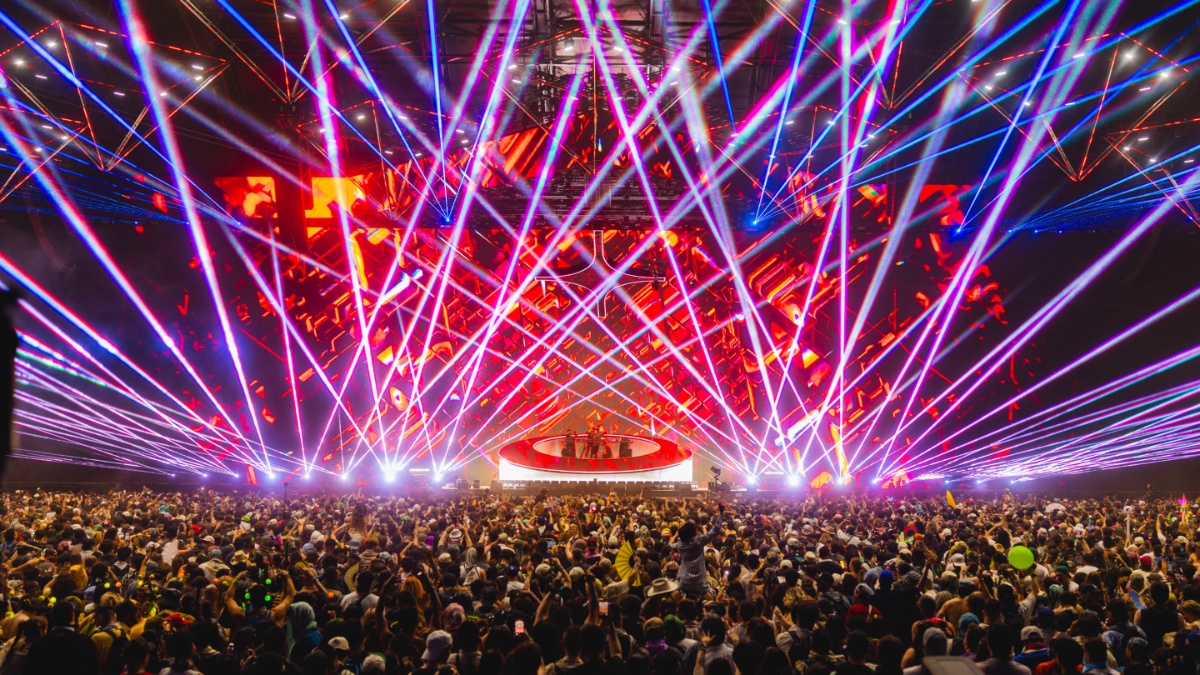
For years, Coachella has followed a predictable rhythm. Weekend 1 delivers the headlines, while Weekend 2 quietly refines the experience. But 2026 flipped that script in a way few expected. Instead of repeating the same sets with minor tweaks, artists held back, recalibrated, and returned with bigger, louder moments. What unfolded wasn’t just a stronger second showing. It was a subtle shift in strategy, where timing, not talent, became the festival’s most powerful surprise.
How Weekend 2 Became Impossible To Ignore
Coachella has had countless bombshell moments over the decades, but this year’s biggest twist wasn’t tied to a single performance. It was when those moments happened. Artists saved nearly all the high-profile guest appearances, from Madonna to Billie Eilish, SZA, and Peso Pluma, for the second weekend..
The contrast was hard to ignore. Justin Bieber kept things relatively contained the first time around, bringing out Dijon and Mk.Gee. A week later, he returned with Dijon and brought out SZA, Billie Eilish (who was serenaded but did not sing), and Sexyy Red. Similarly, Karol G shifted gears from a strong but expected lineup of Becky G, Wisin, and Arturo Sandoval in Weekend 1 to a more crowd-shaking appearance with Peso Pluma and J Balvin in Weekend 2.
The pattern continued across the board. Giveon went from bringing out Kehlani to sharing the stage with Snoop Dogg and Teddy Swims. Addison Rae, who had no guests during her first set, surprised fans the following weekend with Olivia Rodrigo, who joined her not only for “Headphones On” but also the live debut of “Drop Dead.”
Even Sabrina Carpenter raised the stakes. While her first weekend included appearances from Susan Sarandon and Will Ferrell, her second set leaned fully into spectacle, featuring three songs alongside Madonna, a moment that left at least one observer lamenting, “Why oh why did I go last weekend?!”
Beyond guest appearances, the second weekend felt looser and more unpredictable. Alex G jumped into the crowd mid-performance, while The Strokes reserved their politically charged video montage for their final Weekend 2 set. Meanwhile, PinkPantheress turned “Boy’s a Liar” into a full-scale celebration, filling the stage with collaborators including Janelle Monáe, Zara Larsson, Blood Orange, and more.
Traditionally, artists stick closely to the same setlist across both weekends, with only minor variations. Weekend 2 often delivers tighter performances, but it rarely overshadows the first weekend, which stands as one of the biggest stages in music outside the Super Bowl. This year, that balance shifted dramatically.
Why 2026 Coachella Weekend 2 Became The Real Headline
So what made this year different? The answer, according to insiders via Variety, isn’t a single strategic plan but a mix of instinct, strategy, and environment.
One of the simplest explanations is also the most effective: surprise works better the second time around. But there’s also a deeper layer tied to artist control. As one agent put it, “My theory would be that the artists wanted to make sure the spotlight was on them for Weekend 1, and then came back more relaxed and wanting to make another, maybe bigger statement on Weekend 2.”
That logic helps explain moments like Madonna’s appearance with Sabrina Carpenter. The pop icon carefully timed her moves. She announced her upcoming album midweek, teasing new music, and then releasing it shortly after her Coachella cameo. Had that unfolded during the first weekend, it might have overshadowed the headliner entirely.
Other artists followed a similar pattern. Bieber, for example, appeared focused on his new material during his early shows and first weekend set. By the time the second weekend arrived, the pressure had eased, allowing him to expand the experience with high-profile guests.
The crowd itself may also play a role. “Weekend 1 is driven heavily by influencer culture,” the agent added. “But the artist guest area and VIP sections thin out massively for Weekend 2, and there are also less late-night off-site parties, which means less of that [superficial] L.A. crowd makes the trek into the desert.”
Another insider echoed that sentiment, noting, “I think it’s also [artists] giving more to the Weekend 2 crowd, which is generally there more for the music than the scene.” A third summed it up even more bluntly: “Weekend two is always better in my opinion, there’s more to see and less to be seen.”
Despite the clear pattern, insiders insist this wasn’t a coordinated effort by organizers like Goldenvoice or streaming partners. Still, the outcome speaks for itself. Weekend 2 didn’t just match the first weekend, it redefined expectations.
If anything, 2026 may mark a turning point. What was once considered the quieter follow-up is starting to feel like the main event. And if this shift continues, fans may soon find themselves rethinking which weekend truly delivers the magic.