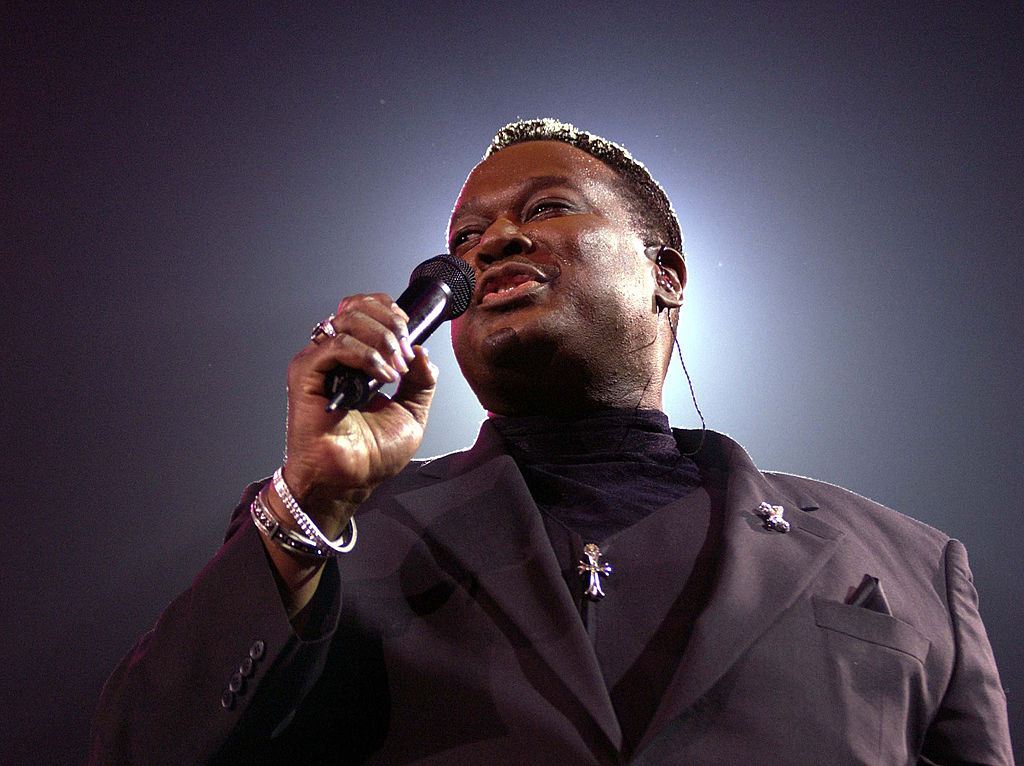
Luther Vandross never had a wife. Not one he kept quiet about, not one the public just didn’t know—there was none. The man who wrote and sang about love more convincingly than almost anyone in his generation never married, never had children, and kept his romantic life so private that it took his death, and the willingness of his closest friends to speak, for the fuller picture to emerge.
That picture has been coming into focus for years. The 2024 documentary Luther: Never Too Much, directed by Dawn Porter, brought it to a much wider audience when it aired on CNN on New Year’s Day 2025. But the facts were always there, quietly waiting.
QUICK FACTS
- Full name: Luther Ronzoni Vandross Jr.
- Born: April 20, 1951, Manhattan, New York City
- Died: July 1, 2005, age 54
- Cause of death: Stroke, diabetes, and hypertension
- Marital status: Never married
- Children: None
- Grammy wins: 8 (out of 31 nominations)
Did Luther Vandross Have a Wife?
No. Luther Vandross never married. He was one of the most commercially successful R&B artists of his era, with 40 million records sold, 11 consecutive Platinum albums that set a record for an R&B singer at the time, and through all of it, he never had a public romantic partner of any kind. He rarely addressed his personal life in interviews. When he did, he deflected.
The “wife” question has followed his name since at least the 1980s, when he became the artist you played when you were trying to make someone fall in love with you. Jamie Foxx put it plainly in the documentary: “Back in the day, if you wanted to fall in love, you let Luther do the work for you.”
That dynamic, the crooner as romantic surrogate, the voice you borrowed when your own words weren’t enough, made the absence of a wife or any public partner feel like something people needed to explain. The explanations kept coming, even after he was gone.
Was Luther Vandross Gay?
This is the question underneath the wife question, and the answer his friends gave after his death is yes.
In December 2017, Patti LaBelle told Andy Cohen on Watch What Happens Live that Vandross was gay, and that he made a deliberate choice not to come out publicly. “He did not want his mother to be upset,” she said, “although she might have known he wasn’t going to come out and say this to the world. And he had a lot of lady fans. He told me that he just didn’t want to upset the world.”
Close friend and collaborator Bruce Vilanch said that Vandross had his most significant romantic relationship with a man while living in Los Angeles in the late 1980s and early 1990s. That man’s identity was never disclosed.
Vandross himself never publicly addressed his sexuality. He was protective of every aspect of his personal life, and he was clear in every interview that it was not open for discussion. That was his right. What came after his death was his friends filling in what he’d chosen to leave out, doing it with care rather than spectacle.
The Smithsonian’s NMAAHC collection includes him among LGBTQ figures in African American history. That’s a form of institutional acknowledgment, the museum claiming his story as part of a larger one, whether or not he claimed that identity publicly while alive.
Why Luther Vandross Never Came Out
The pressure on a Black gay man in the R&B world of the 1980s was specific and real. The genre was built on heterosexual desire, the male crooner as dream partner, the female fan as the object of that aspiration. There was no successful Black male R&B artist in that era who was openly gay. The closet wasn’t optional. It was the cost of entry.
Vandross understood his audience. His fan base was overwhelmingly women who had a genuine emotional investment in him as a romantic figure. “Here and Now,” “Always and Forever,” “Dance with My Father”, these were songs people played at their weddings, in their grief, in the quiet moments of their lives. The intimacy was real. The attachment was deep.
His mother, Mary Ida Vandross, was a woman of deep faith who had already outlived more loss than most people carry. His father, Luther Vandross Sr., died of diabetes when Luther was eight. All three of his siblings, Patricia, Ann, and Anthony, died before him. His mother outlived all four children and died on April 9, 2008. That relationship, and that woman, ran through his music and his decisions. “Dance with My Father,” the song that finally won him the Grammy for Song of the Year in 2004, was his tribute to a family that had shaped and then buried him in grief.
Coming out, in that era, in that industry, at the cost of that fan base and potentially that mother, he weighed it and chose privacy. The 2024 documentary captures what the Tribeca Film Festival’s program notes described as “his frustrations and his loneliness” without sentimentalizing either. That loneliness was real. So was the choice that created it.
Did Luther Vandross Have Children?
No. Luther Vandross never had children. His niece, Seveda Williams, daughter of his late sister Patricia, has been the primary family representative managing his estate and legacy since his death. She spoke publicly about him in connection with the documentary and has been the voice of his family in the years since. When Mary Ida died in 2008, Seveda was among the closest remaining connections to him by blood.
How Did Luther Vandross Die?
Vandross suffered a severe stroke in 2003 at his home in New York City. He was in a coma for close to two months. When he came out of it, he had lost significant function, he couldn’t sing or speak properly for a period, and he relied on a wheelchair to move. The man who had built his name on the precision and power of his voice spent the last two years of his life unable to use it the way he once had.
His final public appearance was on May 6, 2004, on The Oprah Winfrey Show. He died on July 1, 2005, at age 54.
His niece Seveda Williams described his death as the result of “a combination of stroke, diabetes and hypertension.” Diabetes had killed his father. It had moved through his siblings. It was in the family long before it came for him.
His funeral was held at Riverside Church in New York City on July 8, 2005. Aretha Franklin, Patti LaBelle, Stevie Wonder, and Dionne Warwick were there. Cissy Houston sang. He is buried in New Jersey at George Washington Memorial Park in Paramus.
Who Did Luther Vandross Leave His Money To?
His net worth at death was estimated at $30–40 million, earned through decades of hit records, sold-out arena tours, and a collaborator’s reputation that put him in recording sessions with Chic, David Bowie, Chaka Khan, Barbra Streisand, Mariah Carey, and Whitney Houston before and after his solo career took off.
Because diabetes had run through his family, a significant portion of his estate went to the Juvenile Diabetes Research Foundation. The Luther and Mary Ida Vandross Fund was established in his name and his mother’s, honoring the family that shaped him and the disease that outlasted most of them.
In 2026, Vandross received a Hall of Fame nomination for the Rock and Roll Hall of Fame.
The Story the Music Left Out
In 2024, Kendrick Lamar and SZA released “Luther,” a chart-topping single that sampled his duet with Cheryl Lynn on “If This World Were Mine.” For a generation of listeners, it was an introduction. For people who’d grown up with his music, it was a reminder of what the culture had always known about this voice.
That same year, Luther: Never Too Much premiered at the Sundance Film Festival to a standing ovation and went on to win two NAACP awards. Director Dawn Porter described the work as exploring “the nuances and ironies of Vandross’ storied career”, his personal life, his health struggles, and what she called “a lifelong desire to be respected and understood.”
That phrase sits with you if you let it.
Luther Vandross was the undisputed master of the love song. He made millions of people feel seen in their relationships, their longing, their grief. And he spent his entire career unable to publicly acknowledge the love that was his own.
Not because it wasn’t there. Because the world he had built his career inside wasn’t built to hold it.
The music held it for him. It still does.