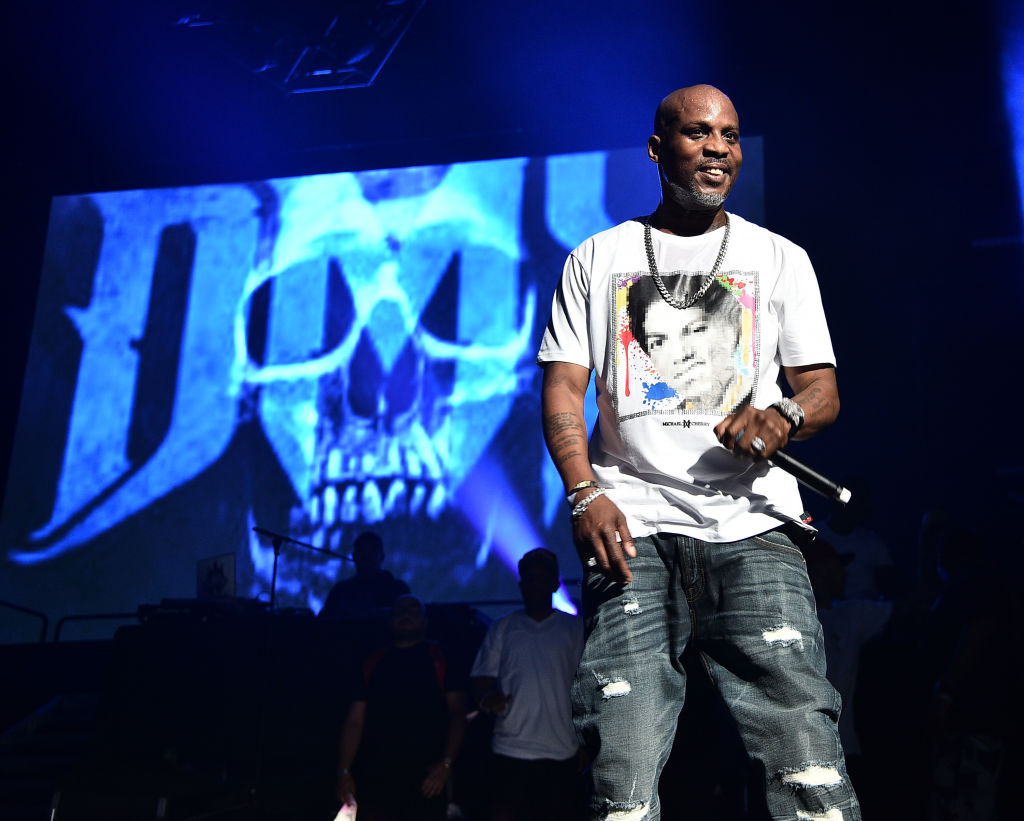
DMX died with a negative net worth. Celebrity Net Worth estimates the figure at -$1 million, though some sources put it closer to -$10 million. The man who sold 75 million records worldwide and claimed he made Def Jam $144 million in a single year left behind 15 children, $2.3 million in IRS debt, and no will.
That gap, between what DMX earned and what he died with, isn’t just about bad decisions. It’s about how the music industry’s advance system eats artists alive, what happens when addiction meets zero financial infrastructure, and why the people who generate the most money for labels are often the last ones to keep any of it.
QUICK FACTS
- Birth name: Earl Simmons
- Born: December 18, 1970, Mount Vernon, NY
- Died: April 9, 2021, White Plains, NY (age 50)
- Cause of death: Cocaine-induced heart attack
- Estimated net worth at death: -$1 million (some estimates: -$10 million)
- Children: 15, with nine different women
- Music catalog value: ~$17.7 million (Billboard estimate)
- Records sold: 74 million worldwide
What Was DMX’s Net Worth at Death?
At the time of his death on April 9, 2021, DMX’s personal finances were deep in the red. Celebrity Net Worth placed the figure at -$1 million. Other estimates put it as low as -$10 million.
He’d filed for bankruptcy in 2013, listing roughly $50,000 in assets against somewhere between $1 million and $10 million in liabilities. Child support was his priority claim—$1.24 million owed across multiple obligations. That filing was eventually dismissed by a Manhattan bankruptcy court, which meant the debts stayed right where they were.
Then came the IRS. In 2017, DMX was charged with 14 counts of tax fraud for failing to file returns on approximately $1.7 million in income earned between 2010 and 2015. He was sentenced to one year in federal prison in March 2018. When he walked out in January 2019, he still owed the government $2.3 million—and the IRS had plans to garnish his income until the debt was cleared.
How Much Money Did DMX Make in His Career?
DMX’s commercial run from 1998 to 2003 was one of the most dominant stretches in hip hop history. His debut album, It’s Dark and Hell Is Hot, sold 251,000 copies in its first week and has moved more than five million total. Seven months later, he dropped Flesh of My Flesh, Blood of My Blood—also a number one debut.
He became the first artist to have his first five albums consecutively debut at the top of the Billboard 200. That’s a record that still stands. …And Then There Was X went six-times Platinum. Across all of it, DMX moved 74 million records worldwide.
The money wasn’t just in music. He starred in Belly, Romeo Must Die, Exit Wounds, and Cradle 2 the Grave. His ex-wife Tashera Simmons told HipHopDX that DMX was earning $10 million per movie at his peak and that the two of them were “very close to being billionaires.”
DMX himself put a number on what he generated for his label. “I gave them their best year,” he said of Def Jam. “I made $144 million for them in one year.” He described how the label operated: they’d offer perks—a Range Rover, tour support, a video budget—and every dollar went on the artist’s tab. “You end up thanking yourself,” he told interviewers.
That quote matters because it explains the math. DMX wasn’t broke because he didn’t earn. He was broke because the structure he earned inside was designed to keep the money flowing in one direction.
How Did the Money Disappear?
The short answer: advances, child support, tax fraud, and addiction. The longer answer involves an industry that hands 22-year-olds from Yonkers millions of dollars in recoupable advances with no financial advisors, no tax planning, and no one in the room working for them instead of the label.
Jay-Z had to personally absorb a $12 million debt DMX owed to Def Jam when DMX left the label in 2006. That’s not a typo. Twelve million dollars in debt to the company that had made hundreds of millions off his records. That debt wasn’t from gambling or jewelry—it was advances, recoupable expenses, and the standard music industry math that treats every dollar an artist touches as a loan.
DMX fathered 15 children with nine women. The child support obligations alone were staggering. He owed $1.24 million at the time of his 2013 bankruptcy filing. In June 2015, he was jailed for six months after falling $400,000 behind on payments. In 2008, Monique Wayne—the mother of two of his children born outside his marriage—sued him for $1.5 million.
And then there was the addiction. DMX has said publicly that he first tried crack cocaine at 14, when his mentor Ready Ron passed him a laced blunt. That addiction followed him for the rest of his life. It didn’t cause the financial problems on its own, but it made every other problem worse—the arrests, the broken contracts, the inability to tour consistently, the legal fees that stacked up across more than 30 arrests.
What Was DMX’s Cause of Death?
DMX died on April 9, 2021, at White Plains Hospital in New York. He was 50 years old.
The Westchester County medical examiner confirmed that the cause of death was a cocaine-induced heart attack that stopped blood circulation to his brain. He’d been hospitalized on April 2 after suffering cardiac arrest at his home, and spent a week on life support in a vegetative state before his family made the decision to let him go.
“It was cardiac arrest for a period of time, so there was no circulation to the brain,” a source from the medical examiner’s office told Vulture. Acute cocaine intoxication had set the whole chain of events in motion.
The addiction that started at 14 ended at 50. DMX had entered rehab multiple times, canceled tours to seek treatment, and been public about his struggles in a way that most artists of his era never were. Songs like “Slippin’” weren’t metaphors — they were autobiography. That honesty is part of what made him matter so much. It’s also what makes his death feel like a failure that belonged to more people than just him.
What Is DMX’s Estate Worth Now?
Here’s the bitter math. DMX was worth more to the industry dead than his personal bank account ever reflected while he was alive.
Billboard estimated in 2021 that DMX’s master recording and publishing royalties were valued at approximately $17.7 million — $13.86 million in masters and $3.84 million in publishing. That number is likely higher now, given hip hop catalog values have continued to climb.
But DMX didn’t own the masters on his biggest hits. And he died without a will, which turned the estate into a legal fight almost immediately. Five of his adult childrenfiled competing petitions with the Westchester County Surrogate’s Court. His daughters Sasha Simmons and Jada Oden estimated the estate at less than $50,000. His sons Xavier, Tacoma, and Sean put it at less than $1 million.
His fiancée, Desiree Lindstrom—the mother of his youngest son, Exodus—petitioned the court to be recognized as his common-law spouse. The court denied the request. New York hasn’t recognized common-law marriage since 1933. After seven years together and a child, she walked away from his estate with nothing.
The estate recently struck a deal with Artist Legacy Group to manage his catalog going forward. And in 2025, a court ruled against his ex-wife Tashera Simmons over music rights, giving the estate administrators control of his catalog and likeness.
The catalog will keep generating money. The question has always been who gets to control it, and whether any of the 15 people who should benefit from it actually will.
The System That Failed DMX Before DMX Failed DMX
This is the part every competitor article skips, or handles with a sentence about “financial mismanagement.” The DMX net worth story is not primarily about DMX making bad choices—though he made them. It’s about an artist who came up in the Ruff Ryders era without a lawyer, a financial planner, or a single person in the room whose job was to protect his money instead of spend it.
The advance system in the music industry is designed to look like generosity. A label gives an artist a car, a tour bus, a video budget—and every cent is recouped from the artist’s royalties before they see a dollar in profit. DMX described this himself: the label would suggest a Range Rover, hand over the keys, and then quietly add $80,000 to his P&L report. The artist ends up in debt to the people who profit from his work.
That’s not a conspiracy theory. It’s how major label deals worked in the late ’90s, and it’s how they still work today when artists don’t have representation that works for them. DMX was a kid from Yonkers group homes who’d been sleeping on floors and committing robberies by his teens. Nobody in that pipeline was teaching him about recoupable advances and tax obligations.
The addiction made it worse. The 30-plus arrests made it worse. The 15 children and the mounting child support debt made it worse. But the foundation of the financial collapse was an industry structure that takes everything from artists who don’t know what they’re signing—and DMX signed young, hungry, and without protection.
Closing the Chapter
Earl Simmons had one of the greatest voices hip hop ever produced. Not the most technically skilled—the most recognizable. The growl, the prayer, the bark, the raw confession on wax. You knew it was DMX in the first three seconds of any song.
He gave Def Jam their best year. He sold 74 million records. He was the first to debut five straight albums at number one. And he died owing money to the IRS, with his children fighting over an estate that might be worth less than the cost of his legal fees.
His catalog is valued at $17.7 million. His personal net worth at death was negative. Both of those numbers are true, and the distance between them tells you everything about how the music industry treats the artists who build it.