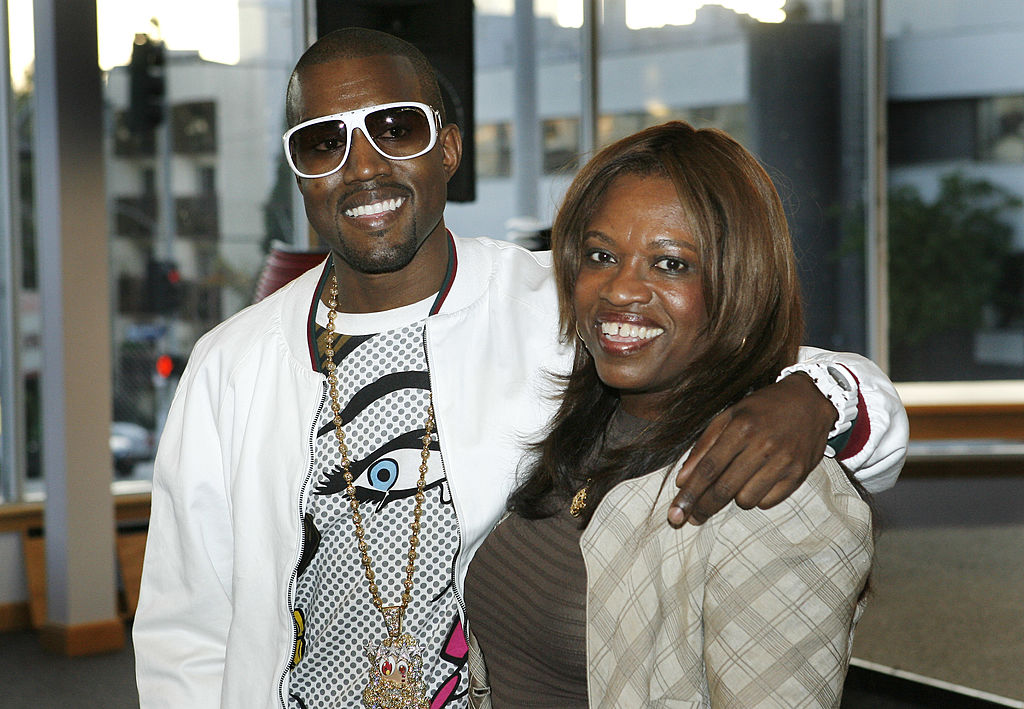
Kanye’s mom, Dr. Donda C. West, died on November 10, 2007. She was 58 years old. The coroner’s report, released in January 2008, ruled her death was caused by coronary artery disease and multiple post-operative factors following cosmetic surgery—liposuction, a tummy tuck, and a breast reduction—performed the day before.
That’s the clinical version. The fuller story involves a surgeon who shouldn’t have operated, a pre-existing heart condition that went uncleared, and a woman whose life was far bigger than the way she died. Most of what gets written about Donda West reduces her to one terrible day. She deserves more than that.
QUICK FACTS
- Full name: Dr. Donda Clairann West (née Williams)
- Born: July 12, 1949, Oklahoma City, Oklahoma
- Died: November 10, 2007, Los Angeles, California (age 58)
- Cause of death: Coronary artery disease and multiple post-operative factors from cosmetic surgery
- Surgeon: Dr. Jan Adams
- Career: Professor and chair, English Department, Chicago State University (31 years)
How Did Donda West Die?
Donda West died at home in Los Angeles on November 10, 2007, one day after undergoing cosmetic surgery. She had liposuction, a tummy tuck, and a breast reduction performed by Beverly Hills surgeon Dr. Jan Adams.
According to the autopsy report, she walked out of the clinic after five and a half hours of surgery, heavily bandaged, and was prescribed Vicodin for pain. She chose to recover at home rather than at a post-operative care facility, even though she was advised otherwise. Her nephew, a nurse, was caring for her.
Her first day home, she appeared fine. She walked around and complained of some pain, including chest discomfort that investigators said could have been caused by tight surgical bandages. The next day, she developed trouble breathing and collapsed. Two women found her unresponsive on a bed in her home and called 911. She was taken to Centinela Freeman Regional Medical Center in Marina del Rey, where she was pronounced dead. She had been home for barely more than 24 hours.
The Los Angeles County coroner’s office released the final report on January 10, 2008. The official cause: coronary artery disease and multiple post-operative factors due to or as a consequence of liposuction and mammoplasty. The manner of death could not be definitively classified—it was not ruled a homicide, and the coroner stopped short of calling it accidental.
What Surgery Did Donda West Have?
Donda had three procedures in a single session: liposuction, abdominoplasty (tummy tuck), and breast reduction. The surgery lasted approximately five and a half hours.
What makes the circumstances around her surgery harder to sit with is what happened before she ever got on Jan Adams’s table. Five months earlier, she had consulted another Beverly Hills plastic surgeon, Dr. Andre Aboolian, about the same procedures. Aboolian was concerned about a pre-existing condition he believed could cause a heart attack during surgery. He refused to operate until she received full medical clearance. Donda did not return to him.
She went to Jan Adams instead. Adams, while a Harvard-educated surgeon who had appeared on Oprah and the Discovery Health Channel, was not board certified by the American Board of Plastic Surgery. Records later revealed he had at least two malpractice settlements—one for $217,337 and another for $250,000—along with alcohol-related offenses. A separate coroner’s investigation could not determine whether Donda received any type of pre-surgical screening before the procedures.
She had taken a stress test in January 2007 after experiencing chest and shoulder pain, but those symptoms apparently didn’t return. Whether Adams knew about her cardiac history before operating has never been publicly confirmed. After the surgery, Adams claimed she left the facility in stable condition and that nothing unusual occurred during the procedure itself.
Who Was Donda West?
The internet mostly knows her as Kanye’s mother. That’s the smallest version of who she was.
Donda Clairann Williams was born on July 12, 1949, in Oklahoma City, Oklahoma. Her father, Portwood Williams Sr., was a civil rights activist. At nine years old, she participated with him in the Katz Drug Store sit-in on August 19, 1958, one of Oklahoma City’s earliest desegregation actions.
She earned her bachelor’s degree in English from Virginia Union University in 1971 and her doctorate from Auburn University in 1980. She was a Fulbright scholar who taught English at Nanjing University in China. She spent 31 years at Chicago State University, eventually becoming chair of the Department of English, Communications, Media, and Theater.
She was an educator first. She raised Kanye as a single mother after separating from his father, Ray West, when Kanye was three.
In 2004, she retired from academia to manage her son’s career full-time, a decision that moved her from Chicago to Los Angeles. She co-founded the Kanye West Foundation, which worked to reduce dropout rates and improve music education for underprivileged youth. She published a memoir, Raising Kanye: Life Lessons from the Mother of a Hip-Hop Star, months before her death.
The woman who sat in at a lunch counter in 1958 Oklahoma, who earned a PhD, who taught for three decades, who moved across the country because she believed in her son—that’s the person this story is about.
What Did the Coroner’s Report Actually Say?
The coroner’s report is worth understanding clearly, because the shorthand version — “she died from plastic surgery” — isn’t quite what the medical examiner concluded.
Deputy medical examiner Dr. Louis A. Pena stated that Donda died from “some pre-existing coronary artery disease and multiple postoperative factors following surgery.” The report found blockages of 50 to 70 percent in two of her coronary arteries. She also had evidence of pneumonia, which may have restricted her breathing enough to decrease oxygen supply to her heart.
Critically, the coroner found no evidence of a surgical or anesthetic misadventure. The surgery itself was not botched. But the stress of multiple invasive procedures on a body with significant undiagnosed coronary artery disease, combined with post-operative factors including pain medication and tight chest bandaging, was more than her heart could take.
Ed Winter, assistant chief of the coroner’s office, was asked whether Donda would still be alive if she hadn’t had the surgery. His answer, per CBS News: “She could, possibly. But she could have also died because of pre-existing cardiac issues.”
The manner of death was listed as “could not be determined.” Not homicide. Not an accident, definitely. The surgery didn’t kill her directly, but it created the conditions in which her undiagnosed heart disease couldn’t survive.
What Is the Donda West Law?
In October 2009, California Governor Arnold Schwarzenegger signed Assembly Bill 1116 — the Donda West Law. The legislation requires that all patients receive a physical examination and written medical clearance before undergoing elective cosmetic surgery. California has the largest cosmetic surgery industry in the country, which made the bill’s passage particularly significant.
Donda’s niece, Yolanda Anderson, was one of the primary advocates behind the bill. She entered it through her assemblywoman’s “It Ought to Be a Law” constituent contest. Schwarzenegger had initially vetoed an earlier version in 2008 during a budget crisis.
Assemblywoman Wilmer Amina Carter resubmitted it, and it was signed into law the following year. “Sometimes patients may think they are well enough for cosmetic surgery, but in reality are not,” Carter said. “This bill will potentially save lives.”
The law doesn’t guarantee safety; critics pointed out that qualified surgeons were already screening patients. But its existence acknowledges something specific: that Donda West might still be alive if someone had required a thorough medical evaluation before she went under. A surgeon who wasn’t board-certified operated on a woman with significant coronary artery disease, and no one confirmed she was healthy enough for five and a half hours of elective surgery. The law exists to make that harder to repeat.
How Has Donda’s Death Shaped Kanye’s Life?
Kanye’s grief over his mother’s death has been one of the most visible and ongoing throughlines of his public life.
In a 2015 Q Magazine interview, he said: “If I had never moved to L.A. she’d be alive… I don’t want to go far into it because it will bring me to tears.” He has repeatedly connected his success to her death, the idea that his career brought her to Los Angeles, and Los Angeles is where she died.
He dedicated performances of “Hey Mama“—the song he wrote for her on Late Registration—to her memory at every stop on the Glow in the Dark Tour following her funeral. His first concert after she died was at The O2 Arena in London on November 22, 2007, where he performed the song along with a cover of Journey’s “Don’t Stop Believin’” in her honor.
In April 2018, he posted a photo of Dr. Jan Adams and wrote that he wanted to use it as an album cover. The message: “I want to forgive and stop hating.” Adams later asked him to stop using his image.
In 2021, Kanye released Donda — an album named after his mother that features recordings of her voice throughout. He renamed the Kanye West Foundation to the Dr. Donda West Foundation in 2008. He and Rhymefest co-founded Donda’s House in 2013, a Chicago nonprofit offering free music writing programs to at-risk youth, built on her teaching philosophy.
Every album, every foundation, every public moment of grief points back to the same place. He lost the person who believed in him before anyone else did.
Remembering Donda
Donda West was a nine-year-old girl at a sit-in. A Fulbright scholar. A department chair. A single mother who drove her son’s equipment to Newark in a U-Haul. She was 58 when she died, and the circumstances of her death—the uncleared surgery, the heart condition no one caught, the recovery at home instead of a facility—are worth understanding in full.
Not because they make a better headline, but because she was a whole person who made a specific, preventable set of choices that the medical system around her should have caught. Her son has spent nearly two decades making sure no one forgets her name.