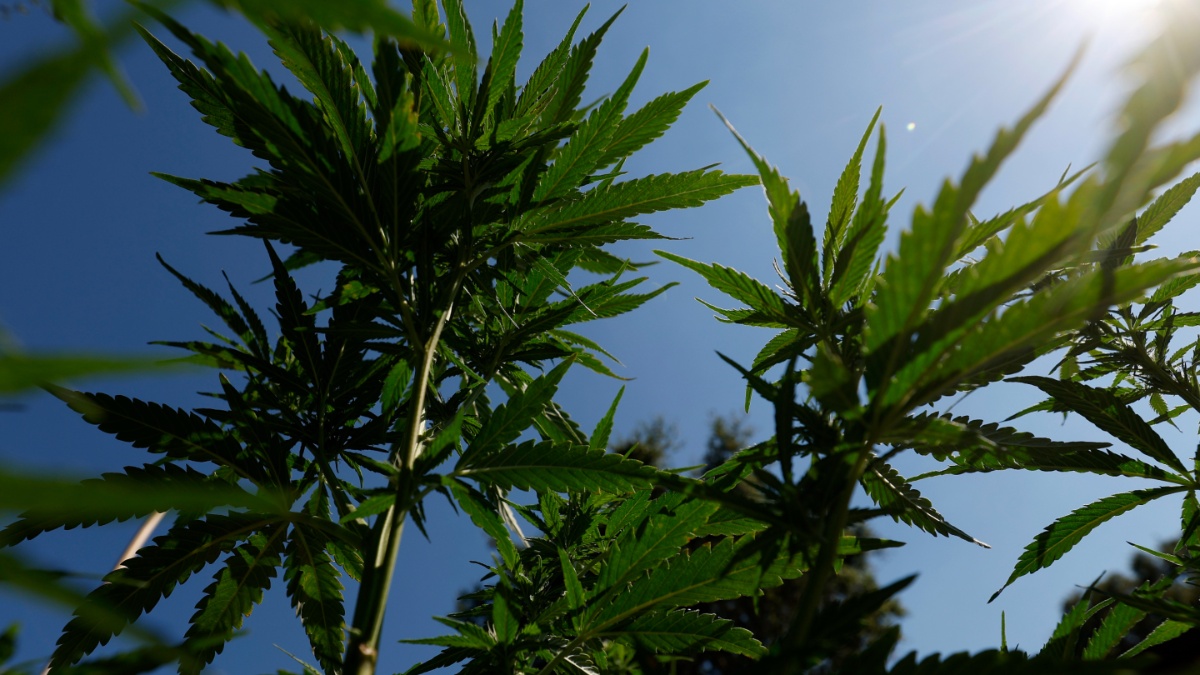
What most people think they know about 420 is usually wrong. Over the years, theories have piled up with some linking it to police codes, others to famous musicians or even scientific facts. But the real story is far less obvious and far more human. It begins with a group of teenagers, a shared curiosity, and a routine that slowly turned into something much bigger than they ever imagined. It started as a private joke and eventually reshaped cannabis culture worldwide.
How a Simple Code Between Friends Became Global
Back in 1971, five students at San Rafael High School, who called themselves the Waldos, weren’t trying to create a global phenomenon. The friends, namely Steve Capper, Dave Reddix, Jeffrey Noel, Larry Schwartz, and Mark Gravich, were just bored teenagers looking for something more exciting than football games and predictable routines. Their hangout spot was a wall in their school courtyard, and from there, they dreamed up adventures they called “safaris.”
One day, a friend brought them an unusual opportunity. As Steve Capper explained, “One day, the five of us were sitting on the wall and a buddy comes up and said his brother was in the Coast Guard… And they said [to my friend], ‘Hey, if you and your friends want to go pick it, here’s a map.’”
For the group, the decision was easy. Dave Reddix put it simply: “It was a no-brainer. We had to go for it, right?”
Timing, however, was everything. With school schedules and football practice to consider, they agreed to meet at a specific time. “We decided we’d meet there at 4:20 p.m.,” Reddix recalled. From there, they set off on their mission, one that became more about the journey than the destination.
“We got high in front of the statue, then we hopped in Steve’s ’66 [Chevy] Impala… and drove out in search of this patch, getting high all the way out there. And maybe that’s the reason why we didn’t find it.”
Even though they never found the cannabis patch, something more lasting stuck: the time. The phrase “420 Louis” became their shorthand, referencing both the meeting time and the statue of Louis Pasteur where they gathered. Over time, they dropped the “Louis” and kept “420.”
As Reddix explained, “After that, we realized that this is a secret code we could use… We could use it in front of our parents, teachers, cops, friends, whatever, and they never knew what we were talking about.”
At the time, secrecy wasn’t just fun, it was necessary. Marijuana laws were strict, and the risks were real. Capper reflected on that reality, saying, “Marijuana was certainly illegal. The consequences were very real… You could go to jail for 10 years for a joint. It was just ridiculous.” That shared risk created what he described as “a brotherhood of cannabis outlaws.”
The 420 Story and How It Spread Beyond the Waldos
For years, “420” remained an inside joke. But its reach expanded in unexpected ways, largely thanks to proximity and coincidence.
Reddix’s connection to the music world played a key role. He explained how things shifted when he started working around members of the Grateful Dead: “I was using 420. It filtered through the backstage people and then that filtered into the Grateful Dead community.”
From there, the term slowly embedded itself into a larger subculture. Meanwhile, the Waldos themselves continued using it casually, unaware of how far it would travel.
Capper recalled their indirect connection to the band, per LA Times: “Mark’s dad would get us on the guest list, and we’d be backstage with them, and we’d be using the term. We’d pass them a joint and use the term ‘420.’”
The real turning point came in 1991 when High Times magazine picked up on the term after spotting a flyer at a Grateful Dead concert. Reddix described the moment: “He saw a flier that said, ‘Meet us to celebrate 420 on April 20th…’ They did a little article on that. And then they started using 420 in their articles.”
From there, 420 evolved from slang into a symbol, eventually becoming a date, a time, and a cultural marker for cannabis enthusiasts worldwide.
Still, misconceptions persisted. Capper pushed back against the myths directly: “Hey, everybody thinks this 420 thing is a police code. That’s bulls****. It’s not the time that Jerry Garcia died. It’s not the number of chemical compounds in marijuana.”
To prove their story, the Waldos gathered evidence spanning decades, including letters and records. One detail stood out from Reddix’s past: “I rolled up a joint and I smashed it down… and I said at the end of the letter, ‘A little 420 for your weekend.’”
Even their original story faced skepticism, especially around the Coast Guard connection. Capper explained how far they went to verify it: “We spent six years trying to find [him]… and after six years [in 2016], we found him.” The man confirmed the story, and official records backed it up.
Despite the global recognition, the Waldos initially avoided the spotlight. Reddix admitted, “In the very beginning, none of us wanted to.” Over time, though, they chose to embrace it: “Hey, this is ours, we should keep it. We should claim this.”
Today, 420 is both a celebration and a conversation starter. Capper sees its cultural impact clearly: “420 certainly was a catalyst for legalization and reform.”
Even as cannabis becomes more mainstream, the Waldos still reflect on how things have changed. Reddix noted, “It’s not the same as it used to be… but there’s still a vibe of community and comradeship.”
At its core, that’s what the 420 story has always been about, not just cannabis, but connection, curiosity, and a shared moment that somehow turned into history.