Rise Up Industries, a San Diego nonprofit, trains formerly incarcerated people as CNC machinists through a paid apprenticeship that pairs technical certification with therapy and case management, and its graduates reoffend at 3% over three years, compared with roughly 66% nationally, according to Good News Network.
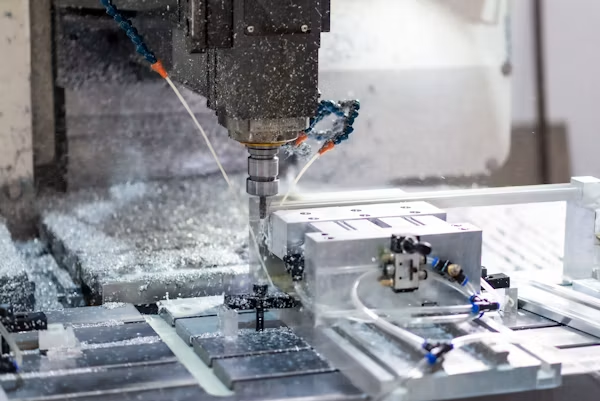
The program runs out of a converted machine shop in southeastern San Diego. Apprentices there learn to operate computer numerical control, or CNC, machines while fulfilling real commercial contracts, including aerospace parts, medical devices, automotive components, camera hardware, faucet hardware, BMX parts and fishing lures, according to Rise Up Industries.
A 22-times difference in reoffending
The gap between the program’s 3% three-year recidivism rate and the roughly 66% national three-year rate reported by the Bureau of Justice Statistics amounts to graduates reoffending at roughly one twenty-second the national rate. Jonathan Yackley, executive director of Rise Up Industries, said the program’s design, not the machinist training alone, is what drives that gap.
“Technical training alone is not enough… Sustainable change happens when demanding career training is combined with behavioral health care,” Yackley said.
That combination means every apprentice works toward a CNC machinist certification while also receiving therapy and ongoing case management, rather than technical instruction on its own. The Bureau of Justice Statistics data cited in the reporting tracks the roughly 66% national figure across all formerly incarcerated people over a three-year window, without the added layer of behavioral health support built into the Rise Up Industries model.
Real contracts, real parts
Apprentices at Rise Up Industries are not training on scrap material or simulated orders. The shop machines parts that ship into aerospace, medical device and automotive supply chains alongside smaller consumer goods like camera hardware, faucet fittings, BMX components and fishing lures. Producing parts against real commercial deadlines and specifications gives apprentices a body of verifiable work experience by the time they finish the program.
Komisi Savaiinaea, who served more than 20 years in prison and now works as a supervisor in the program, said the technical side of the training felt daunting when he started. “I was very intimidated… it had been many years since I went to school,” Savaiinaea said.
From machine shop to family
Anthony Walkens, an apprentice paroled in 2025 after serving on a 55-years-to-life sentence, described the atmosphere inside the shop in personal terms. “It’s really a beautiful place, kind of like a family setting,” Walkens said.
Savaiinaea’s path from apprentice to supervisor and Walkens’s description of the shop’s atmosphere point to the same structure Yackley credits for the program’s low reoffending rate: technical training delivered alongside sustained personal support, rather than a standalone jobskills course. Rise Up Industries continues to operate its machine shop in southeastern San Diego, filling ongoing commercial contracts with apprentices at various stages of the program.
Why the credential itself matters
CNC, or computer numerical control, machinists are certified to operate the computer-guided cutting and shaping equipment used throughout U.S. manufacturing, from aerospace suppliers to medical device makers to automotive parts shops. The certification is portable across employers, meaning a graduate’s ability to use the credential does not depend on staying with any single company, unlike some job-training programs that lead to a position with one employer and little transferable proof of skill if that job ends.
The roughly 66% national three-year recidivism figure the program’s graduates are measured against comes from Bureau of Justice Statistics tracking of reincarceration and re-arrest rates across broader cohorts of people released from state prison, a benchmark the agency has followed across multiple release years. Measured against that wider population, Rise Up Industries’ graduates represent a small program by national standards, but the size of the gap between its outcomes and the national figure is what has drawn attention from reentry researchers and other cities looking to replicate the model.
A rare case of tracked outcomes
Reentry and job-training programs for formerly incarcerated people are common across the country, but concrete, tracked recidivism data tied to a specific program’s graduates is harder to come by than the programs themselves. Many reentry organizations describe their impact through individual success stories rather than a measured reoffending rate compared against a national benchmark, which is part of why a specific, sourced figure like Rise Up Industries’ 3% mark stands out in coverage of the reentry field.
Yackley’s description of combining technical training with behavioral health care reflects a model increasingly cited in criminal justice research as more effective than either job training or therapy offered on its own, though Rise Up Industries’ own results are what has drawn direct attention to that combination in San Diego specifically.
The path from incarceration to the shop floor
Both Savaiinaea and Walkens entered the program directly tied to their release from long sentences, Savaiinaea after more than two decades in prison and Walkens after parole from a 55years-to-life term. Neither described a straightforward transition into the technical work, and both credited the shop’s supervisory and support structure, rather than the machinist curriculum alone, with making that transition workable.
Rise Up Industries has not disclosed how many apprentices have completed the program to date or how many are currently enrolled, though the organization continues to accept commercial contracts across the same range of aerospace, medical device, automotive and consumer-product categories cited in its own materials.