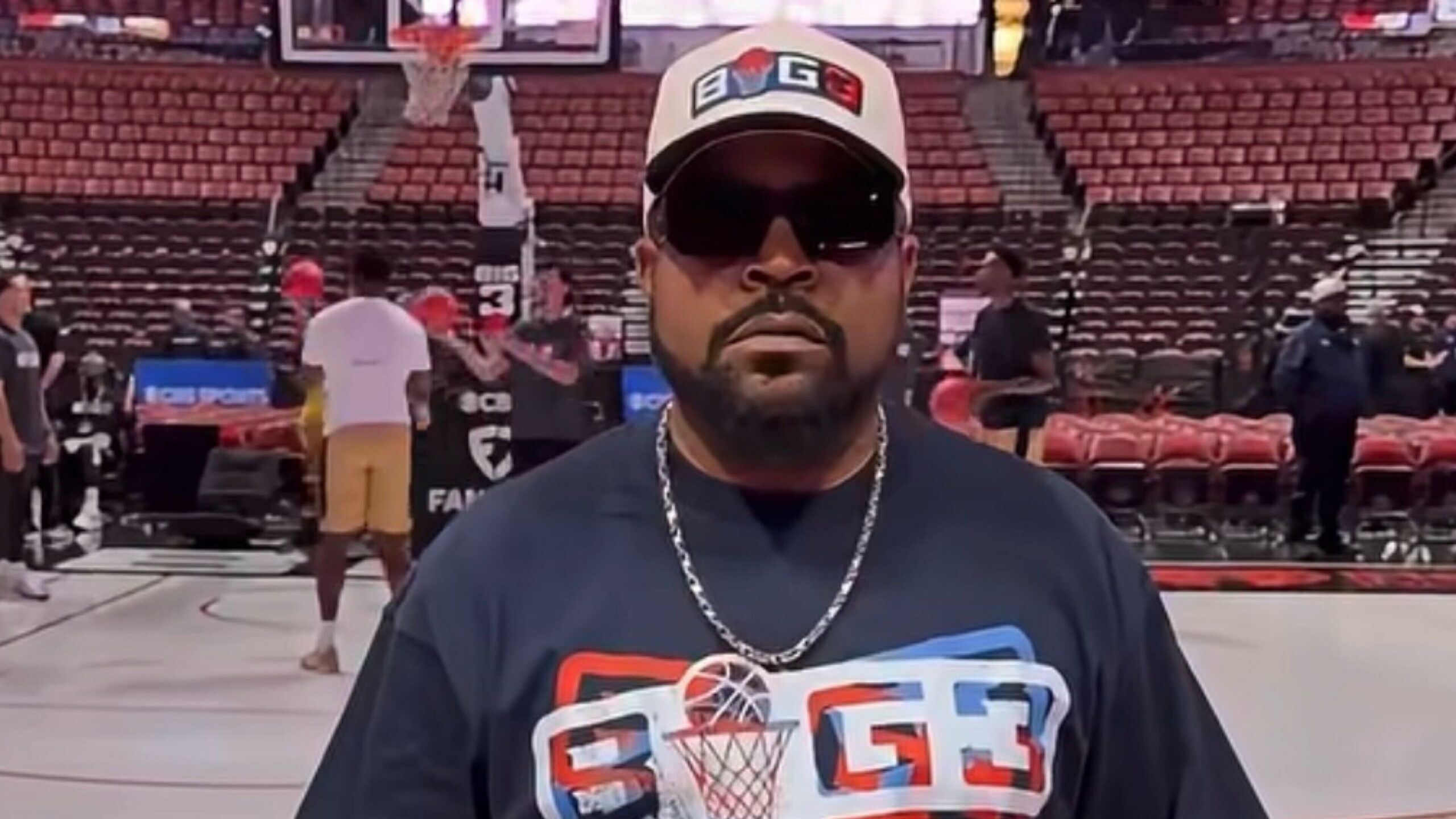
Ice Cube’s BIG3 basketball league is trying to go public through a merger with the blank-check company Graf Global at a $290 million valuation, and its own investor presentation puts 2026 revenue at $7.4 million. The BIG3 public listing has a deadline of Nov. 27.
The valuation is about 39 times budgeted revenue, a calculation from the two figures. The same presentation, filed with the Securities and Exchange Commission on Oct. 22, says there is “substantial doubt” about the league’s ability to continue as a going concern, and that BIG3 has not been profitable historically. Ice Cube is asking public investors to pay for a brand and a TV audience, and the filings show that what they would be buying is a league that spends more than three dollars for every dollar it brings in.
What the BIG3 Filings Show
The October investor presentation lists a 2026 budget of $7.4 million in revenue against $25.2 million in expenses. That is a gap of about $17.8 million, and expenses run about 3.4 times revenue, a calculation from the budget figures. The deck reports average attendance of about 5,000 and about 550,000 average viewers on CBS.
The deal values BIG3 at $290 million in enterprise value, or $284 million in equity after $6 million of assumed debt. Ice Cube and co-founder Jeff Kwatinetz would keep control. The registration statement says the founders would own about 53.4% of the stock and about 91.5% of the voting power.
Ice Cube, the league’s co-founder and CEO, said when the deal was announced in June that BIG3 would be the first publicly traded professional sports league in the U.S. Kwatinetz, the chairman, said the listing would provide “capital and acquisition currency.”
Where the SPAC Cash Went
The merger needs at least $50 million in net cash from Graf’s trust to close. The trust held about $249 million on June 10, according to the June announcement. On June 26, Graf shareholders approved more time to finish a deal and redeemed 14,590,367 shares at about $10.86 each, leaving about $91.4 million in the trust, the registration statement says.
Those redemptions took out about $158.5 million, roughly 64% of the trust, a calculation from the filing’s figures. The remaining cushion over the $50 million floor is about $41 million, and any shareholder who still holds Graf stock can redeem again before the vote. James Graf, Graf Global’s CEO, said in a July release that there will be “a clear automatic transition to ownership of BIG3 securities after closing.” The ticker changed from GRAF to TONT on July 27.
An Ambassador’s NFTs Became BIG3 Shares
A federal ethics filing shows one of the league’s earlier products turning into equity. Ken Howery, the PayPal co-founder and U.S. ambassador to Denmark, reported on his OGE Form 278-T that on Aug. 19 he exchanged a BIG3 Basketball “Fire Tier” NFT, valued at $100,001 to $250,000, for units of BIG3 HoldCo LLC. The form says the NFTs were cancelled and the units were received as part of a settlement. The Office of Government Ethics certified the form on Nov. 3.
The fair case for BIG3 is that it has a network audience of about 550,000 and a founder whose name sells tickets, and that the going-concern warning is the reason it wants public capital. The filing also shows how much that capital has already shrunk. Graf’s board extended the deadline to complete the merger to Nov. 27, with monthly extensions possible to Dec. 27, according to the registration statement.