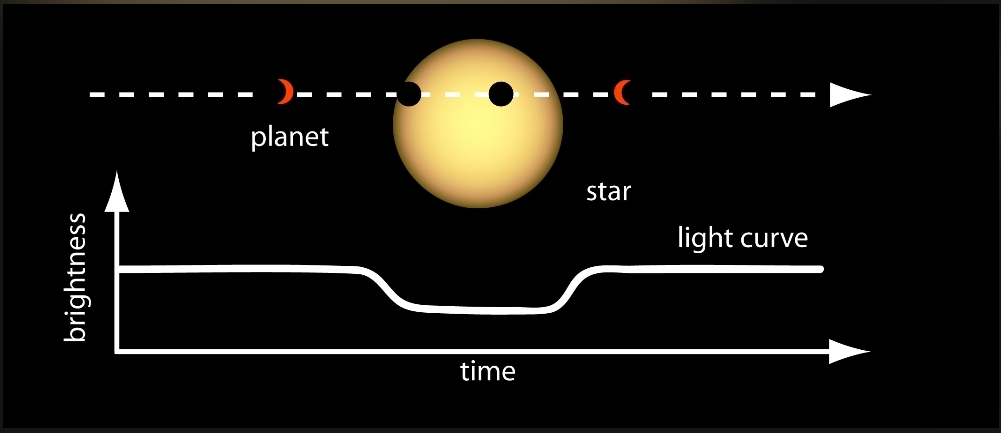
Astronomers watched a giant planet called TOI-2535 b stop crossing in front of its star, the first known “disappearing planet,” UCLA said on Nov. 9. The planet is still there. A hidden neighbor tipped its orbit out of line with Earth.
Astronomers use a planet’s transit, the small dip in starlight as it passes in front of its star, as a fixed signature. This one changed and then vanished while a NASA satellite was watching.
How TOI-2535 b Disappeared
NASA’s TESS satellite observed the system, about 1,000 light-years away, from April 2019 to March 2026. The transits began arriving up to six hours early or late, then grew shorter and shallower, and in 2026 they stopped, according to the release. The team measured the planet’s size with the WIYN 3.5-meter telescope at Kitt Peak in Arizona.
“The planet’s orbit is tilting so quickly that its transit disappeared while we were watching,” said Samuel Yee, the 51 Pegasi b Postdoctoral Fellow at UCLA and the study’s corresponding author. The researchers blame an unseen second planet on a tilted orbit. Its pull makes TOI-2535 b’s orbit wobble like a spinning top, and the wobble carried the planet’s path off the line between its star and Earth.
What the Disappearing Planet Shows
TOI-2535 b is a hot Jupiter, a gas giant that orbits close to its star. It goes around every 8.25 days, about 10 times faster than Mercury. That is the original angle on the finding. Across roughly 2,530 days of observation, the planet completed about 307 orbits, a calculation from the release’s dates and orbital period, and in that span its transit drifted, shrank and disappeared. The planet is not expected to transit again for 30 to 50 years, which means about 1,300 to 2,200 more orbits that astronomers on Earth will not see as transits.
“We think of the universe as resembling clockwork, where everything is regular, but that’s not true,” Yee said. Erik Petigura, a UCLA astrophysicist and co-author, compared it to the moon, whose tilted orbit is the reason Earth does not get an eclipse every month. “But because the moon’s orbit is tilted, eclipses are less common,” he said.
Why Hot Jupiters Matter Here
The finding also bears on how hot Jupiters end up so close to their stars. The researchers suggest this system may have taken a gentler path, with the planet slowly spiraling inward instead of being thrown there. “We may be seeing a formation channel that doesn’t happen very often but is very interesting,” Yee said.
The limits are clear. Nobody has directly observed the neighboring planet. Its existence comes from the changing transits, and the formation pathway is a hypothesis. “This is the most extreme example we’ve seen because the two planets are interacting so strongly,” Yee said. The paper appears in The Astrophysical Journal Letters. The researchers said the hidden neighbor may come into view before TOI-2535 b transits again.