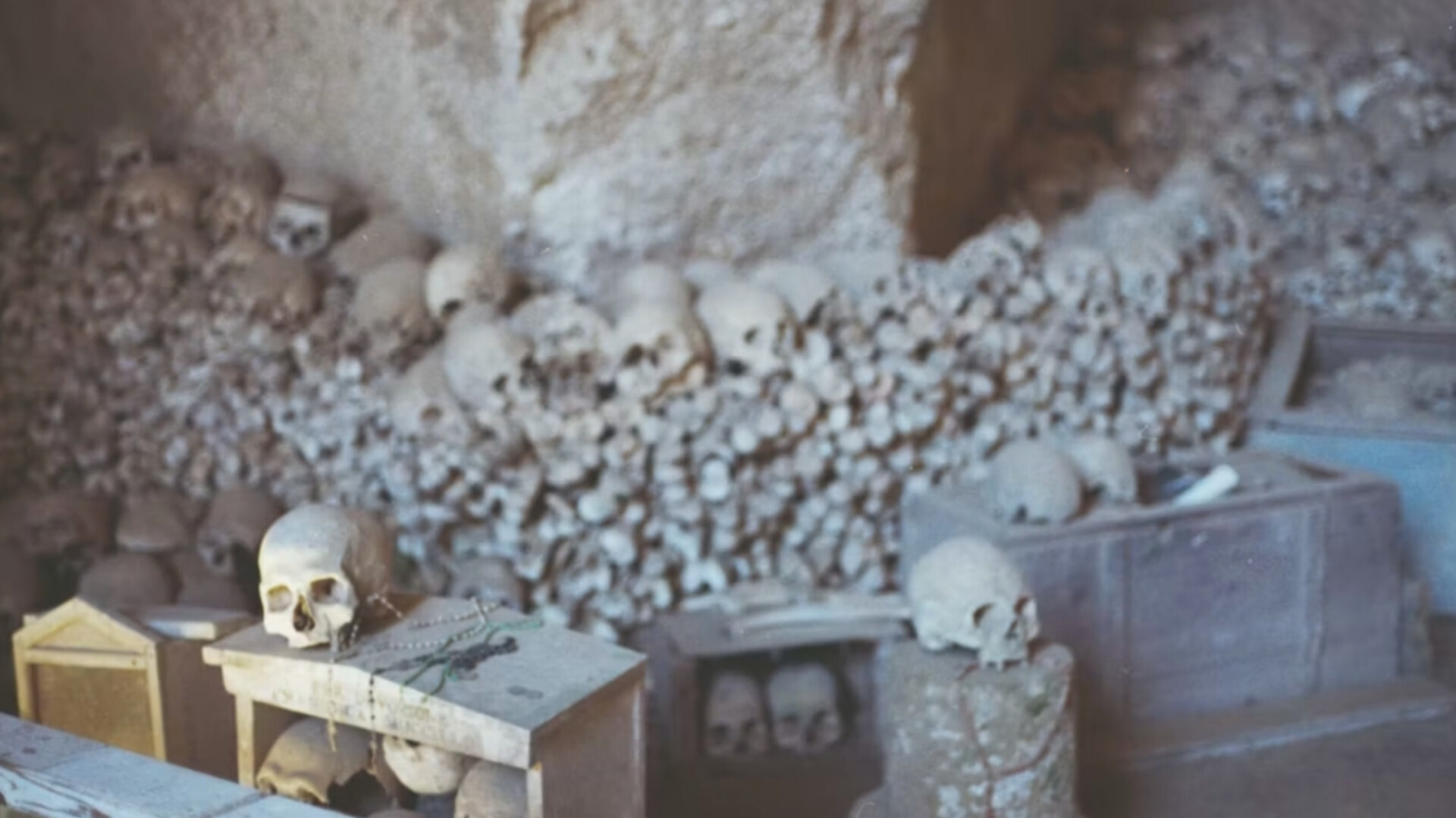
A new forensic study of 46 skulls from royal burials at Abydos found signs of fatal head injuries on 18 of them, which the author says supports the idea that servants and officials were killed to accompany Egypt’s first kings into the afterlife. Roselyn Campbell of Purdue University published the analysis Oct. 5 in the journal Frontiers in Environmental Archaeology.
The skulls date to Egypt’s First Dynasty, which ScienceAlert placed at roughly 3078 B.C. to 2900 B.C. They came from small satellite graves around the royal tombs at Umm el-Qaab, the royal cemetery at Abydos. The collection is held in the Duckworth Collection at the University of Cambridge in England, according to the Frontiers summary of the paper. Campbell is also writing a book on the subject for Routledge, titled “State-sanctioned Violence and Human Sacrifice in Early Dynastic Egypt.”
How the Study Was Done
Campbell re-examined each of the 46 skulls for injuries that happened around the time of death rather than after burial, a distinction that forensic anthropologists use to separate violence from damage caused by the soil, excavation or storage. The Frontiers summary said she found fatal trauma on 18 skulls, about 39% of the sample.
Most of the injuries were linear fractures, which are thin cracks in the bone. Campbell said in the paper’s summary that such injuries would likely cause rapid unconsciousness, internal bleeding and death. Some skulls also carried sharp-force wounds. ScienceAlert reported a penetrating injury to the side of one head and a chopping wound to the eye on another.
The pattern of damage points to the weapon. Earth.com reported that the linear cracks differ from the depressed fractures that a stone mace would leave, the weapon shown in Egyptian royal art. Campbell instead pointed to a flat, wide object made of a lighter material such as wood or antler.
What Petrie Saw
The skulls came out of the ground during Flinders Petrie’s work at Abydos. Accounts vary on when. The Frontiers summary and Earth.com placed his excavation of these graves in the 1920s, while La Brújula Verde, a Spanish science outlet, put it in the early 1900s.
Petrie did not rely on injuries to conclude that retainers had been sacrificed. ScienceAlert reported that he noticed numerous subsidiary graves around a king’s tomb were closed at the same time, which made a string of natural deaths unlikely. He concluded the people in them had been buried to serve the king after death. Live Science reported that he treated some of the cracks as damage from after burial.
Earth.com reported a detail that suggests otherwise. Some skulls carry paraffin wax around the fractures, which Campbell read as a sign that Petrie saw the cracks and tried to stabilize the bone. If that is right, the wounds were visible to him but not interpreted as evidence of killing.
The Size of the Sample
The study covers a small slice of the evidence. Each royal complex at Abydos was surrounded by hundreds of subsidiary graves arranged in rows, La Brújula Verde reported. Many held lower- and mid-level officials and craftspeople, buried with ceramic vessels and small copper tools. Earth.com said the 46 skulls represent only about 5% to 15% of the burials at each site.
The arithmetic cuts both ways. Twenty-eight of the 46 skulls showed no fatal trauma, and the Frontiers summary said Campbell said that some causes of death, such as asphyxiation, would leave no mark on bone. The 39% figure counts skulls that survive in one collection. It is not a rate for every subsidiary burial. Earth.com said Campbell also cautioned that forensic evidence cannot show whether the people were willing or forced.
Campbell told ScienceAlert that “some retainers might have volunteered to die to achieve eternal life or honor,” while others may have been chosen or forced. The bones cannot separate those cases.
Comparison With Other Early Societies
La Brújula Verde placed the Abydos finding alongside two better-known cases. At Ur in Mesopotamia, CT scans of skulls from the Great Death Pit suggested blows to the head killed 74 attendants, the outlet reported. In the Nubian kingdom of Kerma, later burial mounds held more than 300 sacrificial victims in one case. In Egypt, the same outlet reported, the practice ended after the First Dynasty, and small ushebti figurines later stood in for human servants in tombs.
What Retainer Sacrifice Means
Campbell defines retainer sacrifice as the killing of people close to a ruler when the ruler dies, according to the Frontiers summary. The summary said the original purpose of the practice remains debated among scholars. ScienceAlert reported that the belief behind it was that the people buried near the king would serve him in the afterlife. Petrie’s argument about graves closed at the same time was the basis for that reading, and Campbell’s paper tests it against the bones.
How Other Egyptologists Responded
Jacobus van Dijk, an Egyptologist at the University of Groningen in the Netherlands, said to Live Science that the study “adds an important argument” for scholars who, like him, believe retainer sacrifice was practiced in early Egypt. Van Dijk was not a co-author. His comment shows the question is still contested, since he placed himself in one camp.
Live Science reported that the custom lasted about two centuries or less. If that holds, the burials mark a short-lived practice at the start of Egyptian kingship, not a feature of the pharaonic state across its history.
What Comes Next
Earth.com reported that Campbell sees further analysis of skulls from the royal tombs themselves as a way to add comparison data. Because the skulls sit in a named Cambridge collection and were examined with standard forensic criteria, other researchers can check her injury calls against the same bones.