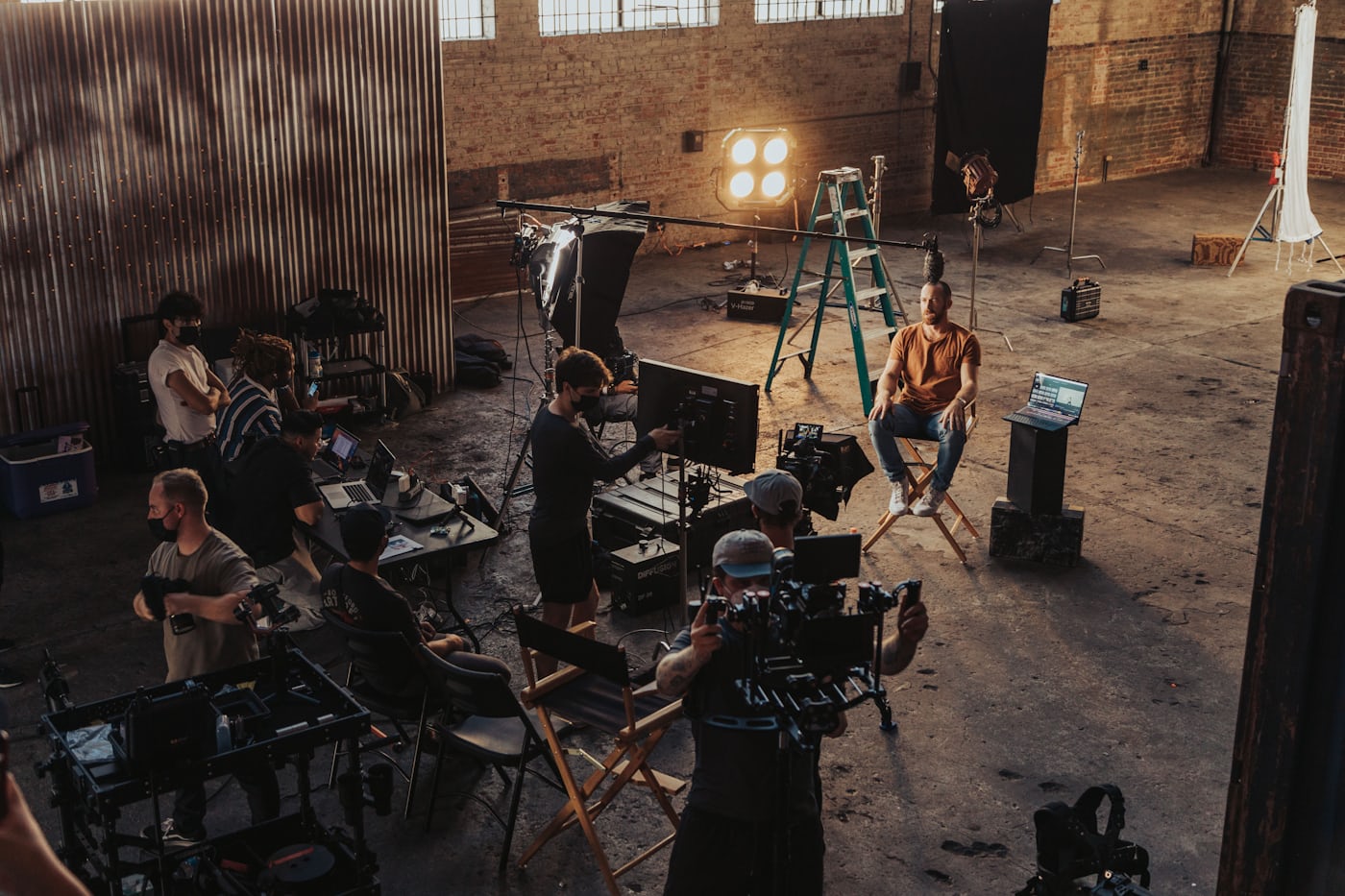
Modern entertainment has shifted. Today, some of the most compelling stories in Hollywood are no longer unfolding on screen, but behind the camera.
Years of production planning, large budgets, and carefully managed marketing campaigns can be overshadowed in a single moment, a cryptic post online, a tense red carpet exchange, or an on-set disagreement that finds its way to social media.
What once lived as background industry noise has now become the main event. Audiences no longer just consume the finished film, they dissect what happens during its making with the same intensity as the story itself.
The question is no longer just what happens on screen, but why the internet is increasingly more invested in what happens when the cameras stop rolling.
Don’t Worry Darling and the Moment the Press Tour Became the Main Event
While audiences were busy dissecting the glamorous world of Don’t Worry Darling, a different kind of spectacle was unfolding off-camera. Reports of on-set tension between Olivia Wilde and Florence Pugh, speculation surrounding Harry Styles and Chris Pine at a film festival screening, Shia LaBeouf’s exit from the project, and Wilde’s public appearances with Styles all fueled a level of attention that often overshadowed the film itself. The final product was fine. The behind-the-scenes narrative, however, became the story people couldn’t stop talking about.
This isn’t an isolated case. Hollywood productions have long shown that sometimes the most compelling drama doesn’t happen on screen. Instead, it unfolds in rehearsals, interviews, leaked moments, and press cycles that audiences consume with just as much interest as the films themselves.
That shift in focus tells us something important about the modern entertainment industry. Audiences often find authentic, candid moments such as conflicts between characters more engaging that the perfectly scripted and organised storytelling. While a movie follows an organised and predictable structure, authentic moments between real life people does not. Even though audiences want character, they enjoy authenticity much more.
Euphoria and the Show That Never Stopped Making Headlines
Most series disappear from the entertainment scene as soon as the show is over but Euphoria never did. The long spaces in between movie production created a vacuum that fans quickly filled with speculations. There were reports of uncertainty as to if the show was going to continue. Scheduling issues, production delays gained as much traction as the episodes already produced.
Social media became the hot seat for constant updates. Production rumors raised concerns and created headlines. Following the Euphoria series felt like watching two different shows. One was aired on HBO while the other was aired on social media, where fans paid attention to minute details of events off-camera. The fascination with behind-the-scenes drama highlights how entertainment culture has evolved in the last decade.
Now, audiences no longer follow only movies, they follow the development process to the completion of the project and even after the completion, they engage with controversy.
The Snyder Cut and the Moment Fans Became Part of the Drama
The Justice League movie changed the relationship dynamics between audiences and the entertainment media. After Zack Snyder stepped away from the project and Warner Bros released a cinematic version that disappointed many fans, a movement started online. What began as an expression of frustration redefined entertainment. The movement tagged Release the Snyder Cut turned a production dispute into an iconic, cultural event. Fans raised awareness that kept online conversation going for years. The campaign became so powerful and influential that it led to the release of Zack Snyder’s version of the film.
This story goes beyond superhero movies. It showed producers that audiences wanted to participate in whatever was happening behind-the-scene. They want to be part of the drama.
With social media, fans have evolved from been observers to stakeholders in the business of entertainment. Audiences feel more connected to the creative process, they have become emotionally invested in production making the drama more interactive.
Grey’s Anatomy Shows How Long Drama Can Outlive a Series
Grey’s Anatomy is a typical example of how some shows have the staying power that can drive conversations in the entertainment space for a really long time. Over the years, headlines about suspected tensions, cast exits, contract disputes, and controversial statements during interviews have become part of the show’s identity. Many fans still remember Katherine Heigl’s drop from the Emmy race. Other fans remember Patrick Dempsey’s departure. Ellen Pompeo has granted interviews that have driven social media discussions after some episodes aired.
These conversations do not disappear as people would often expect but they survive longer that the storylines and plot twists. This shows that audiences bond with not just actors but the people behind the movie production. Once audiences bond to the storyline, off-screen events become a major aspect of the movie experience. This results in engagement far beyond the screen. People keep following the story before the movie ends.
Deadpool and the Business of Controlled Chaos
However, it is important to note that not all behind-the-scene conflicts emerge from conflict. Sometimes, it is a marketing strategy. Deadpool demonstrated how the entertainment industry can turn attention into a tool for marketing. Ryan Reynolds and the team utilized unpredictability in promoting the movie. Internet jokes, viral videos and Ryan Reynold’s sense of humor kept conversation going for a long time. The campaign somehow merged promotion and entertainment. Fans thoroughly enjoyed this form of marketing. Discussions about the movie spread organically across social media platforms. Hollywood noticed and studios understood that visibility drives conversation which in turn drives value. Whatever medium attention comes from is irrelevant. What matters is that the projects stick to the consciousness of fans. These days, attention has become part of the overall movie production itself.
Why We Keep Watching the Story Behind the Story
Closely examining movies like Don’t Worry Darling, Euphoria, Justice League, Grey’s Anatomy, and Deadpool, a pattern forms. The most exciting part of entertainment is often the part that feels more authentic. Movies are organised, edited, scripted. Marketing campaigns are planned in advance. Behind-the-scenes drama appears unfiltered, raw, authentic. Whether this perception is right or not, audiences often treat behind-the-scene stories as a sneak peak behind the curtain. They give audiences access into something that feels real in an industry full of perfectly curated stories.
Humans naturally gravitate towards unpredictability. We want to unravel the mystery, we want to see what happens next. We want to understand conflicts, relationship dynamics. Behind-the-scenes drama help the audience understand these things. Social media exaggerates this effect by constantly keeping up with updates. Every speculation becomes proof, content. Every conflict becomes part of a bigger picture. The result is a continuous plot that never really ends.
The Real Show Starts After the Cameras Stop Rolling
Storytelling is the heart of entertainment. It no longer ends when the screen credits roll. The raw, unedited stories surrounding the projects have become more engaging. Audiences follow tensions between cast, crew members, production delays, and marketing conflicts with the same interest and dedication they follow movies.
From Don’t Worry Darling , Grey’s Anatomy, Euphoria and Deadpool, one thing is very obvious. The behind-the-scenes drama has become its own form of entertainment. Perhaps what the audience want is something that feels raw, unedited and real. Unlike scripts, real life follows structure. However, audiences are increasingly more drawn to authenticity than fiction. Behind-the-scenes drama brings that authentic, unscripted content that thrives in unpredictability and spontaneity.
Final Thoughts
Before now, entertainment ended where the story ended. Now, it goes beyond that to interviews, comment sections, candid behind-the-scenes moments, and leaks. The final product has been redefined and forms a bigger ecosystem.
Behind-the-Scenes drama has become its own pacesetter, one that carries more emotional depth than the original entertainment. Because audiences want more authenticity, not just stories. Much more than the stories, they want to see the people who make them outside the polish of carefully written scripts and perfectly executed characters. The real script becomes who the people are, away from the word “action”.