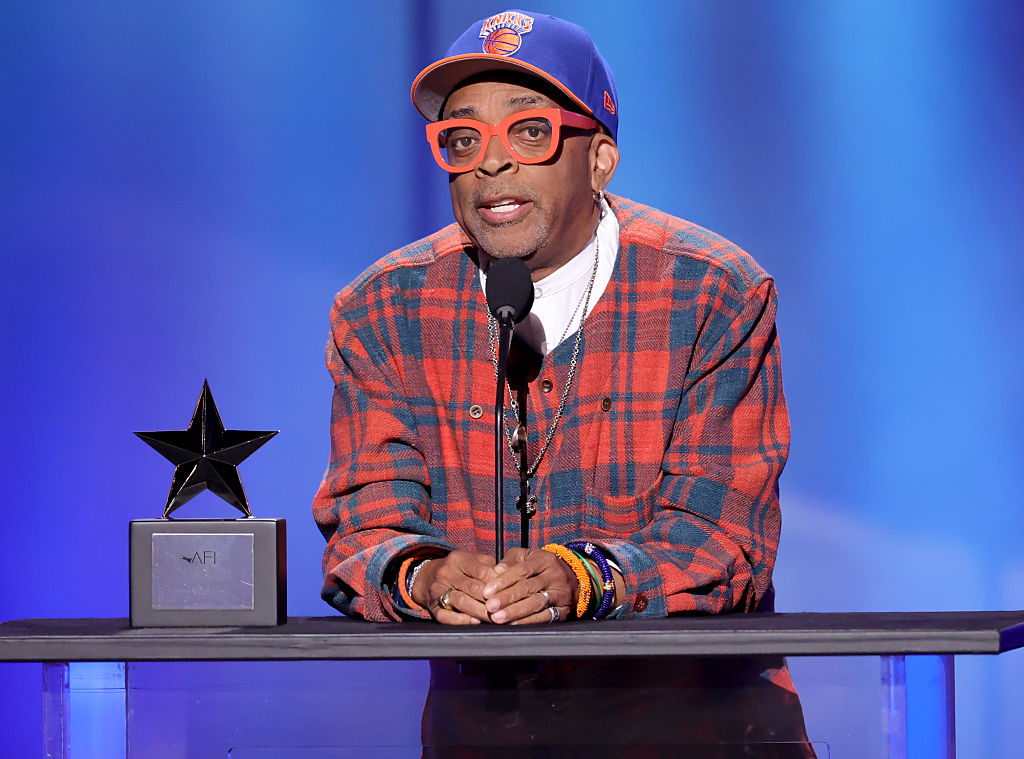
The best Spike Lee movie is Do the Right Thing, and it isn’t especially close. His 1989 portrait of a Brooklyn block on the hottest day of the year remains the film critics, programmers, and filmmakers reach for first when they talk about Lee, and it’s the one the Academy left off its Best Picture ballot the year Driving Miss Daisy won. That gap, between what the culture knew and what the industry was willing to reward, is the whole story of Spike Lee’s career.
He’s been at it since 1986, shooting Black life with a specificity nobody else in Hollywood could match, calling every film a “Spike Lee joint,” and refusing to soften any of it for comfort. The ranking below isn’t sorted by box office or by a review aggregator’s math. It’s sorted by what each film actually did, what it said, what it set in motion, and what’s still being argued about decades later. Twelve joints, in order.
The Best Spike Lee Movies at a Glance
Here are the twelve best Spike Lee movies, ranked:
- Do the Right Thing (1989)
- Malcolm X (1992)
- BlacKkKlansman (2018)
- 25th Hour (2002)
- Inside Man (2006)
- 4 Little Girls (1997)
- Jungle Fever (1991)
- Crooklyn (1994)
- He Got Game (1998)
- Da 5 Bloods (2020)
- School Daze (1988)
- She’s Gotta Have It (1986)
Spike Lee has directed more than two dozen narrative features plus documentaries, so this is a top-tier, not the full filmography. The ones below are the joints that define him.
What Is a Spike Lee Joint?
A “Spike Lee joint” is the term Lee puts in the credits of every film he directs, in place of the usual “a film by” credit. It’s branding, and it’s a statement: there’s no mistaking his work for anyone else’s.
The signature is built from a few recurring moves. The double dolly shot, where a character glides toward the camera as if floating, untethered from the ground. Characters who break the fourth wall and address you directly. A jazz score, often by Terence Blanchard, who has worked with him for decades. And Brooklyn, specifically Bed-Stuy and Fort Greene, the neighborhoods Lee grew up in and keeps returning to. He runs all of it through his own company, 40 Acres and a Mule Filmworks, named after the reparations promise the country made to formerly enslaved people and then broke.
What ties the joints together isn’t a genre. Lee jumps from romance to war film to heist thriller to documentary. It’s a point of view: every film is an argument about race, power, and who gets to tell the story. Even when he’s working a studio genre, the argument is in there.
The 12 Best Spike Lee Movies, Ranked
1. Do the Right Thing (1989)
This is the one. A single block in Bedford-Stuyvesant, one brutally hot day, a pizzeria, and a slow build to a death that still lands like a gut punch every time. Do the Right Thing refuses to tell you who was right, which is exactly why it has outlasted nearly everything else from its era. Made for $6.5 million, it earned more than $37 million and a Best Original Screenplay nomination, then watched a gentler movie about race take Best Picture. The Library of Congress added it to the National Film Registry. The Academy is still living it down.
2. Malcolm X (1992)
Three hours and twenty minutes, and not a slack one in it. Lee fought to direct it, fought over the budget, and delivered an epic worthy of the man, from the Harlem hustler years through the Nation of Islam, through the pilgrimage to Mecca that changed everything. Denzel Washington earned a Best Actor nomination and should have won. It’s the towering Lee-Washington collaboration, and it joined Do the Right Thing on the National Film Registry.
3. BlacKkKlansman (2018)
The true story of Ron Stallworth, a Black detective in Colorado Springs who infiltrated the Klan over the phone, with a white colleague standing in for the face-to-face meetings. John David Washington, Denzel’s son, plays Stallworth, and Lee turns a stranger-than-fiction premise into a film that’s funny right up until it drops you into Charlottesville. It won Lee his first competitive Oscar, for Best Adapted Screenplay, in 2019.
4. 25th Hour (2002)
Edward Norton plays a New York drug dealer spending his last day of freedom before a seven-year prison sentence. Lee, shooting in the city right after the towers fell, made one of the first films to truly reckon with post-9/11 New York, the smoke still hanging over Ground Zero in the background, a famous mirror monologue ripping into every group in the city. It’s the most underrated joint in the catalog and one of his best-directed.
5. Inside Man (2006)
Proof that Lee could walk into a studio genre and own it. A bank heist, a hostage standoff, Denzel Washington as the detective, and Clive Owen as the robber who’s always a step ahead. It’s tight, funny, and quietly political underneath the thriller mechanics. It also became his highest-grossing film, pulling in roughly $184 million worldwide, a reminder that the so-called difficult director could open a movie wide.
6. 4 Little Girls (1997)
Lee’s documentary about the four girls killed in the 1963 bombing of the 16th Street Baptist Church in Birmingham. He builds it from photographs, home movies, and interviews with the families, and he never lets the girls become symbols, they stay people, with futures stolen. It earned an Oscar nomination for Best Documentary Feature and stands as one of the essential films about the civil rights era.
7. Jungle Fever (1991)
An interracial affair becomes the frame for everything around it, class, family, the crack epidemic tearing through Harlem. Samuel L. Jackson’s performance as Gator, the addict brother, is the film’s devastating center and helped put him on the map. Lee dedicated the film to Yusuf Hawkins, the Black teenager killed by a white mob in Bensonhurst, which tells you the affair was never really the point.
8. Crooklyn (1994)
The softest joint Lee ever made, and one of his most personal. Co-written with his siblings, it’s a semi-autobiographical look at a Brooklyn family in the 1970s, seen mostly through the eyes of nine-year-old Troy. There’s no villain and no thesis here, just a kid, a block, and a family holding together. The warmth is the statement, coming from a director better known for heat.
9. He Got Game (1998)
Denzel Washington plays a father let out of prison to convince his basketball-prodigy son to sign with the governor’s alma mater. Lee uses the recruiting machine to get at fathers and sons, money and exploitation, and the way everyone lines up to profit off a young Black athlete before he’s old enough to know better. The Public Enemy and Aaron Copland score has no business working as well as it does.
10. Da 5 Bloods (2020)
Four Vietnam vets return to find buried gold and the remains of their fallen squad leader, played by Chadwick Boseman in one of his last roles. Delroy Lindo gives a performance for the ages as Paul, a man eaten alive by what the war and the country did to him. Released by Netflix in 2020, it landed in the middle of a national reckoning and felt like Lee had been waiting his whole career to make it.
11. School Daze (1988)
Lee’s second feature, a musical-comedy set at a historically Black college and loosely drawn from his own years at Morehouse. It takes on colorism, class, and respectability politics inside the Black community, subjects most filmmakers wouldn’t touch, and does it as a song-and-dance picture. It’s messy and ambitious and unlike anything else, which is the point.
12. She’s Gotta Have It (1986)
The one that started everything. Lee shot his debut in twelve days for $175,000, in black and white, playing the motormouth Mars Blackmon himself. Nola Darling, a Brooklyn woman dating three men on her own terms, was a kind of character Hollywood simply didn’t make. It won the Award of the Youth at Cannes, grossed $7.1 million, and announced that a new voice had kicked the door open. It ranks last here only because everything above it is more finished, not because it matters less.
Did Spike Lee Ever Win an Oscar?
Yes, but the timeline tells you everything. Lee directed for more than three decades before the Academy handed him a competitive award, finally giving him Best Adapted Screenplay for BlacKkKlansman in 2019. Before that, the recognition came sideways: a first nomination for the Do the Right Thing screenplay, a second for 4 Little Girls, and an honorary Oscar in 2015, the kind of award that doubles as an apology.
The wound underneath all of it is 1990. Do the Right Thing wasn’t nominated for Best Picture at all, while Driving Miss Daisy, a tidy film about a wealthy white woman and her Black chauffeur learning to get along, won the top prize. Lee’s film took two nominations and lost both. The snub was so glaring that presenter Kim Basinger called out the Academy live on the broadcast.
Lee has never let it go, and he’s right not to. Years later, he pointed out the obvious to the Daily Beast: nobody studies Driving Miss Daisy in film school. They study Do the Right Thing. The Academy picked the comfortable film, and history picked the necessary one. That’s the throughline of his whole career, the industry catching up, late, to what his audience already knew.
Where to Start With Spike Lee’s Movies
If you’ve never seen a Spike Lee joint, start with Do the Right Thing. It’s the purest distillation of everything he does. The heat, the humor, the refusal to resolve, in 120 minutes. Watch it before anything else.
From there, it depends on what you’re in the mood for. Want the epic? Malcolm X, and clear your evening, because it earns every minute of its runtime. Want something that moves like a thriller? Inside Man or BlacKkKlansman, both of which work as straight entertainment before the politics sneak up on you. Want the quiet, personal Lee most people don’t know? Crooklyn and 25th Hour. Want the documentary side? 4 Little Girls is the one.
The thing to know going in is that Lee’s filmography is uneven on purpose, he takes swings, and not all of them connect. But even the misfires are recognizably his, which is more than most directors with cleaner track records can say. A Spike Lee joint that doesn’t fully work is still more alive than a competent film by someone with nothing to say. Watch enough of them and the voice becomes unmistakable.
The Bottom Line
Rank these films however you want. Put Malcolm X first, swap 25th Hour for Inside Man, leave School Daze off entirely. The argument is half the fun, and Lee would probably enjoy it. What isn’t up for debate is the body of work itself: a filmography that documented Black American life across forty years with a clarity nobody else in Hollywood was offering, often while the industry that profited from it kept him at arm’s length.
The Oscars came around eventually. The films never needed them to. They were right the first time.
Spike Lee Movies: Frequently Asked Questions
What is Spike Lee’s highest-grossing movie?
Inside Man (2006) is Lee’s highest-grossing film, earning roughly $184 million worldwide. The bank-heist thriller reunited him with Denzel Washington and proved he could deliver a mainstream studio hit.
What was Spike Lee’s first movie?
His first feature was She’s Gotta Have It (1986), shot in twelve days on $175,000. It grossed $7.1 million and launched both his career and a new wave of American independent Black cinema.
Which Spike Lee movies are on the National Film Registry?
Do the Right Thing, Malcolm X, 4 little girls, and She’s Gotta Have It have all been selected by the Library of Congress for the National Film Registry as culturally significant works.
How many movies has Spike Lee directed?
Lee has directed more than two dozen narrative features since 1986, along with numerous documentaries, including the Emmy-winning Hurricane Katrina film When the Levees Broke. His most recent feature is Highest 2 Lowest (2025), another collaboration with Denzel Washington.
Did Spike Lee win an Oscar for Do the Right Thing?
No. Do the Right Thing earned a Best Original Screenplay nomination at the 1990 Oscars but won nothing, and it was famously left out of Best Picture entirely. Lee’s first competitive Oscar didn’t come until BlacKkKlansman in 2019.