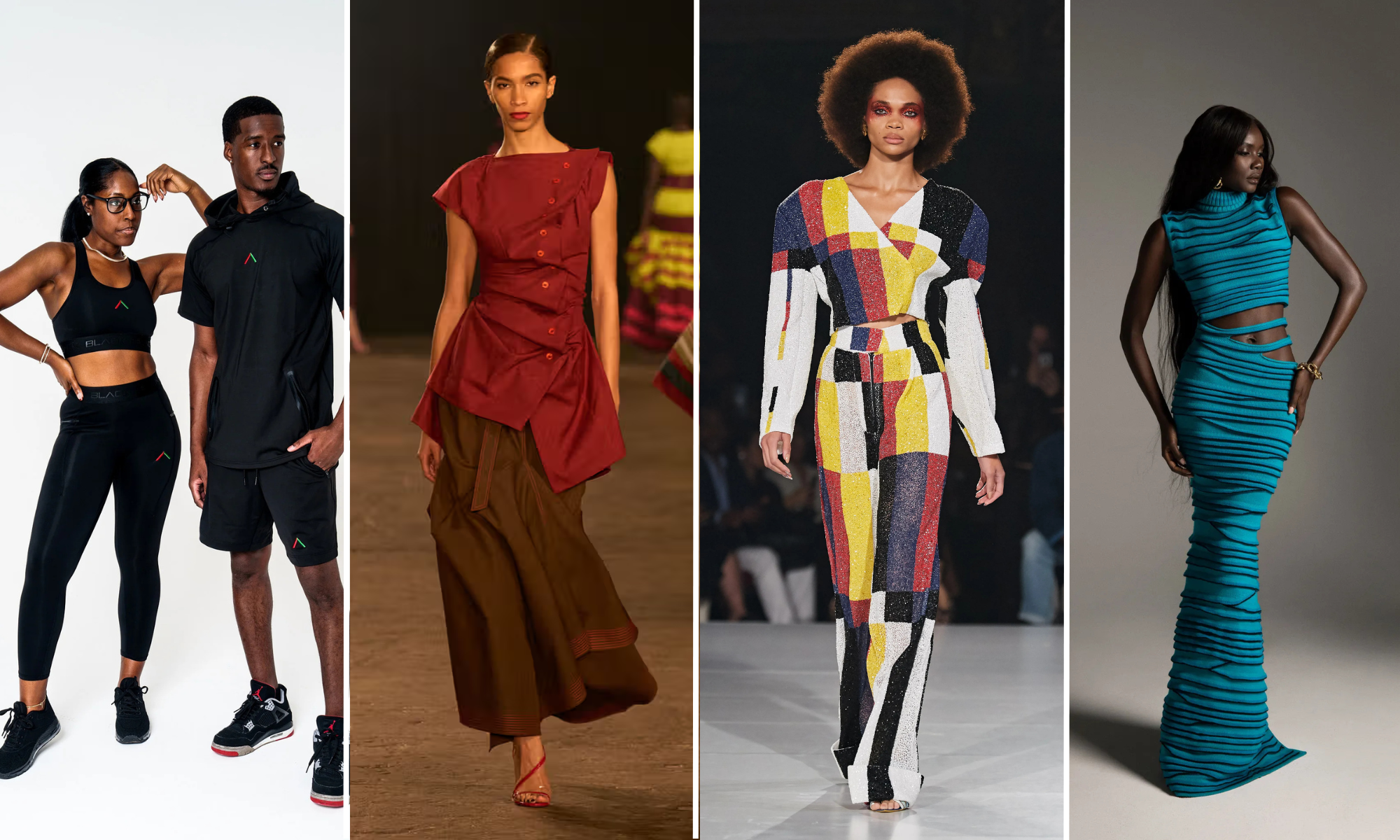
Black clothing brands aren’t a niche category. They’re the reason half the trends in your closet exist. From the streetwear silhouettes that luxury houses spent decades copying to the accessories that redefined what “It bag” means, Black designers have been setting the direction of fashion while the industry figured out whether to credit them or just borrow the look.
This isn’t a roundup of brands that happen to be Black-owned. It’s a list of labels that are doing something, building categories, challenging how fashion works, telling stories through clothes that most brands don’t have the range or the nerve to tell.
What Are the Biggest Black-Owned Clothing Brands Right Now?
Telfar
Telfar sits at the top of this conversation and has for years. Telfar Clemens founded the brand in 2005 while still a student at Pace University in Queens, but the real breakthrough came in 2014 with the Shopping Bag, the vegan leather tote that earned the nickname “Bushwick Birkin.” The bag starts at $150, which is a fraction of what most designer accessories cost, and that’s the point. Telfar’s motto, “Not for you, for everyone”, isn’t marketing language. It’s how the brand actually operates. The Bag Security Program, launched in 2020, lets anyone pre-order any bag in any size and color, guaranteed. No drops, no bots, no artificial scarcity.
Clemens won the CFDA/Vogue Fashion Fund in 2017 and took CFDA Accessories Designer of the Year in both 2020 and 2021. In November 2024, Telfar opened its first flagship store in SoHo, a 10,000-square-foot space with a built-in TV studio, because of course it does. Beyoncé, AOC, Bella Hadid, and Lil Nas X have all carried the bag. But what makes Telfar matter is that so has everyone else.
Fear of God
Fear of God, founded by Jerry Lorenzo in 2013 in Los Angeles, occupies the space between streetwear and luxury that nobody else had figured out how to fill. Lorenzo, the son of former MLB manager Jerry Manuel, attended Florida A&M and started the brand with $14,000. The label caught fire after Kanye West noticed its extra-long T-shirts, and Lorenzo went on to design custom looks for Justin Bieber’s Purpose Tour in 2016. The Essentials line, launched in 2018, brought the Fear of God aesthetic to a wider price range and became one of the most visible streetwear labels in the world. In 2024, Lorenzo partnered with Adidas to lead Fear of God Athletics, merging performance sportswear with his signature minimalism. Fear of God is fully independent, no outside investors, and revenue has doubled year-over-year since launch.
Denim Tears
Denim Tears is doing something nobody else in streetwear is doing. Tremaine Emory founded the brand in 2019, and every collection is a history lesson disguised as a drop. The cotton wreath, the brand’s signature motif, references the cotton fields where enslaved people were forced to labor, printed directly onto Levi’s denim. It’s confrontational and beautiful at the same time.
Emory’s work has entered the permanent collection at The Met’s Costume Institute. He served as creative director of Supreme from 2022 to 2023 before stepping down over allegations of systemic racism within the company. Denim Tears now generates tens of millions in annual sales and is planning store openings across the U.S. and in Tokyo.
Which Black-Owned Fashion Brands Are Shaping Luxury?
Wales Bonner
Wales Bonner is the name that answers this question definitively. Grace Wales Bonner launched her label in 2014 after graduating from Central Saint Martins and immediately started winning, the LVMH Prize in 2016, British Menswear Designer of the Year, CFDA International Men’s Designer of the Year in 2021. Her Adidas collaborations sell out immediately.
But the real headline landed in October 2025: Hermès appointed Wales Bonner as creative director of men’s ready-to-wear, making her the first Black woman to lead design at a major European luxury house. She replaces Véronique Nichanian, who held the role for 37 years. Her first Hermès collection debuts in January 2027. That’s not representation. That’s the top of the mountain.
Christopher John Rogers
Christopher John Rogers brings the kind of color and volume that makes you stop scrolling. The Baton Rouge native won the CFDA/Vogue Fashion Fund in 2019, at 25, and has dressed Michelle Obama, Beyoncé, Lizzo, and Zendaya. His clothes are joyful in a way that feels earned, not decorative. Rogers has also done collaborations with Target and Etsy, which means the work reaches beyond the red carpet.
Pyer Moss
Pyer Moss, founded by Kerby Jean-Raymond in 2013, uses fashion as a vehicle for something larger. Every runway show has been a statement, about Black history, about systemic injustice, about whose stories get told. Jean-Raymond became the first Black American designer invited to show at Paris Haute Couture Week and won the CFDA American Menswear Designer of the Year. The brand sits between streetwear and couture, and it operates on its own terms.
What About Affordable Black-Owned Clothing Brands?
Not every brand on this list retails in the four figures, and price point alone doesn’t determine quality or cultural weight.
Actively Black
Actively Black is a Black-owned athleisure brand built on reinvestment. The brand’s mission is straightforward: represent, uplift, and put money back into the community. With over 11,000 verified reviews and collaborations that include a recent partnership with civil rights photographer Cecil Williams, Actively Black makes premium basics, hoodies, tees, joggers, at prices that don’t require a payment plan. The brand has built a loyal following through quality and message.
The Marathon Clothing
The Marathon Clothing carries the legacy of Nipsey Hussle, who founded the brand as part of his vision for Black economic self-sufficiency in South Los Angeles. The brand continues to operate as a cultural touchstone, its navy and black staples carry a weight that goes beyond the garment.
Hanifa
Hanifa, founded by Congolese-American designer Anifa Mvuemba, built its audience entirely through social media before the industry paid attention. In May 2020, Mvuemba staged a 3D fashion show on Instagram Live, headless digital avatars wearing her Pink Label Congo collection, that went viral and generated over 2,000 pre-orders.
The brand, which Mvuemba started in 2012, is size-inclusive (XXS to 3XL), with pieces ranging from around $50 to $1,500. Hanifa didn’t wait for a major retailer to validate it. It went directly to its customer and built from there.
Are There Black-Owned Streetwear Brands Worth Knowing?
- Who Decides War, founded by designers Ev Bravado and Téla D’Amore, turns art denim and distressed knitwear into something that belongs in a gallery. The brand has become one of the most talked-about names in streetwear-meets-fashion, with pieces that tell visual stories through patchwork, embroidery, and unconventional construction.
- Daily Paper, co-founded in Amsterdam by three friends of Somali, Ghanaian, and Moroccan descent, is a tribute to Pan-African heritage through a streetwear lens. The brand uses custom prints, technical fabrics, and a global perspective that connects African diasporic identity to contemporary youth culture. It’s streetwear with a point of view that stretches well beyond one city or one reference point.
- Billionaire Boys Club, co-founded by Pharrell and Nigo in 2005, has been a fixture for nearly two decades. The brand’s space-themed graphics and bold colorways helped define a generation of streetwear, and it’s still putting out work that holds up. The sister brand, Ice Cream, runs alongside it.
- Brandon Blackwood built a name through accessories, specifically the “End Systemic Racism” tote that went viral in 2020. But the brand has evolved well beyond that moment. Blackwood’s bags, trunk minis, metallic shoulder bags, structured clutches, have been carried by Lupita Nyong’o, Solange, and Keke Palmer. The aesthetic is sharp, editorial, and priced for someone who wants designer without the designer markup.
Why the “Buy Black” Conversation Needs to Go Deeper
Every February, the same listicles circulate: buy Black for Black History Month. The brands on this list don’t need a designated month. They’re competing, and winning, against labels with ten times their resources, a hundred times their marketing budgets, and centuries of institutional access.
The real story isn’t that Black-owned clothing brands exist. It’s that they keep having to prove themselves in a system that was built without them in mind. Grace Wales Bonner didn’t get Hermès because the industry suddenly became fair. She got it because after a decade of work that nobody could ignore, the industry ran out of reasons to say no.
Telfar didn’t wait for Nordstrom to carry the bag. Hanifa didn’t wait for a New York Fashion Week invite. Denim Tears didn’t soften the message to make it easier for mainstream retail. These brands built their audiences directly, told their own stories, and forced the industry to come to them.
That’s not a feel-good narrative. That’s how it actually happened. And if your closet doesn’t reflect any of that yet, now you know where to start.