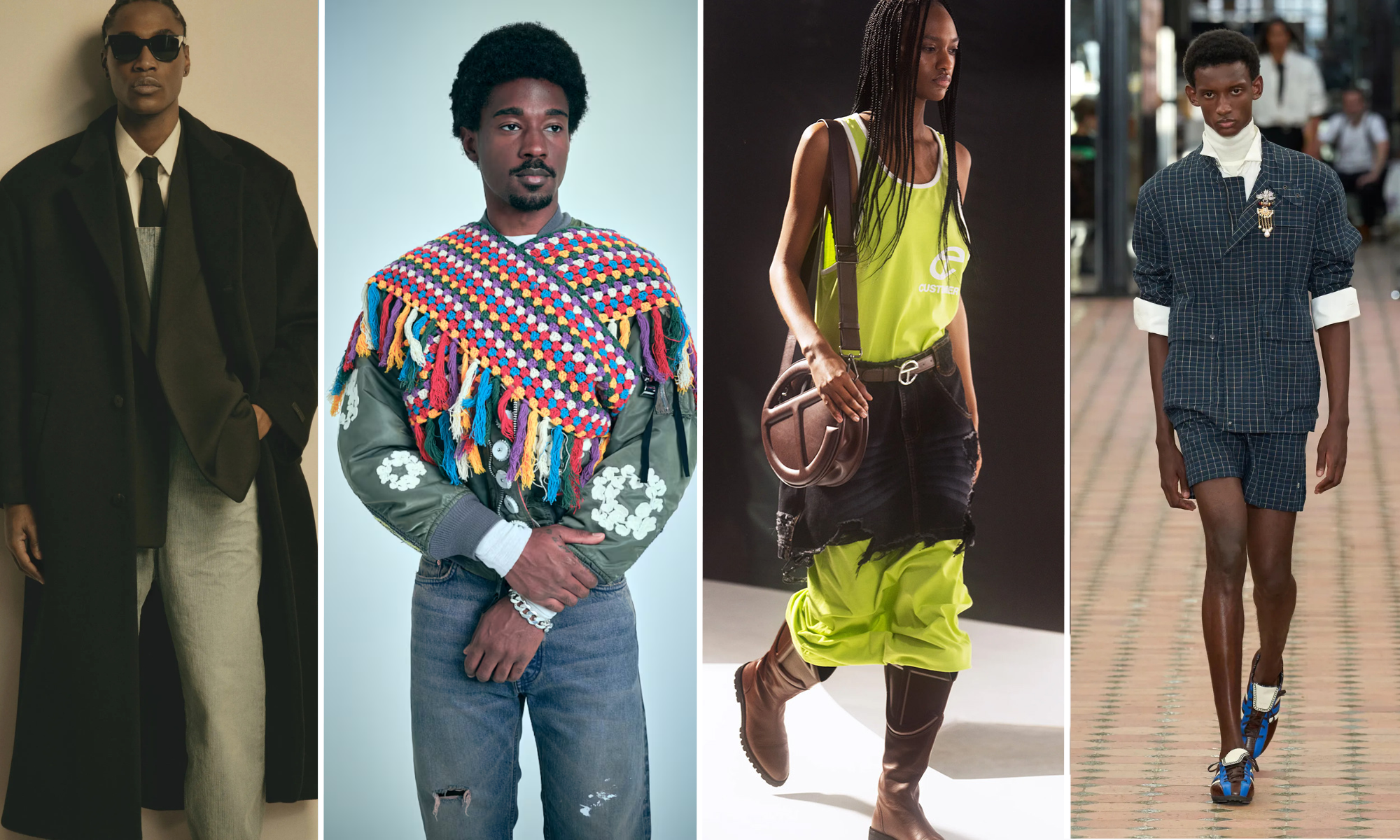
Black-owned fashion brands aren’t having a “moment.” They’re having a takeover. Grace Wales Bonner just got tapped to lead menswear at Hermès, the first Black woman to head design at a major European luxury house. Telfar’s Shopping Bag has become one of the most recognized accessories of the decade. Christopher John Rogers is dressing everyone from Beyoncé to Michelle Obama. And Aurora James’s Fifteen Percent Pledge has pushed nearly 30 major retailers to rethink whose products actually make it onto their shelves.
The brands on this list span luxury, streetwear, accessories, and everything in between. What they share isn’t a price point or an aesthetic, it’s ownership, creative control, and a refusal to wait for the fashion establishment to make room.
Here’s who you should know.
Which Black-Owned Fashion Brands Are Leading Luxury?
Wales Bonner
Grace Wales Bonner launched her label in 2014 after graduating from Central Saint Martins. She won the LVMH Prize in 2016 and quickly built a reputation for collections that fuse Afro-Atlantic storytelling with precise British tailoring. Her Adidas collaborations brought her work to a wider audience without diluting it.
Then came the Hermès appointment. In October 2025, she was named creative director of Hermès menswear, replacing Véronique Nichanian after a 37-year tenure. She’s the first Black woman to lead design at a major European luxury house. Her first Hermès collection drops in January 2027.
Hermès’s ready-to-wear division brought in €4.4 billion in 2024. She’s running one of the most commercially significant design roles in global fashion.
Christopher John Rogers
Rogers won the CFDA/Vogue Fashion Fund in 2019 at 25 years old, the third consecutive year a Black designer took the prize. The Baton Rouge native works out of Brooklyn and builds collections around bold color, structural silhouettes, and clothes that take up space rather than shrink into it.
His client list tells you everything: Michelle Obama, Zendaya, Lizzo, Tracee Ellis Ross. He’s done collaborations with Target and LVMH, and he’s one of the few young American designers operating at both high fashion and commercial scales without losing the thread.
LaQuan Smith
Smith started his brand at 21 and produces every piece in New York. The aesthetic is glamorous, precise, and unapologetically sexy—sheer fabrics, sharp cut-outs, and tailoring that treats the body as architecture. Rihanna, Beyoncé, Jennifer Lopez, and Zendaya have all worn his work.
His 2023 show on the Empire State Building observation deck remains one of the most talked-about NYFW moments in recent memory.
What Black-Owned Streetwear Brands Should You Know?
Telfar
Telfar Clemens, a Liberian-American designer from Queens, launched his unisex line in 2005, nearly two decades before the rest of fashion caught up to his vision. He won the CFDA/Vogue Fashion Fund in 2017, taking home $400,000.
The Telfar Shopping Bag, dubbed the “Bushwick Birkin,” became one of the defining accessories of the 2020s by doing something luxury fashion almost never does: making itself available. Telfar releases bags through timed drops and a Bag Security Program that lets anyone order at retail price. The brand’s motto is “Not for you, for everyone.” It’s a direct challenge to the scarcity model that luxury has relied on for decades, and the demand hasn’t slowed.
Fear of God
Jerry Lorenzo built Fear of God into one of the most influential labels in American fashion. His work sits at the intersection of streetwear, sportswear, and luxury—a zone he essentially created. His partnership with Adidas for the Fear of God Athletics line, plus collaborations with Nike and a diffusion line called Essentials, have made Fear of God one of the highest-grossing independent brands in the country. The brand’s relaxed silhouettes and earth tones helped define a generation of menswear.
What separates Lorenzo from the pack isn’t just the clothes, it’s the business. He’s one of the few Black designers who has built a genuine fashion empire without giving up creative control. The Essentials line alone generates revenue that most independent brands can only dream about, and he’s done it while keeping the brand’s identity tight.
Denim Tears
Tremaine Emory’s Denim Tears uses clothing as cultural commentary. His signature cotton wreath motif, a direct reference to the history of cotton harvesting and slavery, turns denim into a statement piece with genuine weight. The brand’s collaborations with Levi’s and Nike have brought those conversations into mass retail. Emory was also briefly the creative director at Supreme before departing in 2023.
Martine Rose
British-Jamaican designer Martine Rose has built a cult menswear label inspired by hip hop, rave, and punk subcultures. Her proportions run oversized, her patterns clash on purpose, and her designs merge the music and street cultures of London. She’s shown at Pitti Uomo and collaborated with Nike on a series of coveted sneaker releases.
Are There Black-Owned Brands Focused on Accessories and Bags?
Brandon Blackwood
Blackwood’s sleek, minimalist bags have been carried by Lupita Nyong’o, Solange, Keke Palmer, and Saweetie. The brand launched in 2015 and hit a commercial peak with the “End Systemic Racism” tote in 2020, but Blackwood has built a real accessories business beyond that single moment — structured handbags, top-handles, and shoulder bags with hardware that reads luxury without the markup.
What makes Blackwood worth watching is the price positioning. He’s filling a lane that barely existed: bags that look and feel like they cost four figures but price out at a fraction of European luxury. That’s not a compromise — it’s a business model that respects where his customer actually lives financially.
Brother Vellies
Aurora James founded Brother Vellies in 2013 to preserve traditional African shoemaking techniques while building a luxury accessories brand. The shoes are handmade using sustainable methods and African artisan traditions. James won a CFDA award in 2015, but her biggest impact may be the Fifteen Percent Pledge.
In June 2020, James launched the nonprofit, challenging major retailers to dedicate 15% of their shelf space to Black-owned businesses. Nearly 30 companies have signed on, including Sephora, Nordstrom, Macy’s, and Gap. The initiative has redirected an estimated $14 billion in revenue to Black-owned businesses. That’s not charity — it’s a structural shift in how retail works.
Which Black Owned Fashion Brands Are Redefining Women’s Wear?
Hanifa
Congolese-American designer Anifa Mvuemba made headlines with her 2020 virtual fashion show, 3D renderings of her designs walking an invisible runway on Instagram Live, no models required. The moment went viral because the clothes were undeniable: body-conscious, size-inclusive, and built for curves with a confidence that most luxury brands still can’t figure out.
Hanifa has since grown into a full-fledged brand with consistently sold-out drops and organic word-of-mouth that most labels would pay millions to replicate. Mvuemba doesn’t rely on traditional fashion marketing. She doesn’t need to. The designs are feminine, editorial, and wearable, a combination that shouldn’t be as rare as it is. Her pieces show up on your timeline because someone wore them and looked incredible, not because an ad budget put them there.
Fe Noel
Felisha Noel opened her first brick-and-mortar boutique at 19 in Brooklyn. Her namesake label draws from her Caribbean heritage, bold prints, vibrant colors, and silhouettes designed for women who want to be seen. Fe Noel’s pieces have the energy of vacation wear with the construction of ready-to-wear, which is harder to pull off than it sounds.
Cushnie
Carly Cushnie built her reputation on clean, sculptural designs that accentuate rather than hide. The brand’s sharp minimalism and non-traditional necklines have made it a red carpet staple; Michelle Obama, Beyoncé, Lupita Nyong’o, and Ava DuVernay have all worn her work.
What About Up-and-Coming Black-Owned Labels?
Theophilio
Edvin Thompson, Jamaican-born and Brooklyn-raised, launched Theophilio as a contemporary label that blends Caribbean nostalgia with New York energy. His collections explore gender norms, cultural identity, and political engagement through clothing that feels personal rather than academic. He won the CFDA American Emerging Designer of the Year in 2021.
Diotima
Rachel Scott’s Diotima centers on Jamaican craftsmanship, specifically crochet work done by a collective of Jamaican women. The brand merges artisan handwork with high-fashion silhouettes, creating pieces that carry real provenance. The clothing is elegant, textured, and produced through a supply chain that actually supports the community it draws from. In a fashion industry that loves to talk about sustainability and ethical production, Diotima is one of the few brands where those words actually map to what’s happening on the ground.
Pyer Moss
Kerby Jean-Raymond founded Pyer Moss in 2013 as a hybrid streetwear label that uses runway shows as cultural statements. His collections have addressed police brutality, the erasure of Black invention, and the emotional weight of being Black in America, and the clothes back it up. He won the CFDA/Vogue Fashion Fund in 2018 and was named creative director of Reebok in 2020.
Why Supporting Black-Owned Fashion Brands Matters Beyond the Purchase
The fashion industry has a long memory when it comes to trends it borrowed from Black culture, and a short one when it comes to crediting the people behind them. Dapper Dan was making custom luxury pieces in the 1980s. The brands whose logos he used sent lawyers. Three decades later, Gucci came calling with a collaboration—only after being publicly embarrassed for copying his work without credit.
That history matters because it’s not just history. The Fifteen Percent Pledge exists because Aurora James looked at Sephora’s shelves and saw the math: Black consumers spend billions at these stores. Black-owned brands occupied a fraction of the shelf space. The gap between spending power and representation was built into how retail buying works.
And even with the progress, the numbers are stark. Most of the designers on this list are operating without the institutional backing that their white peers take for granted. Fewer investors, fewer wholesale accounts, fewer doors open on the first knock. The fact that they’ve built what they’ve built anyway says something about the work. It also says something about the system they’re building inside of.
The brands on this list aren’t waiting for permission. Wales Bonner is at Hermès. Telfar redefined what a luxury bag can be. Christopher John Rogers is dressing the most photographed women in the world. The industry is finally catching up to what the culture already knew.