Colombia has expanded a Caribbean wildlife sanctuary by nearly 63,000 hectares, which gives coral reefs near the Panama border formal protection for the first time and widens habitat for four sea turtle species. The expansion took effect in May, and the ocean group Mission Blue wrote about it Sept. 30 in a post that Happy Eco News carried.
How Big the Colombia Coral Reef Protection Area is Now
The land and sea in question make up the Acandí, Playón and Playona Wildlife Sanctuary in Chocó, a Colombian department on the Caribbean coast that borders Panama. Mission Blue said the expansion brought the sanctuary to more than 89,000 hectares.
Rainforest Trust, which paid for the expansion, gives the figures in acres. The group said on May 20 that the sanctuary gained over 155,000 acres and now covers nearly 220,000 acres. Converted at about 2.47 acres to the hectare, 155,000 acres comes to roughly 62,700 hectares and 220,000 acres to roughly 89,000. The two organizations describe the same expansion in different units.
The original park was much smaller. Colombia created it on Dec. 18, 2013, as its 58th protected area, and added 26,232 hectares to the country’s marine protected areas, according to the International Coral Reef Initiative forum. Subtract that from the new 89,000-hectare total and the expansion comes to about 63,000 hectares, which matches the figure Mission Blue gave. The new land is 2.4 times the size of the original park.
World Wildlife Fund said the sanctuary tripled in size, from 65,000 acres to more than 220,000. The arithmetic gives a total about 3.4 times the original, so “tripled” rounds down. Rainforest Trust did not state how much it spent. Neither organization says how much of the new area is open water and how much is shoreline.
What the Sanctuary Protects at Sea
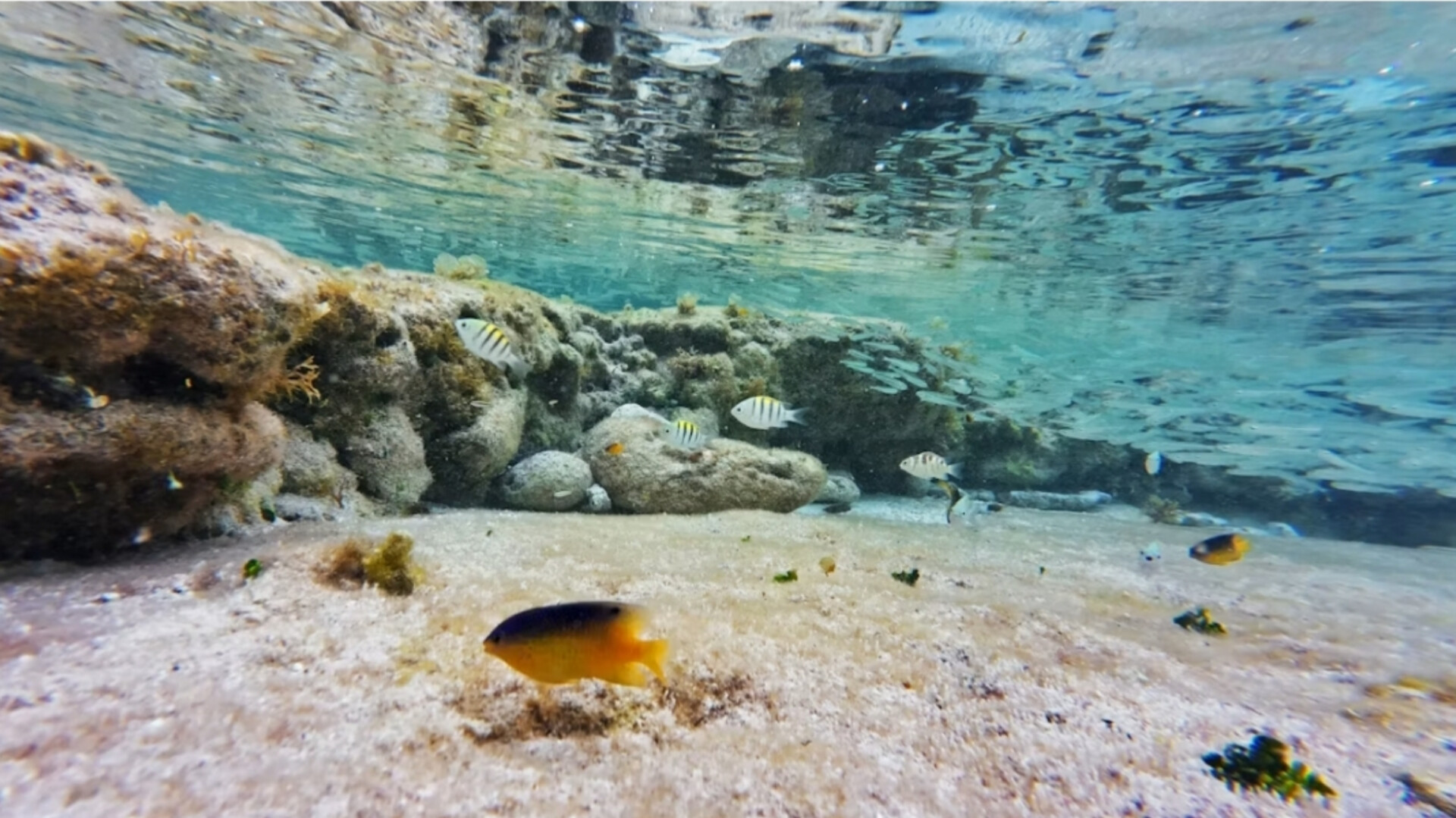
The expanded sanctuary covers coral ecosystems, seagrass beds, islets, mangroves and rocky shores, per Rainforest Trust. World Wildlife Fund says it holds one of the world’s largest leatherback nesting beaches. Mission Blue says the reefs of Capurganá and Cabo Tiburón, which sit inside the expansion, support four sea turtle species. Those are leatherbacks, hawksbills, green turtles and loggerheads.
Mission Blue designated the same reefs a Hope Spot in October 2018, in partnership with Foundation ICRI Colombia. That 2018 announcement listed the leatherback as red-listed by the International Union for Conservation of Nature and the hawksbill as critically endangered. The group also reported that the reefs were about 70% healthy.
Nohora Galvis, the executive director of Foundation ICRI Colombia, said at the time that most protected reefs “are at a maximum of 50% healthy.” Industrial fishing had been banned, and Mission Blue said rays, lobsters, sharks, dolphins and commercial fish had rebounded.
The 2018 and 2026 posts describe the legal picture differently. The 2018 announcement said the designation put all of Colombia’s coral reefs under international or national protection. The 2026 post says the May expansion extended formal protection to these reefs for the first time. The newer account is the one tied to a national park decision.
Who Made the Colombia Protection Happen
World Wildlife Fund says Parques Nacionales Naturales de Colombia, the national parks agency, will co-manage the sanctuary with three Afro-Colombian community councils: Cocomanorte, Cocomaseco and Cocomasur. The councils also backed the original 2013 declaration, per the International Coral Reef Initiative forum, which referred to them as Black Communities Councils. WWF Colombia, GIZ and Re:wild took part in the 2026 expansion, Rainforest Trust said.
Luisz Olmedo Martínez Zamora, director of Parques Nacionales Naturales, said in the Rainforest Trust account that the expansion is “more than a vast area on a map.” Emigdio Pertuz, who spoke for Cocomanorte, said in the World Wildlife Fund account that to protect the Caná “is to protect the water” and the mangrove.
Galvis has spent close to two decades connecting fishers, divers, scientists and government partners, per Mission Blue. Citizen science monitoring of the reefs has run since 2008. Mission Blue says that monitoring has documented recovering artisanal fisheries and positive trends for leatherbacks, though the post gives no counts.
Fishing matters to the local economy. The 2013 park supports artisanal fishing of more than 80 species, including sierra and snook, according to the International Coral Reef Initiative forum. The 2026 management plan keeps sustainable fishing in place alongside new tourism.
The Funding and Timeline Behind the Sanctuary Expansion
World Wildlife Fund says the expansion is part of Herencia Colombia, a Project Finance for Permanence initiative launched in 2022 with support from Enduring Earth. Enduring Earth, in the group’s account, has expanded or created nearly 44 million acres of marine protected areas.
Mission Blue lays out three steps. Local conservation work began in 2008. In 2024, the Darién North area received designation as a marine biosphere reserve. The May 2026 expansion brought the reefs inside the national parks system. From the start of monitoring to the signing is 18 years.
The Rainforest Trust account says a five-year management strategy was formalized at the official expansion event. The plan aims to strengthen governance, consolidate conservation work and promote fishing, ecotourism and cultural tourism. The plan’s budget is not published in either account.
Threats the Colombia Reef Protection Still Faces
World Wildlife Fund lists deforestation, drug trafficking, unsustainable fishing, plastic pollution, climate change and beach erosion as threats to the sanctuary. The 2018 Mission Blue post added a proposed cruise ship terminal and past oil drilling pressure, including one company that pulled out of operations 52 kilometers away. Neither the 2026 posts nor the World Wildlife Fund account says whether those two pressures persist.
The International Coral Reef Initiative forum put the 2013 declaration in a national context. Colombia’s coastal and marine protected areas then covered 1.4% of the country’s marine territory, short of the 10% goal that signatory countries to the Convention on Biological Diversity had set for 2020.
Neither 2026 account gives an updated national percentage. Image: Request a sanctuary or reef photo from Mission Blue or Rainforest Trust through their media contacts. Both organizations hold rights to their own images, and Colombian government imagery is not public domain, so any use needs written permission.