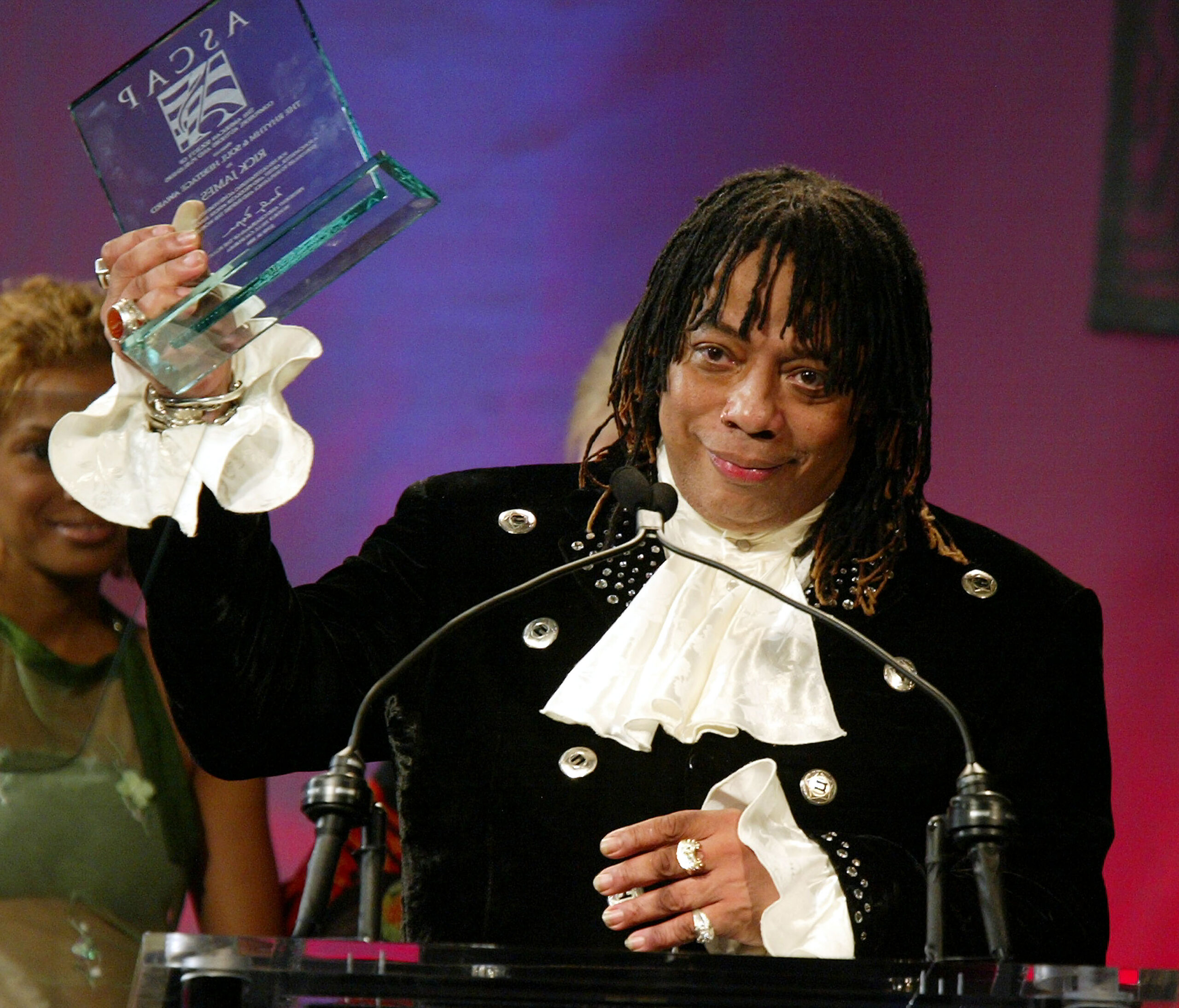
Rick James died on Aug. 6, 2004, at age 56, just months after an unexpected pop culture comeback put his name in front of a new generation. The Los Angeles County coroner ultimately ruled his death accidental and attributed it to a heart attack caused by an enlarged heart, with pneumonia and the effects of multiple drugs listed as contributing factors.
For younger viewers, James had suddenly become familiar again through Dave Chappelle and Charlie Murphy’s famous “Chappelle’s Show” sketch. But the joke was only one part of James’ final act. He was reconnecting with longtime collaborator Teena Marie and watching songs he made decades earlier remain embedded in popular culture.
How Did Rick James Die? What the Coroner Found
James was found dead at his residence near Universal City on Aug. 6, 2004. An initial autopsy did not establish a cause of death, and the Los Angeles County coroner’s office waited for toxicology and other testing before issuing its final findings.
The coroner’s findings were announced on Sept. 16, 2004, about six weeks after James’ death. The Los Angeles Times reported that toxicology testing found nine drugs in his system: methamphetamine, cocaine, alprazolam (Xanax), diazepam (Valium), bupropion (Wellbutrin), citalopram (Celexa), hydrocodone (Vicodin), digoxin and chlorpheniramine.
According to an Associated Press report citing coroner spokesman David Campbell, James died from a heart attack caused by an enlarged heart. Pneumonia and the effects of multiple drugs were also listed as contributing factors.
However, Campbell emphasized that none of the substances detected were present at independently life-threatening levels. “He didn’t die of a drug overdose,” Campbell said. The coroner classified the death as accidental.
James had also dealt with serious health problems before 2004. The Los Angeles Times reported that he had previously suffered a stroke and undergone hip replacement surgery, yet he had returned to performing by the final months of his life.
Rick James Lived to See His ‘Chappelle’s Show’ Resurgence
On Feb. 11, 2004, “Chappelle’s Show” aired “Charlie Murphy’s True Hollywood Stories: Rick James,” with Dave Chappelle portraying James and the real James appearing in the episode. The sketch became one of the show’s defining moments and gave James a new wave of recognition.
The Los Angeles Times reported after his death that James embraced the renewed attention. He and Chappelle had even discussed the possibility of the comedian portraying him in a film about his life.
James was still working as that renewed attention grew. In June 2004, he appeared at the BET Awards with Teena Marie for a reunion performance of “Fire and Desire,” one of the songs most closely associated with their musical partnership.
The BET appearance was not the end of James’ return to the stage. The Los Angeles Times reported that he performed on July 26 at Universal Amphitheatre with Marie and Morris Day and the Time, less than two weeks before his death.
James was also still creating music. In its Aug. 7, 2004, obituary, the Los Angeles Times reported that he had finished an album that was then expected to be released the following year. Separately, a final studio album titled “Deeper Still” was released posthumously. AllMusic reports that the album was recorded in 2003 and 2004 and released on May 15, 2007, nearly three years after James’ death.
James’ Catalog Outlived the Comeback
James did not need the “Chappelle’s Show” revival to make his music relevant again. The sketch put him back in front of a new audience, but his catalog had already been moving through later generations of R&B, funk and hip-hop for years.
“Super Freak,” from his 1981 album “Street Songs,” supplied the instantly recognizable foundation for MC Hammer’s “U Can’t Touch This.” James received a songwriting credit on Hammer’s hit and shared the 1991 Grammy for Best Rhythm & Blues Song, the only Grammy win of his career.
Decades later, “Super Freak” found another major audience. Nicki Minaj interpolated the song on her 2022 single “Super Freaky Girl,” which debuted at No. 1 on the Billboard Hot 100. The chart-topping release arrived 18 years after James’ death, underscoring how far his music continued to travel beyond his own recording career. His catalog also included “Give It to Me Baby,” “Mary Jane” and “Fire and Desire,” while his work as a writer and producer extended to artists including Teena Marie, the Mary Jane Girls and the Temptations.
That longevity helps explain why James’ final months feel unusual in retrospect. He was alive to see pop culture rediscover him while continuing to perform and record. James’ life ended in 2004, but his music did not remain confined to that era. Later releases, samples and interpolations showed that his catalog could keep finding audiences long after he was gone.