More than a week after powerful storms tore through northwest Indiana, tens of thousands of people are still without electricity. Gary and parts of Lake and Porter counties have been among the hardest hit. Residents describe long lines for gas and ice, spoiled food, closed schools and growing frustration as their communities wait for the lights to come back on.
“We Are in Trouble in Indiana”: Residents Describe a Crisis
For people living in northwest Indiana, the storm has become much more than a bad weather event. It’s turned into a prolonged disruption to everyday life.
A TikTok creator living in Indiana described the situation as a “massive crisis,” warning viewers, “We are in trouble in Indiana.” Her report reflects how many residents feel after days without electricity, reliable services and basic conveniences most people take for granted.
Gary, Merrillville, Hobart, Crown Point, Schererville and Valparaiso have all felt the effects of the storm system. Some neighborhoods are facing especially long outages. The National Weather Service had warned of severe thunderstorms across those same communities before the storm hit.
The scale of the disruption has been extraordinary. NIPSCO serves about 500,000 electric customers across northern Indiana. According to Lakeshore Public Media, the utility said roughly 301,000 of them lost power on Aug. 11 alone, more than 60% of its entire base. Company officials called it the largest outage event in the utility’s 137-year history.
For residents who’ve gone days without power, the problem goes well beyond sitting in the dark. Refrigerators stop working, food spoils, phones become hard to charge, and people have to hunt down places to get fuel, ice or other essentials.
“It’s Like a Horror Movie”: No Gas, No Power, Nowhere to Go
Another resident described the experience in stark terms: “It’s like a horror movie.” She went on to describe a situation where there was “no gas, no power, nowhere to go. We are stuck.”
That sense of being trapped has echoed through the community as residents deal with the practical fallout of the extended blackout. Local reports describe long lines at gas stations, where people wait to fill vehicles, portable generators and gas containers. Some residents have also struggled to find ice and other necessities.
Schools have felt the impact too. Gary’s school district stayed closed as the community dealt with the ongoing outage. Other districts pushed back the start of the school year over safety concerns. Medical equipment, generator use and the financial strain of missing work have all become growing concerns. For families already struggling financially, days without electricity can quickly turn into something far more than an inconvenience.
Some residents have also raised concerns about crime and security during the outage. Social media claims about theft and looting have circulated, but residents should treat those individual reports cautiously unless local authorities confirm them.
What Caused the Indiana Power Outages?
The National Weather Service’s Storm Prediction Center classified the Aug. 11 event as a derecho, a fast-moving, long-lived line of thunderstorms capable of hurricane-force winds. To qualify, a storm has to carve a damaging wind path of at least 250 miles. This one stretched roughly 330 miles, from eastern Iowa through northern Illinois and into Indiana, and even continued toward Ohio.
The Guardian reported that Indiana was the hardest-hit state in the wider Midwest outage event, with more than 267,000 outages recorded on Aug. 13. NIPSCO alone had about 258,885 customers without service at that point. That number was part of a broader multistate total that topped 1 million customers on the storm’s first night.
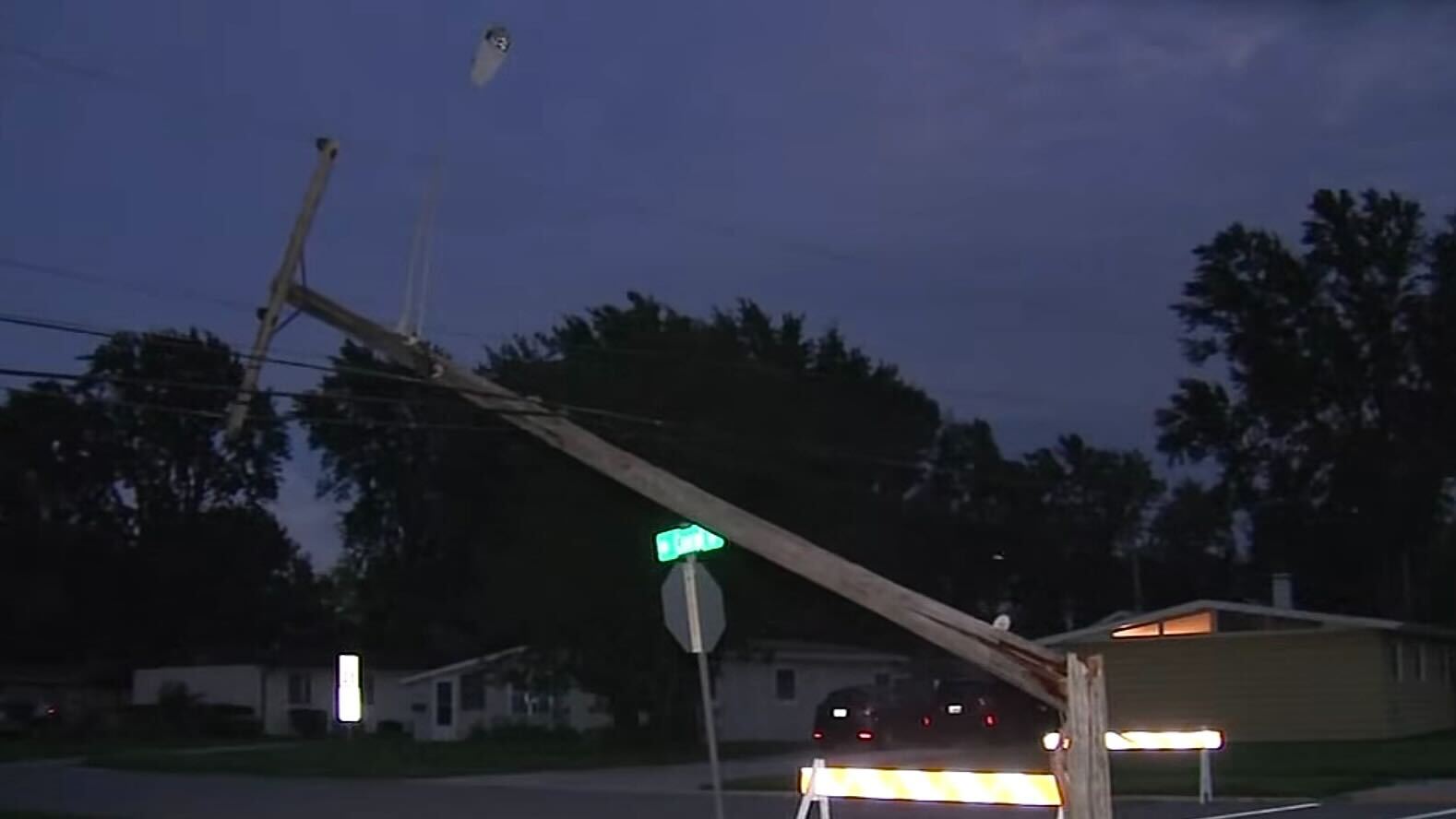
The damage ran deep enough that restoring electricity was never going to be as simple as flipping the grid back on. Crews have had to replace damaged poles, clear fallen trees and repair sections of the transmission and distribution network, including several damaged substations.
What Is Being Done to Restore Power?
NIPSCO has brought in employees, contractors and mutual-aid crews to work around the clock on repairs, including roughly 1,200 mutual-aid crews it pulled in from other states. The utility initially expected to restore power to 90% of affected customers by Aug. 18 and aimed to get everyone back on by Aug. 21.
As of Aug. 20, The Associated Press reported about 68,000 NIPSCO customers still without electricity, with more than 20,000 outages in Gary alone. Full restoration in parts of Gary could stretch until Aug. 25, since hundreds of utility poles still need replacing.
National coverage has documented the destruction across the Midwest, but some northwest Indiana residents feel the scale of what they’re going through hasn’t gotten enough attention. That sentiment is now spilling onto TikTok and other social platforms, where residents document the blackout, the long waits for essentials and what daily life looks like without power.
Now, the question isn’t simply when the storm will be over. It’s when life will finally return to normal. Learning how to manage stress in times like this really helps.