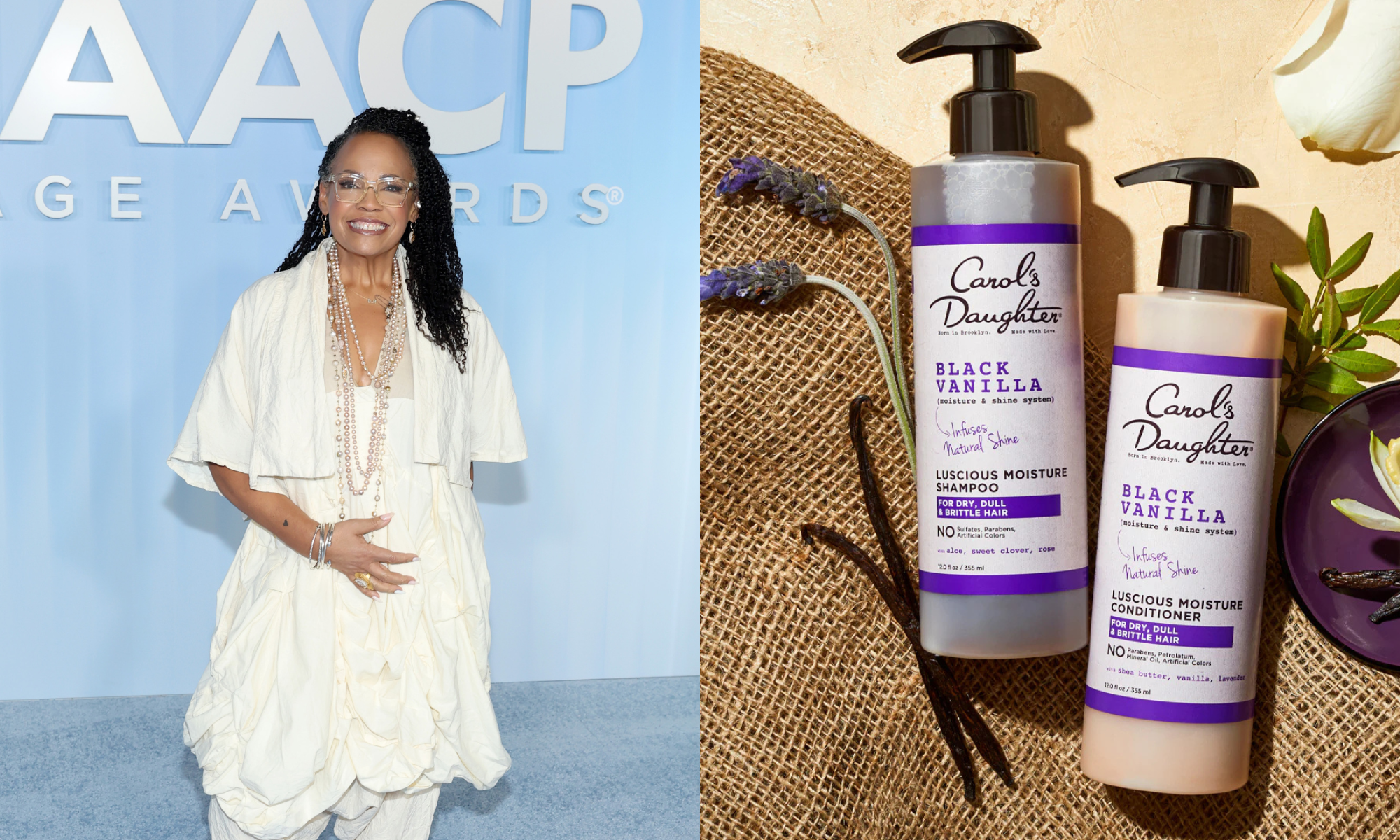
Yes, Carol’s Daughter is Black owned. As of March 2025, founder Lisa Price reclaimed the brand she built from her Brooklyn kitchen more than 30 years ago after L’Oréal USA announced the sale of the company back to Price and her business partner. Price now serves as President with an equity stake, meaning she’s not just the face of the brand again. She’s running it.
That’s the short answer. The longer one involves a Brooklyn apartment, a Cosby Show paycheck, Jada Pinkett Smith’s investment, a decade inside a corporate conglomerate, and a community that never stopped asking whether the brand still belonged to them.
Who Is Lisa Price, the Founder of Carol’s Daughter?
Lisa Price was born May 18, 1962, in Brooklyn, New York. Before she was a beauty mogul, she was working in television production, including on The Cosby Show and its spinoff Here and Now, per Wikipedia. Making beauty products wasn’t the career plan. It was a hobby that wouldn’t stay small.
The beauty brand started as a side project. Price had been experimenting with fragrances and essential oils at home, mixing body butters and moisturizers for friends and family. Her mother, Carol, the brand’s namesake, told her to sell them at the church flea market. That was 1993. Price began selling handmade products at craft fairs and flea markets in her Bedford-Stuyvesant neighborhood, working out of her kitchen with about $100 in startup capital.
She wasn’t thinking about a beauty empire. She was thinking about formulas that actually worked for Black hair and skin, without the harsh chemicals that dominated the market at the time. The early ’90s natural hair movement was just getting started, and Price was right there at the beginning, making products by hand for women who had been ignored by mainstream beauty for decades.
The ingredients were simple, shea butter, jojoba oil, almond oil, and the results were better than anything sitting on drugstore shelves marketed to Black women at the time.
How Did Carol’s Daughter Grow From a Kitchen to a National Brand?
Slowly, and then all at once.
For six years, Price ran the business out of her home. The first Carol’s Daughter boutique opened in Fort Greene, Brooklyn, in 1999. The e-commerce site launched in 2000. And then came the moment that changed the trajectory of the entire company.
In 2002, Price appeared on The Oprah Winfrey Show. The Carol’s Daughter website crashed as 17,000 buyers flooded the site. That kind of exposure doesn’t come with an instruction manual, and Price was still learning the business side of things in real time.
By 2005, a group of celebrity investors including Jay-Z, Will Smith, Jada Pinkett Smith, and music executive Steve Stoute invested $10 million in Carol’s Daughter to help expand the brand’s reach. Other investors included Interscope Records chief Jimmy Iovine, investor Andrew Farkas, and music executive Tommy Mottola. Price opened a flagship store in Harlem, launched on HSN in 2008, and by 2011 was leading one of the most recognized natural haircare brands in the country.
That celebrity investment wasn’t just capital, it was cultural validation at a time when Black-owned beauty brands rarely got that kind of backing.
This wasn’t a venture-backed startup with a team of MBAs. This was a woman who started mixing products in her apartment and built it into something real, with community support, celebrity co-signs, and a customer base that treated the brand like family.
Why Did Lisa Price Sell Carol’s Daughter to L’Oréal?
Here’s where the story gets honest.
Price brought on equity investors in 2007 with a three-to-five-year plan to scale and eventually sell. Then the 2008 recession hit, and sales took a beating. Her investors needed their money back, and the timeline compressed.
In October 2014, L’Oréal USA acquired Carol’s Daughter. The brand had net sales of $27 million per L’Oréal at the time of the deal. The acquisition came roughly a month after the brand’s retail arm had emerged from Chapter 11 bankruptcy.
The backlash was immediate. Black consumers felt the brand had been taken from them. Price heard it directly and addressed it head-on in a Helm interview: “Technically are we Black-owned? No. But are we Black-founded and Black-led? Yes.”
She also described the financial reality plainly: “Unless money magically fell out of the sky or I found someone who wanted to buy out all my partners, the only way everyone would recoup what they put in was through a sale.”
That’s the part of the story that doesn’t fit neatly into a headline. Price didn’t sell because she wanted out. She sold because the business needed it, her investors needed it, and L’Oréal was the partner who agreed to let her stay on and keep running things. The choice wasn’t between keeping the brand Black-owned and selling it. It was between selling to the right buyer or watching the company collapse under its financial obligations.
Under L’Oréal, distribution expanded significantly, from around 3,000 retail doors to international markets including Canada, the UK, and Europe. But long-time customers noticed changes in the formulas, and the conversation about ownership never went away. Especially after 2020, when the push to support Black-owned businesses gained new urgency.
Who Owns Carol’s Daughter Now?
On March 3, 2025, L’Oréal USA announced it was selling Carol’s Daughter. Price now co-owns the brand alongside Joe Wong, a finance veteran who has previously acquired several other brands from L’Oréal, including Ambi Skincare, AcneFree, Baxter of California, and Dermablend. Price holds the title of President and has an equity stake in the new partnership.
The financial terms weren’t disclosed. L’Oréal initially didn’t even name Wong publicly—they described him only as “an independent beauty entrepreneur with a proven track record.” Industry insiders identified him quickly.
Price described the partnership in a March 2025 interview: “Joe prefers to be behind the scenes. He’s like, ‘This is your brand. You know this better than I do. I’m just here to help you figure it out.’”
She also made the moment personal in her Instagram announcement: “My dreams are not finished. Today, I begin a new chapter and reclaim the indie spirit of my brand as its forever founder and newly appointed president.”
The transition from L’Oréal’s infrastructure to independent operations won’t happen overnight. Price has said new product development could take up to a year, but in the meantime, the brand plans to reconnect with its community through pop-ups and events. Long-time fans are already requesting the return of discontinued body products and original formulas from the pre-L’Oréal era.
What Does Carol’s Daughter’s Return Mean for Black Haircare?
Carol’s Daughter coming back to its founder is the exception, not the rule. The pattern in Black haircare over the past two decades has mostly gone one direction: Black founders build, conglomerates buy, formulas change, community trust erodes.
SheaMoisture sold to Unilever in 2017. Soft-Sheen was acquired by L’Oréal in 1998. Mane Choice, founded by Courtney Adeleye, was acquired by MAV Beauty. African Pride is now owned by Indian conglomerate Godrej. In almost every case, the sale meant Black ownership ended permanently.
What Lisa Price pulled off is rare. She sold under financial pressure, stayed through the corporate years, kept her name and credibility intact, and then found a way back. That arc—building the thing, losing control of the thing, and then reclaiming the thing—is a story that hits differently when you understand how few Black founders in beauty have managed to do it.
It also says something about the current market. L’Oréal has been shedding smaller brands, and investors like Wong are scooping them up at lower valuations. That creates openings for founders like Price to step back in, not because the system suddenly became fair, but because the math changed.
Carol’s Daughter didn’t just come home because the culture demanded it. It came home because a woman who started making products in her kitchen 32 years ago never actually left.