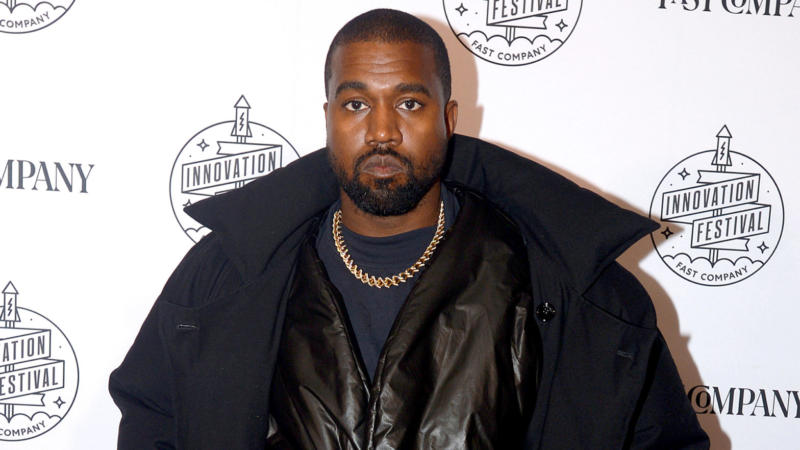
Kanye West is set to stand trial Oct. 12 in Los Angeles County Superior Court over a former Donda Academy security guard’s claim that he was fired in 2022 for refusing to cut his dreadlocks, in a case seeking roughly $23 million in damages.
What the Lawsuit Alleges
Benjamin Provo, a Black former guard at West’s private school in Simi Valley, California, sued West in 2024, claiming he was terminated after declining an order to cut hair he wore for religious reasons. Provo’s suit alleges West directed employees to shave their heads, that Black staff were treated worse than white staff and were yelled at, and that books by prominent Black authors and leaders were removed from the school, according to TheGrio and Atlanta Black Star.
West denies firing Provo over his hair and denies all discrimination claims; his legal team also argues Provo was technically employed by a third-party staffing company rather than by West directly, according to court filings cited by both outlets. West has not issued a public statement addressing the specific allegations.
The case is a nonjury trial, meaning a judge rather than a jury will decide the outcome. It is one of several pieces of litigation to come out of Donda Academy, the K-12 school West founded that also drew separate lawsuits from teachers over alleged working conditions, some of which have since settled.
What a Former Chief of Staff Said Under Oath
Milo Yiannopoulos, who served as West’s chief of staff, testified in a deposition that employees at the school “must accept the provocative way Ye talked about religion” and warned that anyone with “really thin skin about racially charged remarks… this really is not the company for you,” according to TMZ. That testimony, from someone who ran West’s day-to-day operations rather than an outside critic, goes directly to Provo’s central claim: that the workplace tolerated racially charged conduct as a condition of employment rather than as isolated incidents.
The Fight Over an Insanity-Style Defense
Provo’s legal team is separately trying to block West from using a mental-fitness defense at trial. TMZ reported Sept. 1 that Provo’s attorneys filed a motion opposing any attempt by West’s side to argue an “unsound mind” defense, the kind of claim that could shift the trial’s focus from whether discrimination occurred to West’s mental state at the time.
A related dispute concerns whether West’s past public statements and social media posts, some of which have drawn accusations of antisemitic and racially charged rhetoric, can be introduced as evidence of a broader pattern rather than excluded as prejudicial.
The School at the Center of the Case
Donda Academy is the private K-12 school West founded and named after his late mother,
Donda West, who died in 2007. The school has operated out of facilities in Simi Valley, California, and has drawn scrutiny before Provo’s case: former teachers have separately alleged inadequate classroom conditions and abrupt changes to curriculum and staffing, allegations that produced their own lawsuits, some of which West’s side resolved through settlement rather than trial.
Provo’s case is the first tied to the school to allege race-based discrimination specifically, rather than working-condition complaints, and the first scheduled to proceed to an actual trial date rather than settle beforehand.
Why the Third-Party Employer Argument Matters
West’s claim that Provo was technically employed by a staffing company rather than by West personally is not a minor technicality. Under California employment law, discrimination liability generally attaches to the entity that controls the terms and conditions of a worker’s employment, not necessarily the entity that issues the paycheck.
If West’s legal team can establish that a staffing company, not West or Donda Academy directly, controlled Provo’s hiring, supervision and termination, that could shift or limit West’s personal liability even if a judge finds the underlying discriminatory conduct occurred. That legal question is likely to be argued alongside, and potentially before, the substance of Provo’s discrimination claims once trial begins.
A School With a Pattern of Litigatio
Donda Academy has faced multiple lawsuits since opening, including from teachers who alleged unsafe or inadequate conditions, some of which West’s side settled rather than litigated to trial. Provo’s case differs from those in that it centers on race and religious accommodation rather than working conditions broadly, and it is proceeding to an actual trial date rather than settling, which will put sworn testimony, including further examination of Yiannopoulos’s account, into the public record for the first time in this specific dispute.
How an “Unsound Mind” Defense Would Change the Trial
If a judge allowed West to argue a mental-fitness defense, it would not necessarily excuse discriminatory conduct outright, but it could shift the trial’s central question away from whether Provo was treated unlawfully and toward West’s state of mind at the time, a different and, for Provo’s team, riskier legal fight to have in front of the same judge who will decide both issues.
That is why Provo’s attorneys moved specifically to block the defense before trial rather than waiting to contest it once proceedings begin: allowing the argument to surface at trial, even if ultimately rejected, could color how the judge weighs the discrimination evidence itself.
What Happens Next
The nonjury trial begins Oct. 12 in Los Angeles County Superior Court. Ahead of that date, the judge is expected to rule on the pending disputes over West’s proposed mental-fitness defense and over what evidence, including his past public statements, can be introduced. Neither Provo’s attorney nor West’s legal team has commented publicly beyond the positions already reflected in court filings.