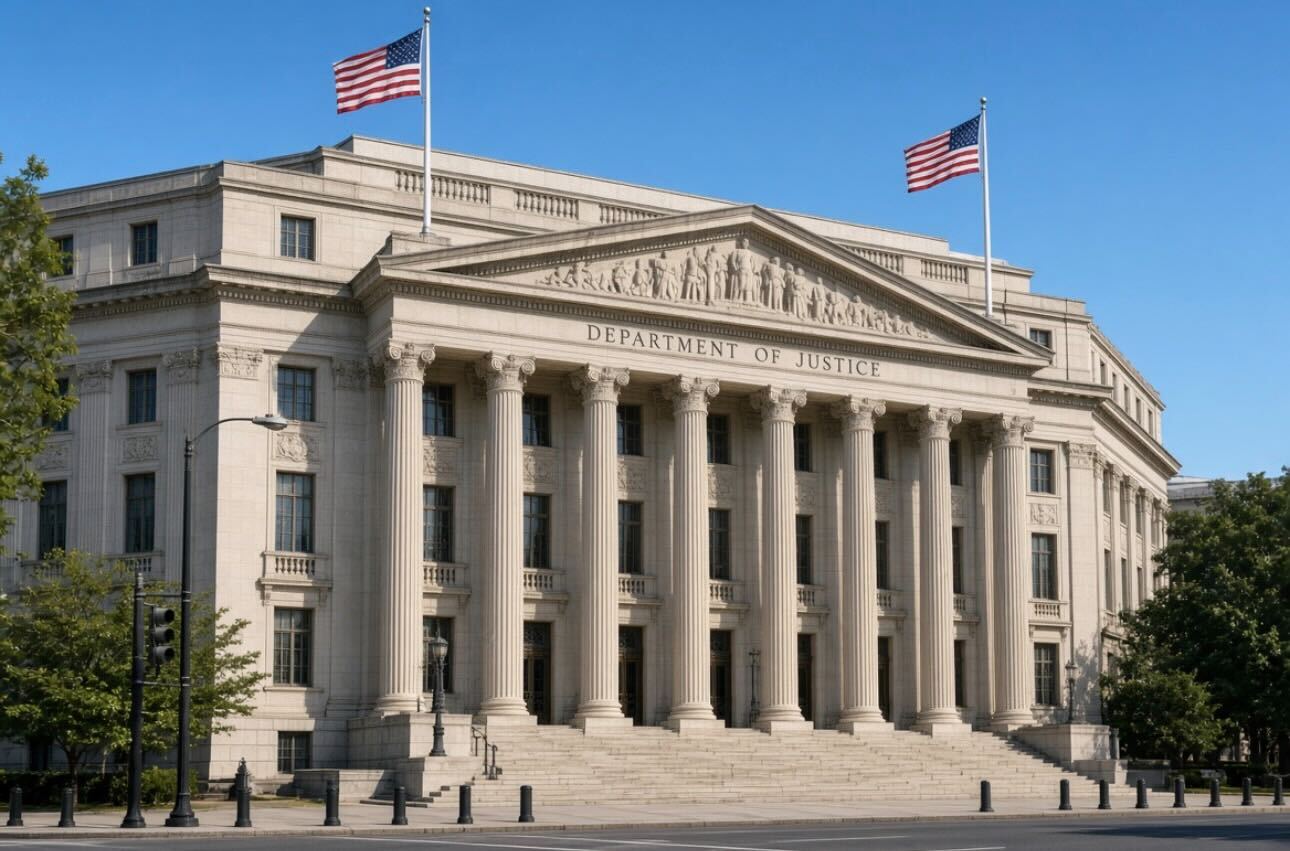
The Justice Department’s Civil Rights Division said Oct. 21 that Ohio State University’s College of Medicine discriminated against white and Asian applicants in admissions for the 2023, 2024 and 2025 incoming classes. Ohio State said it strongly disagrees and will contest the findings.
What the Justice Department Found
The department’s announcement says the college violated Title VI of the Civil Rights Act of 1964, which bars discrimination based on race or color. It also cites the Supreme Court’s 2023 decision in Students for Fair Admissions v. Harvard, which the department says banned race discrimination in admissions.
The department describes a “Holistic Approach” in which screeners score applicants in three categories with different maximum points: Attributes at 12, Experiences at 16 and Metrics at 8. The maximums add up to 36 points, a calculation from the department’s figures. Some applicants then receive an interview. The department said that among screened and interviewed applicants, Black applicants were about 2.8 times as likely to be admitted as Asian applicants with equal credentials.
It also describes what it calls a “side door,” a pathway that admits some applicants without a screener score or an interview. In 2024 and 2025 combined, the department said, Black applicants were four times as likely as white applicants with comparable credentials to be admitted through that pathway, and no Asian applicants were admitted through it. Harmeet Dhillon, the assistant attorney general for civil rights, said in the department’s announcement that a university’s admissions process and all its stages “should apply equally to all applicants regardless of race.”
What the Findings Letter Reports
The department’s findings letter, dated Oct. 21 and addressed to Ohio State’s Office of Legal Affairs, reviewed seven admissions cycles from 2019 to 2025. It reports its comparisons as odds, not as simple percentages. For 2025, it says Black applicants had 3.3 times the odds of admission as white applicants with similar credentials, and Hispanic applicants had 2.4 times the odds.
At the interview stage in 2025, the letter says Black applicants had 7.7 times the odds of Asian applicants with similar credentials and 4.6 times the odds of white applicants. Hispanic applicants had 2.3 times the odds of white or Asian applicants. Among the factors it ranked at the interview stage, with Asian applicants as the baseline, the letter lists Ohio residency as the strongest boost, followed by Black race, Hispanic ethnicity and a variable the letter labels SED.
The difference between odds and likelihood changes how the numbers read. An applicant with a 20% chance of admission has odds of 1 to 4. An applicant with 3.3 times those odds has odds of 3.3 to 4, which is a chance of about 45%, not 66%. The example is a calculation, and the letter does not report the underlying admission rates. The letter does not report class sizes, applicant totals or overall admission rates, and it does not list specific corrective steps or a deadline.
MCAT Medians of Admitted Applicants
The letter reports median Medical College Admission Test scores for admitted applicants. In 2024, the Black median was 512, at the 83rd percentile, and the Hispanic median was 514, at the 88th. In 2025, the Black median was 514, at the 89th percentile, and the Hispanic median was 515, at the 91st. The Asian median was 517, at the 94th percentile, in both years.
The letter says denied Asian applicants had a median score of 515 in both years. That is higher than the admitted Black medians of 512 and 514 and higher than the admitted Hispanic median of 514 in 2024. The gap between the Asian and Black admitted medians was five points in 2024 and three points in 2025, both calculations from the letter. The scores are one measure. Ohio State’s process also scores attributes and experiences, and the letter does not say how the college weighted each category.
Ohio State’s Response
The university told WOSU Public Media that “Ohio State strongly disagrees with the findings.” It said it complies with the Supreme Court’s ruling and with federal and state admissions laws, and that the College of Medicine does not consider race, ethnicity or any other protected class during admissions.
Ben Johnson, a university spokesperson, told the student newspaper The Lantern in an email, in the paper’s own reporting, that Ohio State “follows the law and will contest these findings.” The accounts differ on the period the findings cover. The department’s release and letter name the 2023, 2024 and 2025 incoming classes. The Lantern reported that the review covered cycles from 2019 to 2026 and that the findings cover 2023 to 2026.
How the Review Began
The department opened a Title VI compliance review of the college on March 25. A letter from Dhillon to Ohio State’s legal office asked for documents by April 24, according to WOSU’s March reporting. The request sought admissions data from 2019 to 2026 in 46 items, including test scores, demographic information “collected or inferred,” treatment of legacy applicants and parents’ education levels.
A second request covered seven years of admissions-policy materials in 14 items, including internal correspondence about race, diversity and donor communications. The findings letter says the department sent a supplemental request for information on July 24. From the March letter to the findings is 210 days, a calculation from the March 25 and Oct. 21 dates.
Legal Basis and Next Steps
The department said it will keep investigating whether medical schools comply with Title VI as the Supreme Court interpreted it in the Harvard case. Where it finds a violation, it said, it will negotiate a settlement to bring admissions practices into compliance, and it will file suit if negotiations fail.
The findings letter says the department seeks a voluntary resolution agreement and may pursue enforcement to compel compliance if the college does not correct the problems voluntarily. The department invites the public to report possible civil rights violations at civilrights.justice.gov. Neither the announcement nor the letter sets a date for a resolution or a lawsuit.