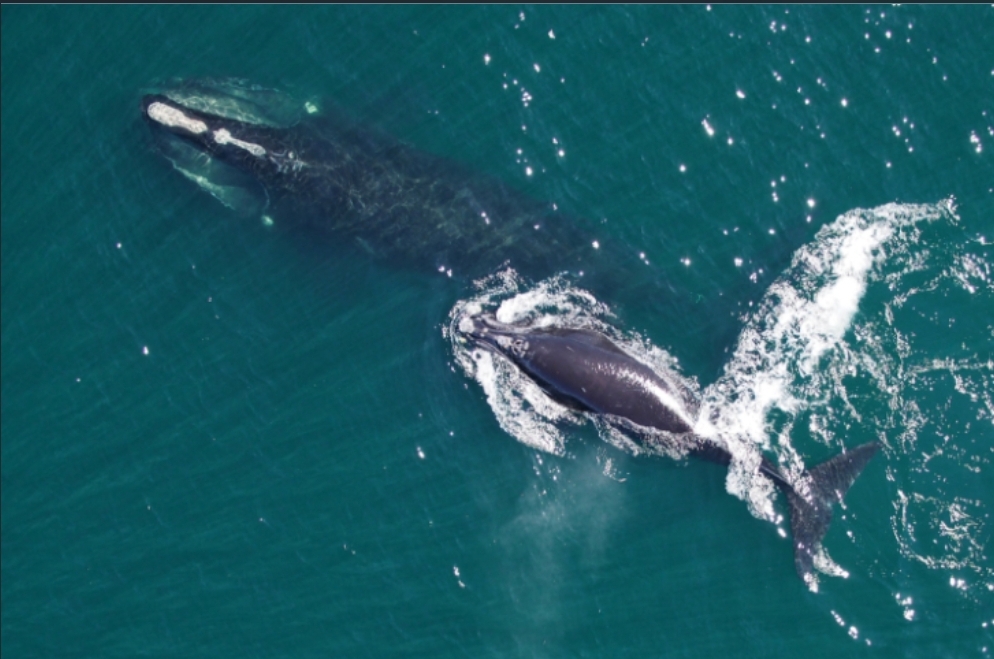
Researchers photographed a North Atlantic right whale named Silt with a calf nobody had recorded near Anticosti Island, Quebec, on Sept. 25, the New England Aquarium said in a release. The right whale calf is the 24th of the 2026 season.
NOAA Fisheries said the 23rd calf already made this season the highest number of births in 17 years. The new calf adds to that record for a species with about 380 whales left.
Who Silt is
Researchers from the Mingan Island Cetacean Study found the pair. The calf was missed in winter surveys off the southeastern U.S., where most right whales give birth. Silt, catalog No. 1817, is at least 38 years old. She has six known calves, three grandchildren and a first great-grandchild born this year, according to the aquarium. She has survived at least five entanglements in fishing gear. Her calf from 2022, Division, died this year from an entanglement, and her eldest calf died in 2005 after a ship strike. “This is an exciting discovery for us so late in the year,” said Amy Warren, a scientist at the aquarium’s Anderson Cabot Center for Ocean Life.
Why 24 Calves Matters
NOAA puts the number of breeding females at about 70. Twenty-four calves from about 70 females means roughly a third of them gave birth this season, a calculation from the two figures. Females now calve every seven to 10 years, NOAA says, against a healthy interval of three to four. At the current interval, about 70 females would produce roughly seven to 10 calves a year. At the healthy interval, the number would be about 18 to 23, a calculation from NOAA’s figures. This season matched or beat a healthy year.
The Threats That Remain
NOAA has had an Unusual Mortality Event open for right whales since 2017, and deaths have outnumbered births over the past decade. Entanglements and ship strikes, the two causes that killed two of Silt’s calves, remain the main threats. One strong season does not reverse that trend. It does show that the females who survive will reproduce at a healthy rate when they are healthy enough to do it, and Silt, entangled at least five times, is one of them. The calf’s birth date, birthplace and sex are unknown. The next calving season begins this winter off the southeastern U.S.