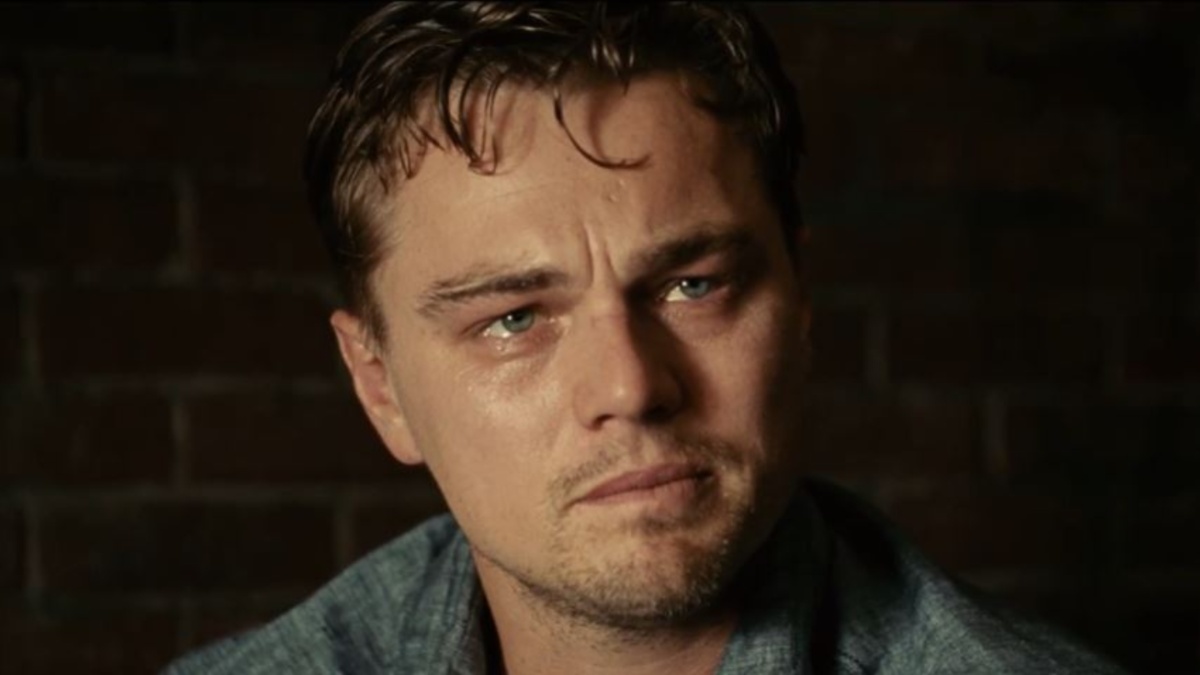
Martin Scorsese’s Shutter Island still inspires arguments because its final moments refuse to leave viewers comfortable. At first, the film looks like a mystery about a U.S. Marshal investigating a missing patient at a remote psychiatric hospital. By the end, it becomes something much more tragic. Leonardo DiCaprio’s Teddy Daniels is not solving someone else’s case. He is being forced to face the truth about himself, his family, and the guilt he cannot survive.
Shutter Island Explained Through Andrew Laeddis’ Real Identity
The biggest reveal in Shutter Island is that Teddy Daniels is not really Teddy Daniels. He is Andrew Laeddis, a patient at Ashecliffe Hospital who created an elaborate fantasy to escape the truth of his past.
Andrew’s invented identity allows him to see himself as a heroic lawman rather than a broken man who killed his wife, Dolores. The doctors, led by Dr. Cawley and Dr. Sheehan, build an extreme role-playing experiment around that delusion. Their hope is that by letting Andrew fully live out the fantasy, he will eventually see its contradictions and return to reality.
That explains why everyone around Teddy seems strange. Mark Ruffalo’s Chuck is not his partner but Dr. Sheehan, his psychiatrist. The missing patient case is not real in the way Teddy believes. It is part of a final attempt to help Andrew confront what happened: Dolores drowned their children, and Andrew killed her afterward.
His grief, guilt, trauma from war, and failure to recognize Dolores’ mental illness all combine into the Teddy Daniels persona. Teddy is the man Andrew wishes he had been: brave, righteous, and in control.
Shutter Island Explained Through The Law Of Four And Patient 67
The mystery of Patient 67 is one of the film’s cleverest tricks. Teddy believes he is searching for a hidden patient the hospital is trying to erase, but Patient 67 is Andrew himself.
The names are clues. Edward Daniels is an anagram of Andrew Laeddis, while Rachel Solando is an anagram of Dolores Chanal, Dolores’ maiden name. This is the “law of four,” referring to the four names Andrew’s fractured mind has created to protect him from the unbearable truth.
Rachel also connects to Andrew’s daughter. His dead child appears in his dreams, including the haunting Holocaust imagery, and tells him, “You should have saved me.” That line is not random. It is Andrew’s guilt speaking directly to him. His daughter represents the truth he keeps trying to bury.
The fake Rachel Solando, played by a nurse as part of the role-play, is designed to push Andrew closer to remembering Dolores. The plan nearly succeeds, but Andrew’s mind keeps reshaping the evidence into conspiracy.
Shutter Island Explained Through George Noyce And The Conspiracy
George Noyce is real, but Andrew misunderstands his role. In Teddy’s fantasy, Noyce becomes evidence that Ashecliffe is conducting sinister experiments. In reality, Noyce is another patient who once recognized Teddy as Andrew Laeddis.
That recognition caused Andrew to violently attack him, which is one reason hospital officials began pushing for Andrew to be lobotomized. Dr. Cawley and Dr. Sheehan’s experiment is their last chance to prove he can be reached without destroying his mind.
The government mind-control conspiracy gives Andrew a story he can tolerate. It lets him believe he is on the island to uncover corruption, not because he belongs there. It also allows him to cast the doctors as villains rather than people trying to treat him.
That is why Chuck encourages Teddy’s theories during the storm, telling him, “While you were looking into them, they were looking into you!” The line feeds the fantasy so Andrew can follow it to the end. When Teddy finally reaches the lighthouse, there is no secret laboratory waiting for him, only the truth.
Fire And Water Reveal Andrew’s Hidden Trauma
The film‘s symbols quietly tell the audience what Andrew refuses to say. Fire represents fantasy, hallucination, and emotional escape. Whenever Teddy is near fire, his mind drifts deeper into illusion. Matches, explosions, and dreamlike visions all pull him away from reality.
Water represents the truth. Dolores drowned their children, and Andrew’s distress around water comes from that buried memory. His seasickness, the storm, the island’s shoreline, and the lighthouse all connect back to the event he cannot face.
This symbolism makes the ending feel less like a sudden twist and more like the completion of a pattern. The truth has surrounded Andrew from the beginning, but he keeps turning toward fire because fantasy is easier than memory.
Even the hospital staff’s behavior makes more sense on a second viewing. Guards are tense because a dangerous patient is being allowed to move freely. Staff members awkwardly participate in interviews because they know the investigation is staged. One nurse calls her job “far from normal,” an ironic remark made directly in front of the patient pretending to be a marshal. Mrs. Kearns writes “run” because she understands the experiment may be his only chance to escape his fate.
Andrew’s Final Choice Changes The Whole Ending
The ending is often seen as ambiguous, but the film strongly suggests Andrew has regained awareness. The next morning, when he sits with Dr. Sheehan, he appears to slip back into the Teddy persona. However, his final words suggest something more deliberate.
He asks, “Which would be worse – to live as a monster, or to die as a good man?”
That line changes everything. Andrew knows who he is. He understands what he did. He also knows he cannot live with that knowledge. By pretending to relapse, he allows the doctors to proceed with the lobotomy, choosing mental death over a life haunted by guilt.
The movie and Dennis Lehane’s novel share a similar ending, but the film leaves more room to believe Andrew consciously chooses his fate. In the book, Teddy never truly understands the truth, making the lobotomy feel like something done to him. In the film, Scorsese gives Andrew one devastating moment of agency.
That decision also explains the emotional power of the ending. Andrew is not simply a patient who fails treatment again. He is a man who briefly returns to reality and decides reality is too painful to survive.
Fans continue debating the final scene because the film presents enough unease to invite alternate theories. Some viewers argue Teddy may have been brainwashed, while others believe the straightforward reading is the most tragic and meaningful one. One Redditor, Snow_sun2, defended that interpretation by writing, “So many people have disagreed with me about it, and I don’t understand why. The ending is so much more meaningful, interesting and truly ends an amazing story this way. If he just “relapsed” again, it wouldn’t be as emotional and meaningful, but rather unsatisfying and “unfinished”.”
That is why Shutter Island endures. It is not just a puzzle about identity. It is a story about grief, denial, violence, and the mind’s desperate need to survive itself. Andrew creates Teddy to escape being a monster, but in the end, he chooses to disappear as Teddy so he can die, at least in his own mind, as a good man.