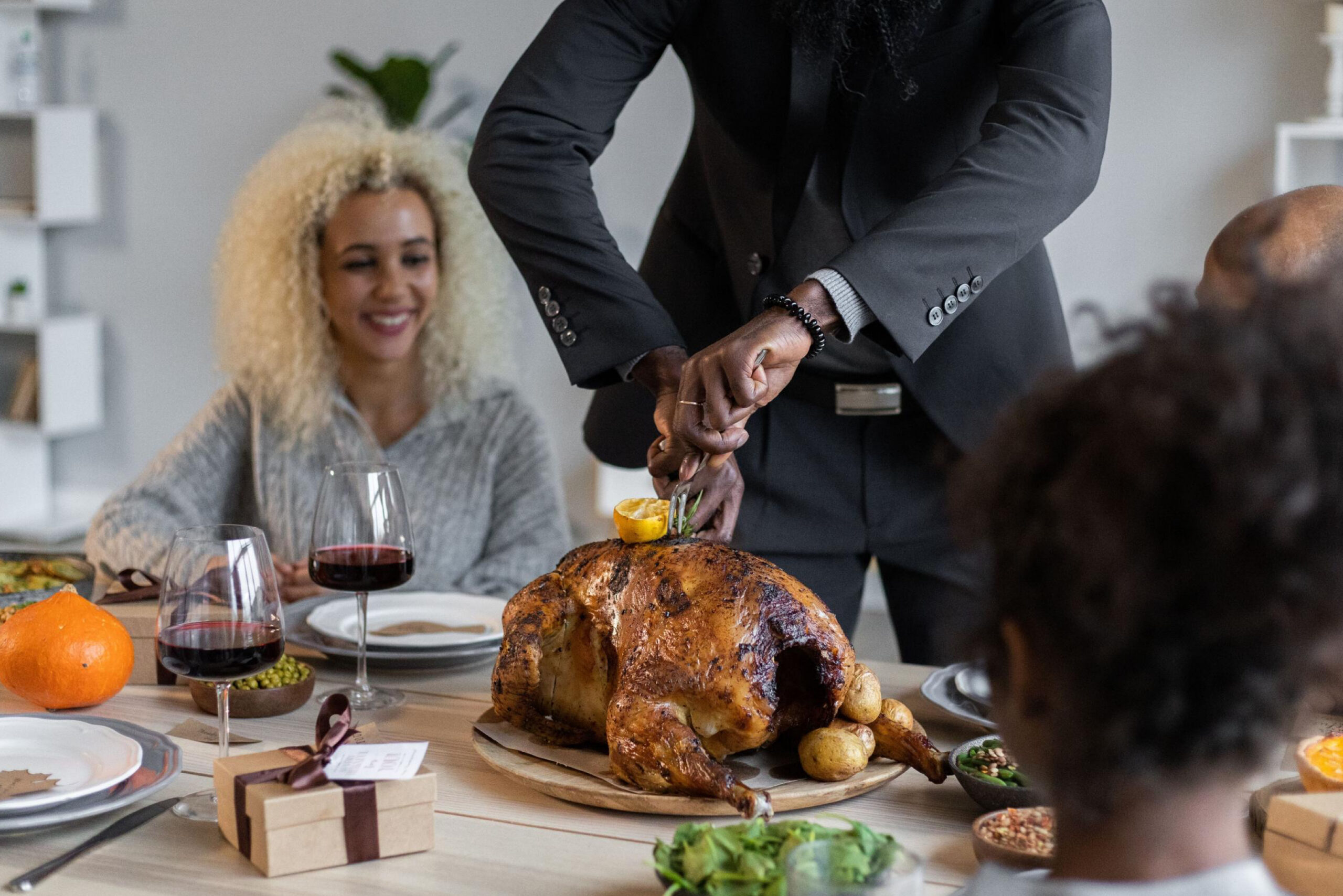
The classic Thanksgiving dinner cost for 10 people is $58.63 this year, up more than 6% from 2025, the American Farm Bureau Federation said in its annual survey release on Nov. 18.
The increase is real, but it is mostly one item. A 16-pound turkey costs $23.68, and that bird explains nearly two-thirds of the year’s increase, which means the shopper who hunts for a cheap turkey can erase the whole thing.
Turkey Drives the Thanksgiving Dinner Cost Increase
The Farm Bureau’s 41st survey priced the same menu it has used since 1986: turkey, stuffing, sweet potatoes, rolls, peas, cranberries, a veggie tray, pumpkin pie mix, pie crusts, whipping cream and milk. Last year the group put that meal at $55.18, with the turkey at $21.50. A calculation from the two Farm Bureau releases: the full meal rose $3.45, and the turkey rose $2.18. The bird accounts for about 63% of the increase and about 40% of the total bill, up from 39% last year.
The rest of the table moved in both directions. Whole milk rose 8.6% to $4.05, cranberries rose 8.8% to $2.48 and dinner rolls rose 7% to $3.81. Frozen peas, pie crusts, whipping cream and the veggie tray all got slightly cheaper, the Farm Bureau said. The expanded menu, which adds boneless ham, russet potatoes and frozen green beans, comes to $81.72. That is up about 6% from last year’s $77.09, a calculation from the same releases.
Why Thanksgiving Prices Rose This Year
The Farm Bureau tied the jump to costs on the farm. “High diesel prices and a shortage of farm labor have taken a toll on the farm level of the food supply chain,” Faith Parum, AFBF deputy chief economist, said in the release. The group’s economists wrote in a market analysis that turkey prices reflect “strong demand and tight inventories.” They also said farmers are “price-takers, not price-makers.” USDA estimates that less than 6 cents of every retail food dollar goes back to the farm, the Farm Bureau said.
Government data points the same way. The Bureau of Labor Statistics said food at home rose 0.4% in October, with beef up 0.9% for the month. The survey also carries a political message. “They need strong farm policy, which begins with the farm bill,” AFBF President Zippy Duvall said in the same release, urging Congress to pass the farm bill and labor reform.
How Shoppers Can Beat the Average
The 6% headline overstates what a careful shopper will pay. Volunteer shoppers collected prices in the first week of November and excluded coupons and deals that require buying other items. The Farm Bureau said USDA data showed the average feature price for whole frozen turkeys fell in the second week of November, after the survey closed.
Some volunteers found turkey for as low as 69 cents a pound, “nearly half the average nationwide price,” the Farm Bureau’s economists wrote. A calculation from those figures: a 16-pound bird at 69 cents costs $11.04, which would cut the classic meal to about $45.99, roughly $9 less than last year’s national average. The best case for the survey’s method is consistency. Excluding coupons lets the Farm Bureau compare the same basket year after year, and diesel and labor costs do not disappear because one grocery chain runs a loss leader.
Even at full price, the meal remains below its peak. This year’s cost is $5.42, or 8.5%, under the 2022 record of $64.05. Where you live matters more than the annual change: the classic meal averages $54.33 in the South and $61.57 in the Northeast, a $7.24 gap that is twice the national increase. Thanksgiving is Nov. 26. The Bureau of Labor Statistics releases November consumer price data on Dec. 10, which will show whether the grocery bill kept climbing after the turkeys were bought.