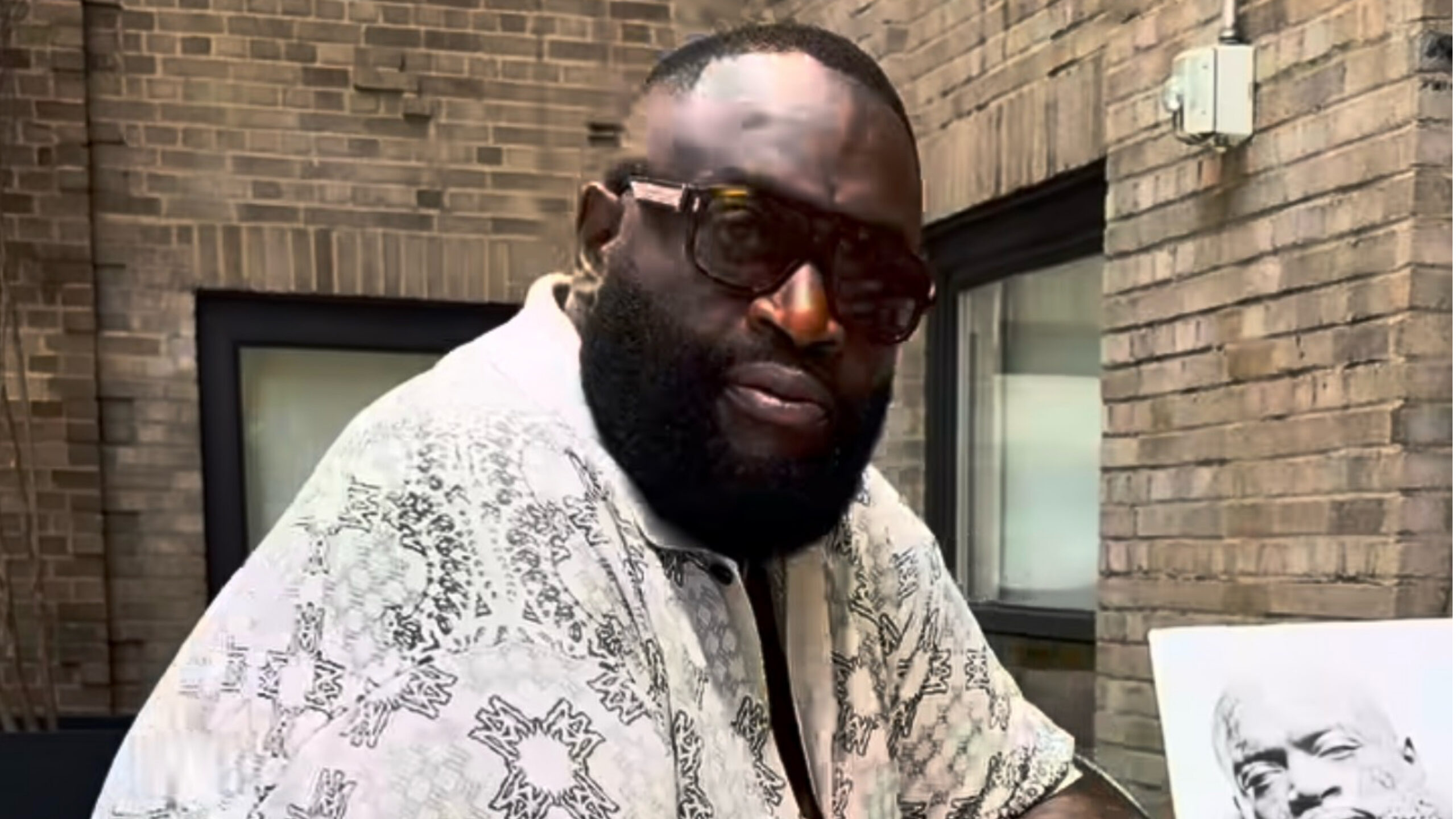
IN MEMORIAM This page is dedicated to the memory of James “Jim” Barry.
For twenty-three years James “Jim” Barry stood at the door of one of the greatest musical houses in Broadway history — the theatre of Oklahoma!, The King and I, and Hello, Dolly! — and welcomed everyone in. Two years ago today, on August 18, 2024, the Broadway icon Jim Barry died at the age of 69. He was the lead usher at the St. James Theatre, and for a generation of performers, crew, and theatergoers who came through 246 West 44th Street, he was the person who made the building feel like a home rather than a venue.
Ushers are not billed in the Playbill. Barry was nonetheless in that lobby for twenty-three straight years of Broadway history, from April 2001 to August 2024, and he watched most of it from about ten feet away.
From the Teller Window to the Mezzanine
James John Barry Jr. was born in Brooklyn on July 17, 1955, and grew up loving the theatre. He worked in banking for a living.
In 2001, a customer at his bank who worked for Jujamcyn Theaters got him a part-time ushering job at the St. James. He showed up for his first shift and walked into a dress rehearsal for “The Producers.” Mel Brooks’s musical opened that April, broke the house ticket-sale record, and won twelve Tony Awards, more than any show before it. Barry stayed for the whole run, and for the twenty-two productions that followed it. He kept both jobs until 2016, when he left the bank.
The House Jim Barry Walked Into
The St. James opened on September 26, 1927 as Erlanger’s Theatre, built for producer A. L. Erlanger of the old Theatrical Syndicate and designed by Warren and Wetmore, the architects of Grand Central Terminal, who had never designed a theatre before. The original Sardi’s was demolished to make room for it. The first show was George M. Cohan’s “The Merry Malones.” In 1932 it was renamed the St. James after the London house of the same name.
What played there afterward covers a large part of the history of the American musical. The Ballets Russes de Monte-Carlo danced there in 1933 and 1934, their last American appearances for fifty years. John Gielgud played Hamlet on that stage in 1937; the following year Maurice Evans gave America its first uncut “Hamlet” there. Katharine Hepburn played it in 1942.
Then, in March 1943, the Theatre Guild premiered Rodgers and Hammerstein’s first musical at the St. James. “Oklahoma!” ran more than 2,200 performances, saved the Guild from bankruptcy, and changed what a Broadway musical was allowed to be. Frank Loesser’s “Where’s Charley?” followed in 1948. “The King and I” premiered there in 1951 and ran 1,246 performances. “The Pajama Game” opened in 1954 and ran 1,061. “Li’l Abner” came in 1956, “Flower Drum Song” in 1958, Carol Burnett in “Once Upon a Mattress” in 1960, and Laurence Olivier and Anthony Quinn in “Becket” that same year.
In January 1964, Carol Channing opened “Hello, Dolly!” at the St. James. It played 2,844 performances through 1970 and was the longest-running Broadway musical in history when it closed. Raul Julia followed in “Two Gentlemen of Verona” in 1971. Jim Dale starred in “Barnum” in 1980. “My One and Only” arrived in 1983, “42nd Street” transferred in from the Majestic in 1987, and Tyne Daly played “Gypsy” there in 1989. The 1990s brought “The Secret Garden” with Mandy Patinkin, “The Who’s Tommy,” and a revival of “A Funny Thing Happened on the Way to the Forum.” The city landmarked both the facade and the auditorium interior in December 1987.
That was the house Barry ushered in. The mezzanine he worked is the same one that was packed on the opening night of “Oklahoma!”
The Broadway History Barry Took Part in at St. James Theatre: 23 Shows in 23 Years
Playbill counted twenty-three productions across his twenty-three years at the St. James. Barry saw every one of them from the aisles, most of them hundreds of times.
| YEAR | PRODUCTION | NOTE |
| 2001 | The Producers | Mel Brooks. Broke a Broadway ticket-sale record; ran 2,502 performances through 2007. |
| 2007 | Dr. Seuss’ How the Grinch Stole Christmas! | Opened one day before the 2007 stagehand strike. |
| 2008 | Gypsy | Revival with Patti LuPone, Laura Benanti, Boyd Gaines. |
| 2009 | Desire Under the Elms | Goodman Theatre’s O’Neill revival. |
| 2009 | Finian’s Rainbow | Transfer of the City Center Encores! staging. |
| 2010 | American Idiot | Green Day’s rock musical. |
| 2011 | Hair | Revival. |
| 2011 | On a Clear Day You Can See Forever | Revised revival with Harry Connick Jr. |
| 2012 | Leap of Faith | Alan Menken musical. |
| 2012 | Bring It On: The Musical | Lin-Manuel Miranda and Tom Kitt. |
| 2013 | Barry Manilow on Broadway | Limited concert engagement. |
| 2013 | Let It Be | Beatles tribute revue. |
| 2014 | Bullets Over Broadway | Woody Allen and Susan Stroman. Part of the stage-left wall was demolished for the set. |
| 2014 | Side Show | Revival. |
| 2015 | Something Rotten! | Ran a year and a half. |
| 2017 | Present Laughter | Noël Coward revival with Kevin Kline. |
| 2018 | Frozen | Disney. Set the house box office record — $2,624,495 in eight performances, week ending December 30, 2018. Closed by the COVID shutdown. |
| 2021 | Springsteen on Broadway | The first Broadway show to reopen after the shutdown, June 26, 2021. |
| 2021 | David Byrne’s American Utopia | Returned that fall. |
| 2022 | Into the Woods | Sondheim revival, extended through January 2023. |
| 2023 | New York, New York | Kander and Ebb. |
| 2023 | Spamalot | Revival transferred from the Kennedy Center; 164 performances. |
| 2024 | Illinoise | Sufjan Stevens. Jim’s final show; it closed in August 2024. |
Some of those shows ran for years and some closed in weeks. Barry worked them the same way, and he was there for the gaps in between, when the house sat empty and the next set was loading in.
Barry’s Stoop on Broadway
Barry’s post was a doorway on West 44th Street. He called it his stoop. He greeted people there in his Jujamcyn uniform, learned their names, and photographed the actors and athletes and comedians walking in. The gathering place he made of that doorway got a name of its own: The Stoop on 44th. Playbill credited him as its founder.
Inside, he was Papa Jim. He answered questions nobody had thought to ask, absorbed difficult patrons so younger ushers did not have to, and helped sort stacks of Playbills before doors opened, a task that was not his job and that he did anyway. When you told him good news, the answer was “Yeah, buddy!” The commute from Staten Island ran close to two hours each way. He was always early.
| “He treated celebrities like friends, patrons like celebrities, and friends like family.” — Gillian Sheffler, colleague at the St. James, writing in BroadwayWorld, August 2024 |
The Night Broadway Came Back to Life
The St. James went dark with the rest of Broadway on March 12, 2020, in the middle of the “Frozen” run. The show never reopened.
Fifteen months later, the St. James was the first Broadway house to raise a curtain again. “Springsteen on Broadway” opened there on June 26, 2021, and about seventy-five people came back to work at that theatre alone — ushers, ticket-takers, bartenders, porters, cleaners, stagehands, box office staff.
Michael Paulson of The New York Times went looking for a face for that return and found Barry at the top of the mezzanine stairs, masked, cupping his hands around outstretched phone screens to read seat numbers. Sara Krulwich’s photographs of him ran with the piece. He described the feeling of belonging as the moment your whole body is “enveloped in euphoria.” He told Paulson that nothing could get him down, because he was back at his house and the Boss was playing it.
That March, on the twentieth anniversary of his first shift, with every theatre in the city still dark, Barry had gone into Times Square and photographed himself in front of all forty-one Broadway houses.
He told Paulson that there is an old saying about loving what you do and never working a day in your life, and added: “I love to make people feel good about coming to our house.”
What Broadway Says About Barry
Scenic designer David Zinn, who worked on “Frozen” and “Into the Woods” at the theatre, wrote that Barry made a walk down 44th Street feel like home, and called him “a model for how to greet the world.” Christopher Fitzgerald, who had recently played the St. James in “Spamalot,” wrote that Barry linked back of house to front of house with unusual zeal, and that the community had lost one of its great ones. Actor Jimmy Smagula wrote that the entire “Spamalot” company would miss him.
Katie Nascenti, a fellow St. James usher who organized a fundraiser for the family, described him as the heart and soul of 44th Street. Colleague Elizabeth Harvey observed that Barry never set out to change Broadway or leave a theatrical legacy, and that he worked one of the busiest posts in the house while creating the connections that made people feel welcome, and made it look like nothing.
In Loving Memory
“Sunset Boulevard” loaded into the St. James that October and took the house box office record from “Frozen” in July 2025. The St. James hosted Gavin Creel’s memorial that December. “The Queen of Versailles” came and went in late 2025, and “Titanique” is playing there now. Jujamcyn, whose uniform Barry wore for twenty-three years, has been folded into a larger operator.
The doorway on West 44th Street is still there, and the people who worked beside him still describe the same thing: he treated the front of the house as though the whole evening depended on it. He did that for twenty-three years, in a building that has been making Broadway history since 1927.
Sources
BroadwayWorld (Nicole Rosky, August 19, 2024; Gina Sarno, August 21, 2024) · Playbill (Margaret Hall, August 19, 2024) and the Playbill Vault · TheaterMania (August 19, 2024) · Broadway.com (August 2024) · The New York Times (Michael Paulson, June 29, 2021; photographs by Sara Krulwich), as syndicated in The Irish Times · Internet Broadway Database and The Broadway League, St. James Theatre production history · NYC Landmarks Preservation Commission designation reports, 1987 · John Vincent Scalia Home for Funerals obituary, August 2024.