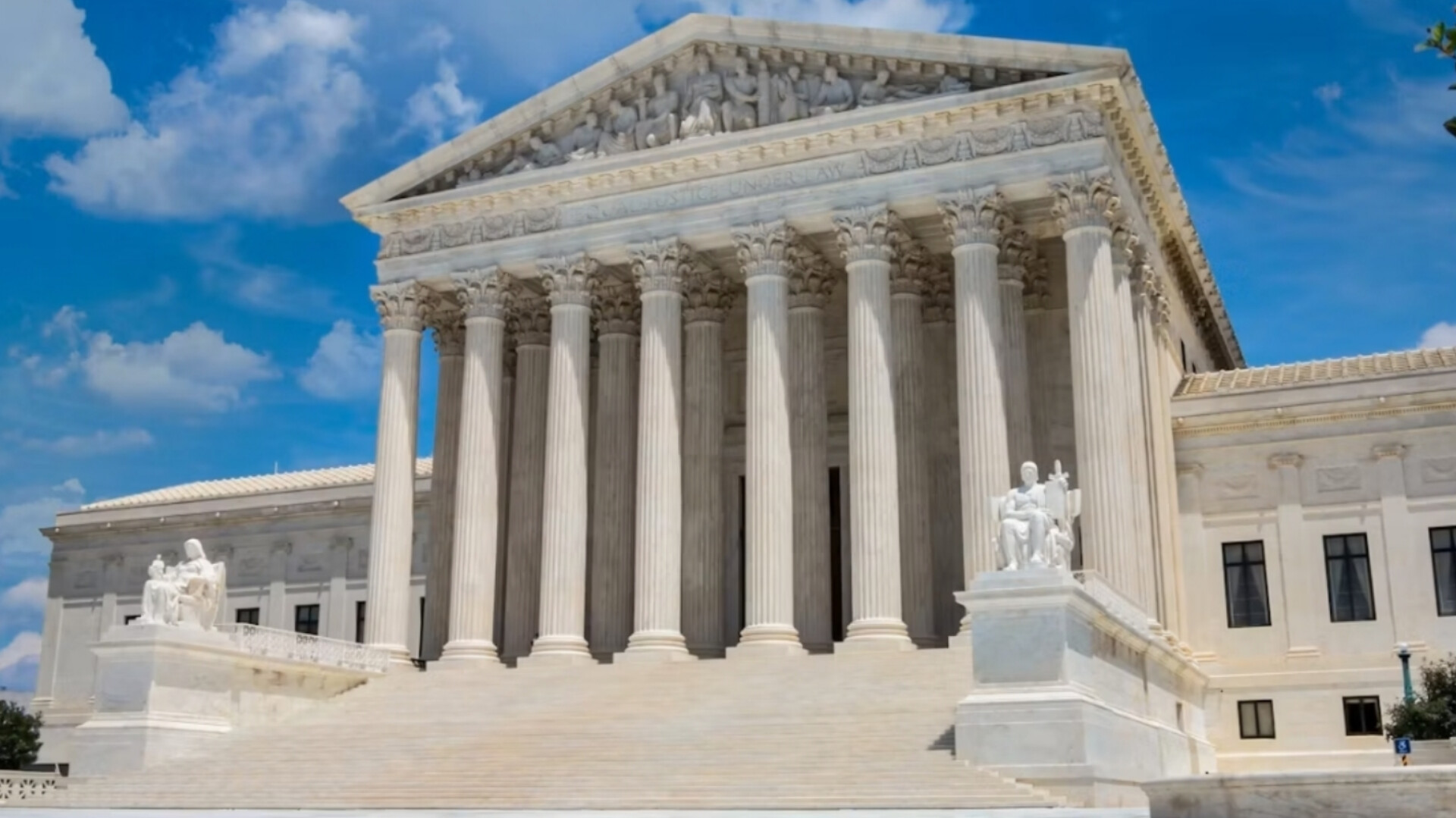
The Supreme Court on Sept. 29 allowed the Trump administration to resume deporting immigrants to countries other than their homelands without the notice a lower court required, while the justices take up the policy in December. The three liberal justices would have denied the request, according to SCOTUSblog.
What the Supreme Court order does on third-country deportations
The unsigned order stays a ruling by U.S. District Judge Brian Murphy in Boston. Murphy had barred the Department of Homeland Security from sending people to a third country without written notice of the destination and a meaningful chance to say they fear persecution or torture there. SCOTUSblog reported that Justices Sonia Sotomayor, Elena Kagan and Ketanji Brown Jackson indicated they would have denied the stay and did not write an explanation.
The Associated Press story carried by Boston.com said a lower court order had forced the cancellation of a deportation flight carrying about 70 people. The order lifts the notice requirement while the case proceeds.
The justices also agreed to hear the case in early December, SCOTUSblog reported. The questions they identified include whether the policy is lawful, whether the lower courts had authority to block it and whether the plaintiffs can proceed as a class. UPI reported that a ruling on the merits is expected in 2027.
How the case reached the justices
The case, Department of Homeland Security v. D.V.D., began in 2025 when immigrants with final removal orders challenged deportations to countries where they had no ties. Murphy issued a preliminary injunction on April 18, 2025, according to Wikipedia’s case summary. The Supreme Court stayed that injunction June 23, 2025, with the same three justices dissenting, and clarified July 3 that the stay applied in full. Eight men were flown to South Sudan after that clarification.
Murphy entered final judgment for the plaintiffs in February, declaring the policy unlawful. The 1st U.S. Circuit Court of Appeals affirmed that judgment Sept. 18 in an opinion by Judge Aframe, with one exception on pre-removal procedures. The 1st Circuit then lifted the stay that had kept Murphy’s order from taking effect, and Solicitor General D. John Sauer filed his request at the Supreme Court Sept. 24, according to SCOTUSblog.
The Associated Press said this was the third time the justices had turned aside Murphy’s efforts to halt the deportations. NPR’s account, carried by MPR News, described the same sequence.
What Judge Murphy required before removal
SCOTUSblog’s account of the government’s filing lays out the terms the stay now suspends. Murphy’s order required written notice of the destination country and a meaningful opportunity to challenge removal. It also required officials to assess whether a person’s fear of torture was reasonable, rather than applying a “more likely than not” test. People also had at least 15 days to ask immigration judges to reopen their cases.
The fear standard is the most technical of the three. Murphy’s order replaced a requirement that people show torture was more likely than not with a test of whether their fear was reasonable, a lower bar.
The administration and the plaintiffs
Sauer told the court the order took away “an essential tool to remove certain aliens,” according to the NPR report, adding that it covered some of the worst criminal offenders. He also argued, per SCOTUSblog, that it created substantial logistical problems for removal operations.
Attorney General Todd Blanche described the policy as “an entirely lawful and critical tool” in the AP account. The administration says the confidential agreements it has made with receiving countries include assurances against persecution or torture.
Lawyers for the immigrants disagree. A lawyer for the migrants, Trina Realmuto, said, as NPR reported, that class members removed without meaningful notice have faced prolonged detention, beatings, sexual assault and disappearance. In their response to the government, the immigrants said the policy sends thousands of longtime U.S. residents, many with no criminal history, to countries where they face persecution and torture, UPI reported.
Scale of the policy
The AP reported that the administration has deported roughly 25,000 people to more than two dozen countries under confidential agreements, with Mexico receiving most of them. The policy traces to a January 2025 executive order, according to SCOTUSblog. Spread over the roughly 20 months since then, 25,000 removals averages about 1,250 a month, or more than 40 a day, although the pace changed whenever courts paused the practice.
Docket numbers and the questions before the court
The government’s application and its petition for review carry the docket numbers 26A406 and 26-426, according to SCOTUSblog. In granting review, the court directed the parties to brief whether the Homeland Security guidance on third-country removals is lawful, whether Murphy had jurisdiction to enter the order and other questions the government considers appropriate.
The immigrants’ lawyers told the justices that the Murphy order does not stop third-country removals at all. They said it requires only lawful procedures, namely notice and an opportunity to be heard. SCOTUSblog quoted their response as saying the order “does not prevent third- country removals.”
What comes next
The case will be argued in early December, and UPI reported a ruling on the merits is expected in 2027. Until then, the class-wide notice protections Murphy ordered are on hold and DHS can carry out third-country removals under its own procedures.
The 1st Circuit’s decision remains on the books, and the Supreme Court has not ruled on whether it was correct. The December arguments will take up whether Murphy’s judgment survives, whether it applies to the whole class and whether federal district courts had the power to order it.