A federal judge in Washington said Thursday he will decide by Tuesday, Oct. 13, whether to keep CNN, MS NOW and Politico reporters in the White House while their lawsuit over President Donald Trump’s press ban proceeds. U.S. District Judge Timothy Kelly extended his temporary order through that ruling after a hearing on Oct. 8, CBS News reported.
The case is Cable News Network, Inc. et al. v. Trump et al., No. 26-3287, in the U.S. District Court for the District of Columbia. Trump appointed Kelly to the bench, CBS News reported.
How the White House Press Ban Began
Trump announced the ban on Truth Social at about 3:04 p.m. on Sept. 18, saying it was effective immediately, according to Kelly’s temporary restraining order. Over the weekend, reporters from the three outlets were denied access and their hard pass credentials were deactivated. A hard pass is the long-term credential that lets a journalist enter the White House complex without applying each day.
CBS News reported that the outlets sued on Sept. 21. The court record shows the administration did not send its explanation until Sept. 22, four days after the passes were revoked. The letters named articles the White House objected to. According to the order, one said the organization had violated standards of professionalism and decorum, and others said the reporting threatened national security or spread falsehoods. The government did not dispute that the outlets received no notice or hearing before the passes were pulled, the order says.
CBS News reported that most of the articles cited in the letters were written by reporters who do not hold White House credentials. The outlets declined to respond by a Sept. 25 deadline, CBS News reported.
What Judge Kelly’s Temporary Order Requires
Kelly signed the restraining order on Sept. 24. It directs the defendants, other than Trump himself, to restore the passes of employees of the three outlets. The order named Trump, Steven Cheung, Sean M. Curran and Susan Wiles as defendants. It set a $1 bond, due Oct. 1.
The judge wrote that Sherrill v. Knight and Karem v. Trump, two D.C. Circuit decisions on press access, shaped his view that the outlets are likely to win on due process. He quoted that precedent in the order:
“a duly issued hard pass may not be suspended without due process.” The order also said the record offered little factual support for the national security justification. The order lasted 14 days, which put its expiration on Oct. 8, the day of the hearing. His extension to Tuesday means the restraining order remains in force for five more days while he writes the injunction ruling.
CBS News reported that reporters have regained access to the White House complex, but the White House still bars CNN and Politico from the Oval Office and Air Force One, where the press pool works. The restraining order covers hard passes and, by its terms, does not bind Trump personally.
What Each Side Argued on Oct. 8
Ted Boutrous, the outlets’ lawyer, told the court the ban affects 78 credentialed journalists, CBS News reported. He argued the standards are too vague to satisfy due process and that the ban retaliates against coverage Trump dislikes, which he said violates the First Amendment. He said the White House has changed its reasons over time and pointed to continued retaliation after the temporary order.
Michael Velchik, a senior counsel in the Justice Department’s Civil Division, argued the reporters fell below minimum professional standards and published material that endangered national security, CBS News reported. He said publishing classified or sensitive national security information is a serious breach of decorum. He argued the outlets had adequate notice and a chance to respond. In court he said, “access to the White House is a privilege not a right,” according to CBS News.
Kelly pressed the government on that point. CBS News reported that he asked whether portraying the administration negatively violates minimum journalistic standards. He said the president appeared to have given public reasons that differ from the arguments the Justice Department now makes, and he called that fact pattern a hard one to find precedent for. He called the process question probably the biggest hurdle for the government and asked Velchik for the strongest evidence that the ban serves national security.
The Timeline and What a Ruling Would Decide
From Trump’s Sept. 18 post to Kelly’s self-imposed deadline of Oct. 13 is 25 days. The case moved from a revoked credential to a pending injunction in less than four weeks, and the passes were pulled before any written explanation existed. That sequence is why the due process claim, rather than the First Amendment claim, led the temporary order.
Kelly did not need to decide whether the ban was retaliatory to find the lack of notice likely unlawful. A preliminary injunction would extend the pass restoration until the case is decided on its merits. A denial would let the administration re-revoke the passes. Either side could appeal to the D.C. Circuit.
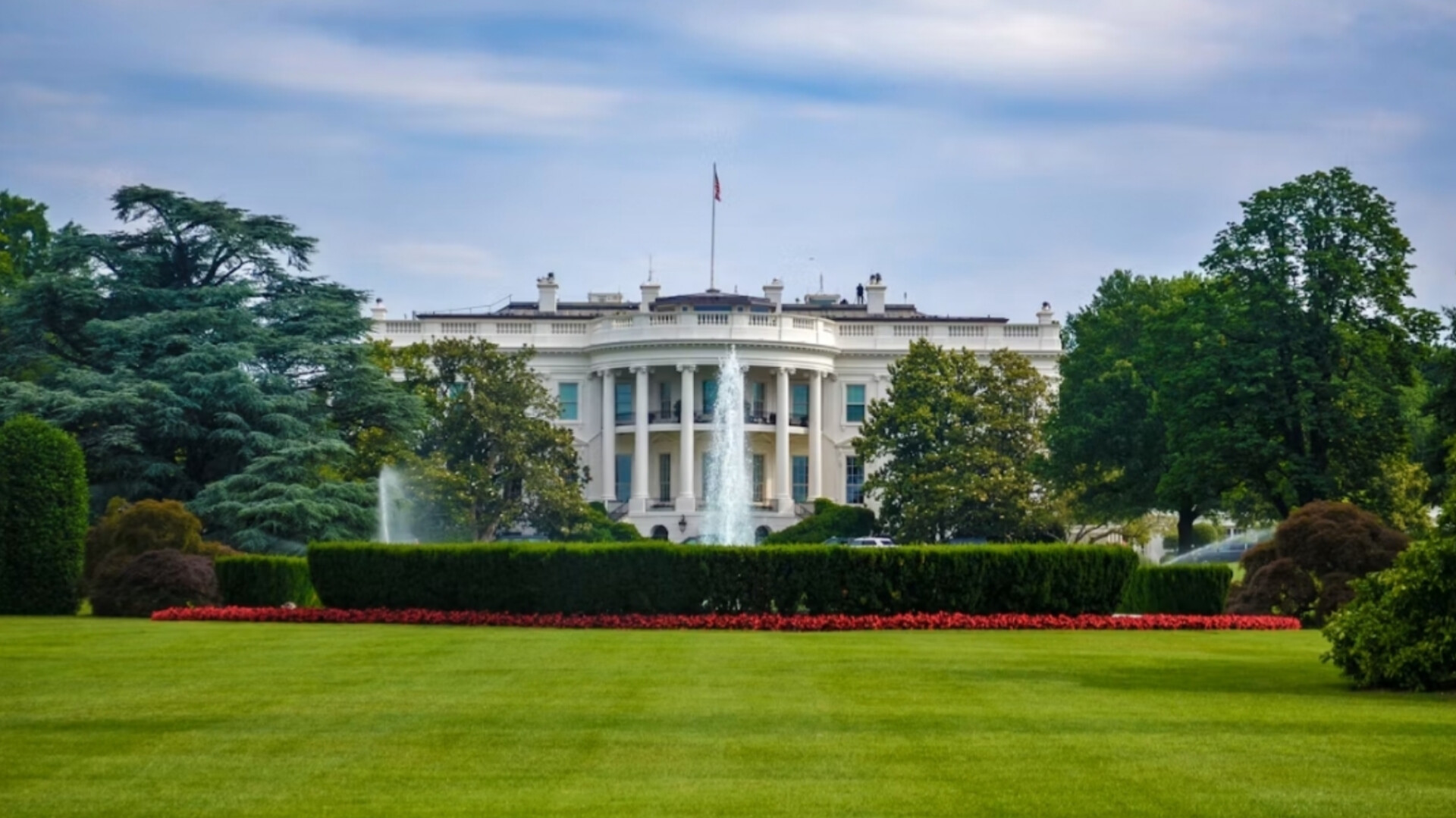
Kelly said he will rule no later than Tuesday. Image: Exterior of the White House North Portico, official White House or National Park Service photograph, U.S. government work in the public domain, no license needed.