The biggest curvy fashion trends in 2026 are wide-leg and barrel pants, wrap dresses, statement and balloon sleeves, matching sets, pleated midi skirts, sheer layering, and color you can see from across the room. The throughline isn’t a body type or a “flattering” rulebook. It’s permission. The clothes that designers are finally cutting for curves are the same trend-forward pieces everyone else has been getting for years.
So before the list, one thing worth saying plainly: nobody dressing a real body in 2026 should be working off a chart of what to hide. The trends below are here to be worn, not to apologize for.
At a Glance:
- Bottoms: Wide-leg and barrel pants, high-waisted everything, pleated midi skirts
- Dresses: Wrap silhouettes, empire-waist minis, fit-and-flare
- Tops: Statement and balloon sleeves, peplum, sheer layering, mesh
- Sets: Matching co-ords (top and bottom, done in one decision)
- Color: Jewel tones, butter yellow, gingham, generous florals
- Mindset: Dress the body you have, not the one a 2009 styling guide wanted you to fake
The Silhouettes Leading Curvy Fashion Trends in 2026

The strongest curvy fashion trends this year are about shape, not shrinkage. These are the bottoms and dresses doing the most work in 2026.
- Wide-leg and barrel pants. The skinny jean’s reign is over and the curve-girl wardrobe is better for it. Wide-leg and barrel-leg trousers move with you, sit clean over hips and thighs, and read polished with a heel or easy with a sneaker. Trend forecasts put wide-leg and barrel cuts at the center of the 2026 silhouette conversation. Buy them long and let them break right at the shoe.
- Wrap dresses. Still undefeated. A wrap ties at the natural waist, opens at the neckline, and skims everything in between, which is why it’s been a curvy-wardrobe anchor for decades and isn’t going anywhere. The 2026 update is in the print: bigger florals, gingham, the occasional metallic.
- Pleated midi skirts. The midi is having a moment, and the pleats do something a pencil skirt won’t, they move, they swing, they give. Pair one with a fitted top so the proportion stays sharp, or tuck in a tee and let the skirt be the whole outfit.
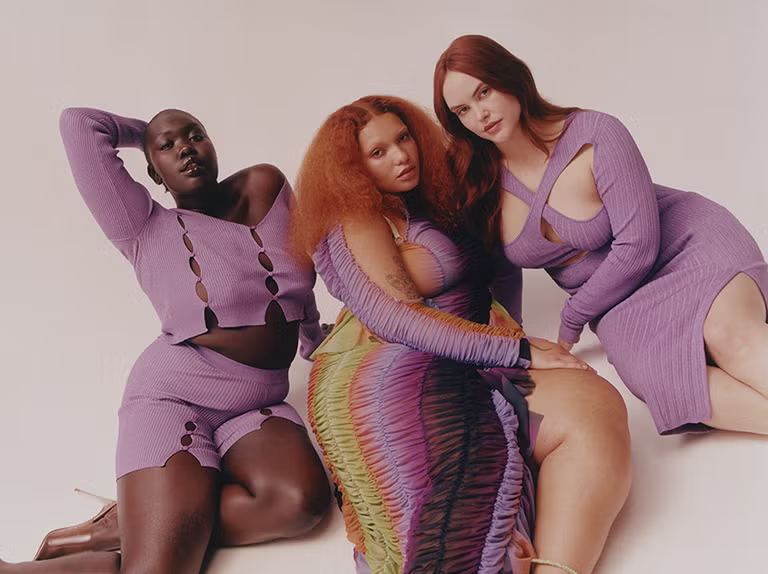
- Matching sets. A co-ord top and bottom is the laziest way to look like you tried hard. One decision, head-to-toe intention, zero “does this go” math at 7 a.m. Sets in extended sizing have gotten genuinely good, and they’re one of the easier trend buys to pull off.
- Empire-waist minis. Yes, minis. The empire cut nips in just under the bust, the narrowest point on most torsos, then lets the fabric fall, so the leg gets to be the story. Add a knee-high boot and the line runs unbroken.
The Statement Pieces Worth Building an Outfit Around

If the silhouettes are the foundation, these are the pieces that make a look feel like 2026 instead of last spring.
- Statement and balloon sleeves. Drama up top is everywhere this year, with balloon and statement sleeves named across 2026 collections. A puffed or balloon sleeve pulls the eye where you want it and balances the proportion of a fuller hip without a single “slimming” trick involved. It’s the rare trend that’s loud and easy at the same time.
- Structured blazers. A blazer with a real shoulder is power dressing that actually fits. Not a tent, not a struggle across the back. Worn open over a bodysuit and wide-leg pants, it’s the whole look. Worn over a slip dress, it’s a different one.
- Sheer layering. An organza or mesh layer over a fitted base adds texture without adding bulk, and it’s one of the more grown, editorial trends in the curvy lane right now. Sheer over a cami, sheer under a blazer. It photographs like effort and feels like nothing.
- Peplum tops. The peplum is back and it earns the comeback. That little flare at the waist creates shape on a straight torso and rhythm on a curvy one. Over high-waisted trousers, it’s a clean, defined line.
- Mesh tops. Mesh moved from the club to the everyday rotation. Layered over a bralette or a tank, in a bold color, it’s the kind of piece that used to come only in straight sizes and now doesn’t. Wear it because you want to.
What’s the Color and Print Story for Curvy Bodies in 2026?

Here’s where a lot of old advice goes to die. The “dark colors are slimming, so stick to black” rule has been quietly retired, and good riddance, even mainstream trend reporting now frames bold color as a power move rather than a risk. In 2026, color is the point.
Jewel tones, emerald, sapphire, a deep berry, are doing the heavy lifting this year. So are generous, large-scale florals that look intentional instead of busy. Gingham is back across dresses and peplum tops. And for summer, butter yellow is the shade trend analysts keep naming, soft enough to read elegant and warm enough to flatter across skin tones.
The styling note that matters: if a print or a color makes you happy when you put it on, that’s the whole test. Polka dots, gingham, florals, a clean monochrome moment, all of it works on a curvy body. The only outfits that don’t work are the ones you talked yourself out of.
What Is the 3-3-3 Rule, and Does It Work for a Curvy Capsule Wardrobe?
The 3-3-3 rule is a capsule wardrobe formula:
Pick 3 tops, 3 bottoms, and 3 pairs of shoes that all coordinate, and you can build 27 outfits from nine pieces. The idea grew out of Project 333, a minimalist challenge from writer Courtney Carver that asked people to wear 33 items for three months.
For a curvy capsule wardrobe, the math is the same but the build is specific.
- Your three bottoms should be the silhouettes above: say, wide-leg trousers, a pleated midi, and a good dark jean.
- Your three tops do the shape work: one fitted, one with a sleeve moment, one easy tee for tucking.
- Three shoes covers the spread: a sneaker, a flat boot, a heel.
The reason it works for curves better than a closet full of impulse buys is fit. When every piece already fits right and plays with the other eight, you stop fighting your wardrobe at 7 a.m. and start getting dressed. The rule isn’t about owning less to punish yourself. It’s about owning the right nine things so getting dressed feels like a choice instead of a negotiation.
Who Actually Built Curvy Fashion

The industry didn’t “become more inclusive” on its own, in passive voice, with no one to credit. Women built this lane, and the receipts are public.
Start with Fashion Nova. The brand grew on Instagram by dressing curvy women when straight-size retailers wouldn’t, turning influencers and celebrities into the entire marketing machine.
A 2018 WWD profile named the women who made it aspirational, Cardi B, Blac Chyna, bodies the standard size chart never planned for. When Cardi B partnered with the brand in 2018, she brought tens of millions of followers and a clear point: curvy women wanted the trendy, tight, fun pieces, not a watered-down “plus” version. (The brand wasn’t above contradiction, either, for years it kept plus-size models on a separate Curve account instead of the main page.)
Then Rihanna. When Savage X Fenty launched in 2018, it carried the same disruption that made Fenty Beauty’s 40 shades a reckoning, size-inclusive from day one, plus bodies in the campaign before the line even dropped. The activewear that followed runs XS to 4X. She didn’t add inclusivity as a press release. She built it in.
The dollars back the story up. The global plus-size clothing market value is anticipated to reach over $412 billion in 2030, and brands finally moved because this spending power got impossible to ignore.
The trends in this article exist on the rack in your size because the culture made them too profitable to keep gatekeeping.
What’s the Best Style for a Curvy Body?
The honest answer: the one you actually like. There’s no single silhouette that’s “best” for a curvy body, because curvy bodies aren’t one body: an hourglass, a fuller midsection, a pear, an apple, and a tall pillar of a frame are all “curvy,” and they don’t want the same dress.
What the trends above have in common is that they work with proportion instead of against it. Define a waist if you want definition, a wrap dress, a belt, a peplum. Balance a fuller hip with a sleeve moment up top. Let a wide-leg pant give your legs room instead of shrink-wrapping them. None of that is about looking like a different size. It’s about clothes that fit the body in the mirror.
If you’re starting from scratch, start with fit. A piece that fits beats a “flattering” piece that pinches every time. After that, it’s just preference, and preference is allowed to be loud.
What Should a Curvy Woman Actually Avoid?
Not a fabric. Not a color. Not a hemline. The only thing worth avoiding in 2026 is the old rulebook. The one that said no horizontal stripes, no bold prints, dark colors only, nothing tight, nothing cropped, hide the arms, hide the stomach, hide, hide, hide.
That list was never about style. It was about making a body smaller and quieter, and it cost a generation of curvy women the fun of getting dressed. The trends carrying this year… color, crop, sheer, statement sleeve, mesh… are the exact things that rulebook banned.
The practical version: buy for fit, not for a number on the tag, since sizing runs wildly different between brands. Tailor what you love. And if a piece only “works” because it makes you look smaller, that’s not the piece working, that’s the old rule talking. Leave it on the rack.
The Trends Are Here. So Is Your Size.
Curvy fashion in 2026 isn’t a separate, sadder version of the trend cycle anymore. The wide-leg pants, the wrap dresses, the statement sleeves, the butter-yellow everything, they come in your size now, and they come in your size because the women you watched on Instagram and in the front row made the industry move.
So treat the list like a menu, not a prescription. Take the pieces that sound like you, leave the ones that don’t, and skip the part where you ask permission. The clothes finally caught up to the bodies. The only thing left to do is wear them.