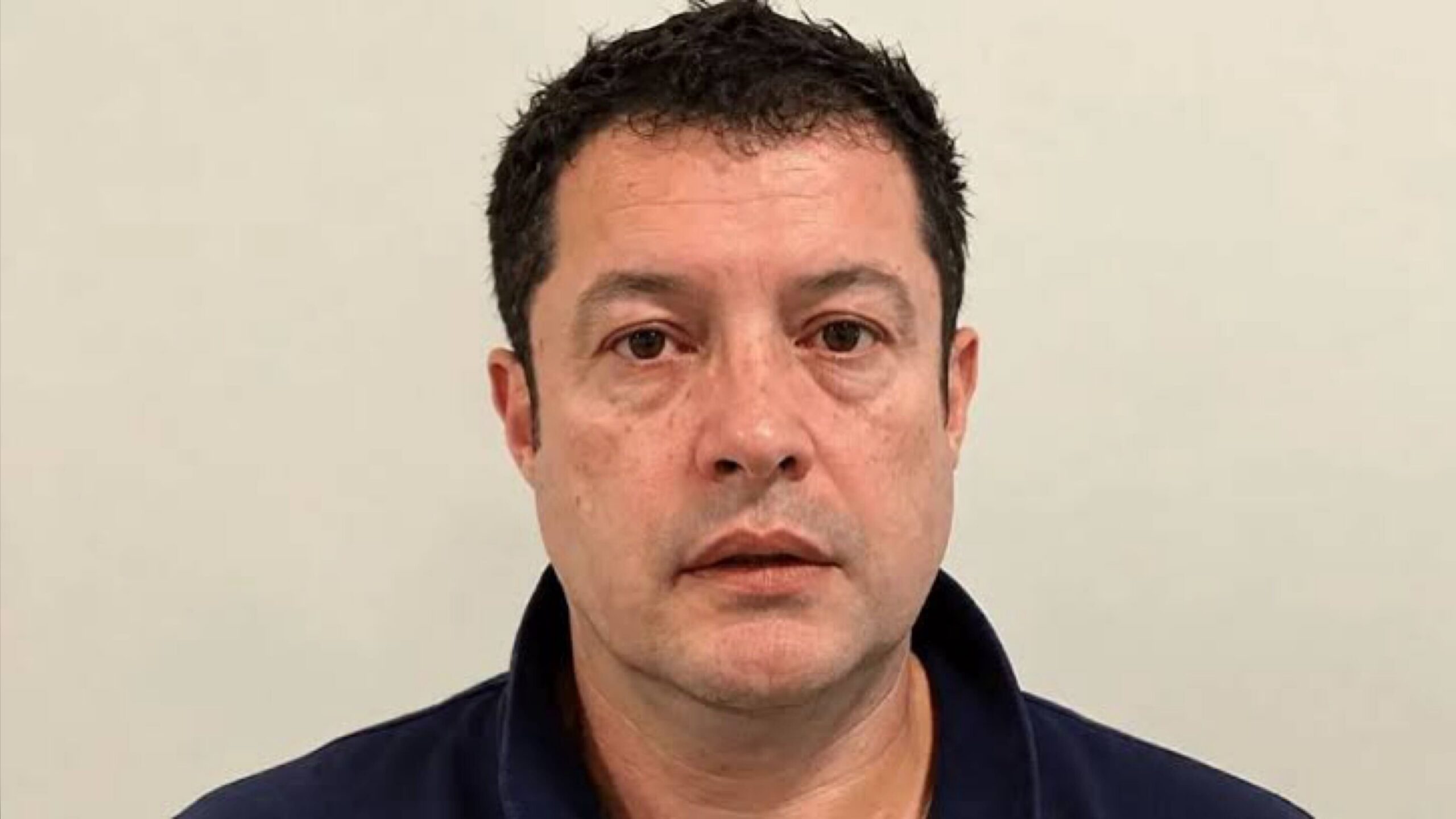
Alvaro Pulido Vargas, a 62-year-old Colombian national, was arrested on federal charges that he helped launder about $1.95 billion tied to Venezuelan bribery schemes. The Justice Department announced the arrest on Oct. 11. His first court appearance in the Southern District of Florida was set for the afternoon of Oct. 13.
The charges are allegations. The department said in its release that all defendants are presumed innocent until proven guilty. The release did not include a statement from Pulido Vargas or a lawyer for him.
What the Two Indictments Charge
Two cases sit behind the arrest. A federal grand jury in Miami returned the first in July 2019. It charged Pulido Vargas and Alex Nain Saab Moran, a former Venezuelan minister of industry, with laundering about $350 million. The 2019 indictment alleges conduct from about November 2011 through at least September 2015. It centers on a government contract to build low-income housing and on bribes tied to Venezuela’s government-controlled currency exchange.
The department said the defendants submitted false import documents for goods never imported and paid officials to approve them. That case carries one conspiracy count and seven money laundering counts.
A second grand jury returned the 2021 indictment in October of that year, in the case United States v. Alvaro Pulido Vargas et al., No. 21-20509-CR. It names four co-defendants, including Jose Gregorio Welma-Mora, who served as governor of Tachira state from about 2012 to 2017. It charges one conspiracy count and four money laundering counts.
The department said each of those counts carries a maximum of 20 years in prison. The department also said Pulido Vargas has a drug trafficking history, including a 1997 conviction in Italy under the alias German Enrique Rubio Salas.
How the CLAP Food Scheme Allegedly Worked
The 2021 case turns on CLAP, a Venezuelan state program meant to distribute food and medicine. The indictment says two state entities, COBISERTA in Tachira and CORPOVEX, hired companies to import the goods. Defendants allegedly controlled some of those companies, including Group Grand Limited and Asasi Food, and inflated contract prices to fund bribes to officials.
The indictment lists four contracts. A food contract signed on Oct. 14, 2016, covered about 10 million food boxes at $34 each, or about $340 million. A second food contract on Feb. 14, 2017, was worth about $369.9 million. Two medicine contracts, on March 31 and May 22, 2017, were worth about $70.9 million and $75 million. Added together, the four contracts come to about $855.8 million.
The indictment says Welma-Mora and a co-conspirator received about $17.26 million in bribes and proceeds between December 2016 and April 2018. That equals about 2% of the value of the four contracts. Money then moved through accounts in several countries.
The indictment describes about $33.75 million wired from a Venezuelan fund to a Group Grand account in Antigua in July 2017. It also describes about $105 million and then about $248.7 million wired from the Venezuelan development bank BANDES to an Asasi Food account in the United Arab Emirates in 2018. Those three transfers total about $387.45 million. The indictment adds that some funds were converted through gold sales to obtain dollars and euros.
Where the United States Comes in
The 2021 indictment ties the case to the American financial system through four wire transfers into a U.S. bank account: about $1.6 million from Panama on Dec. 23, 2016, about $1.6 million from Panama on Feb. 11, 2017, about $2.5 million from Antigua and Barbuda on July 5, 2017, and about $630,000 from Antigua and Barbuda on Aug. 23, 2017.
Those four wires total about $6.33 million. The indictment seeks forfeiture of about $1.61 billion, so the transfers named in the counts are about 0.4% of the amount prosecutors want to forfeit. The indictment and the department’s arrest release give different figures for the money that passed through the United States.
The indictment says at least $10 million was wired to U.S. accounts, at least $5.5 million of it into South Florida, and about $170 million moved through U.S. correspondent banks. The department’s release says about $180 million was transferred through or to the United States. Measured against the roughly $1.6 billion the department says came from the Venezuelan government, the $170 million figure is about 10.6% and the $180 million figure is 11.25%.
Why Saab’s Guilty Plea Matters to This Case
Saab, Pulido Vargas’s co-defendant in the 2019 case, pleaded guilty on Sept. 15 before U.S. District Judge Kathleen M. Williams in Miami. He admitted conspiracy to launder monetary instruments, which carries up to 20 years. The department said Saab admitted organizing bribes so that secretly controlled entities would win government import contracts for CLAP. No sentencing date has been set.
The Saab case has a history. The department said then-President Joe Biden granted Saab clemency in December 2023 while he awaited trial in Miami, and he returned to Venezuela. A new indictment was returned in January 2026, and Saab appeared in the Miami court on May 18, 2026.
Assistant Attorney General A. Tysen Duva of the Criminal Division said in the Saab release that Saab “exploited the U.S. financial system to profit off the backs of the Venezuelan people.” The Saab release does not describe a link between Saab’s plea and Pulido Vargas’s cases. It lists the Pulido Vargas arrest as related content.
What Officials Said about the Arrest
Duva said in the arrest release that Pulido Vargas is “no longer a fugitive from justice.” Jason A. Reding Quiñones, the U.S. attorney for the Southern District of Florida, described the allegations as a betrayal of the Venezuelan people and said defendants cannot escape U.S. justice by fleeing.
Terrance Cole, the DEA administrator, said the agency and its Homeland Security Task Force partners had pursued Pulido Vargas across borders for years. John A. Condon, acting executive associate director of Homeland Security Investigations, said the agency will keep following illicit financial networks.
The DEA Miami Field Division, the FBI Miami Field Office and Homeland Security Investigations Miami investigated the cases. Assistant U.S. Attorney Monique Botero of the Southern District of Florida is prosecuting them with Deputy Chief Joseph Palazzo of the Criminal Division’s Money Laundering, Narcotics and Forfeiture Section and Assistant Chief Katherine Raut of the White Collar and Corporate Enforcement Section.
The department said each count in the 2021 case carries a maximum of 20 years. The 2019 case adds a conspiracy count and seven money laundering counts. The department’s release does not state a trial date.