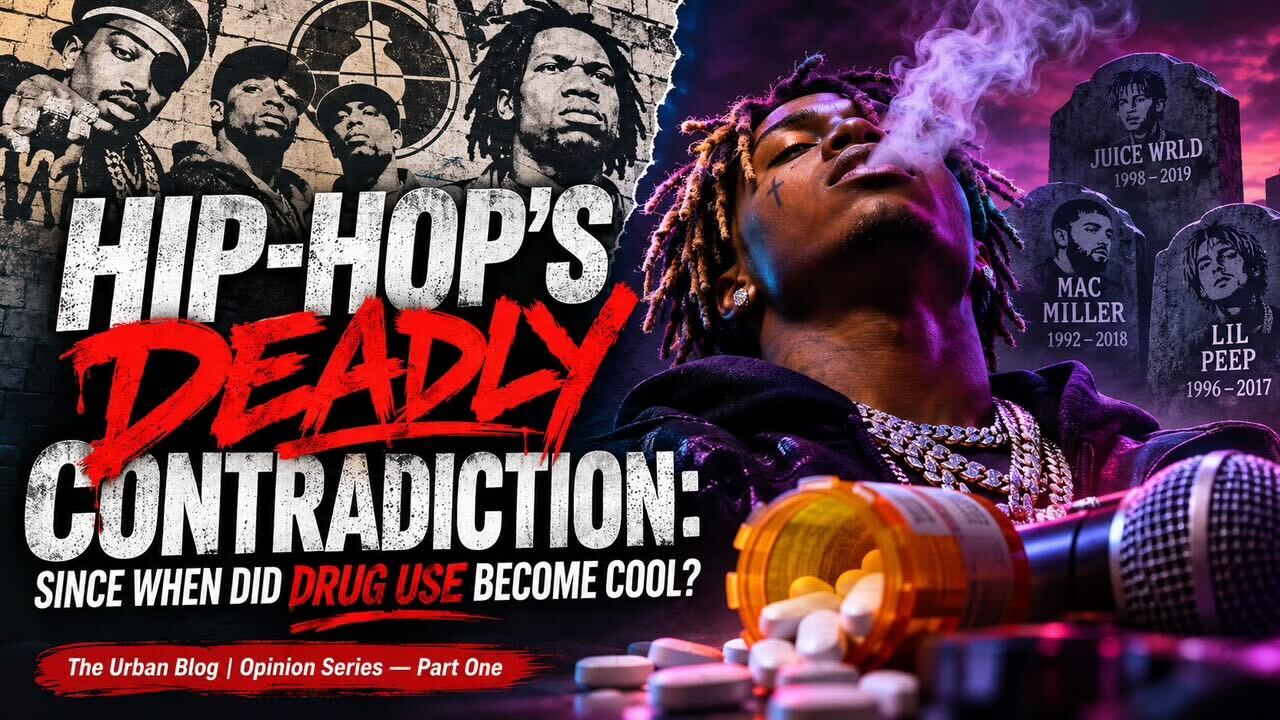
Hip-hop has always been a voice for creativity, resistance, and storytelling. From Slick Rick’s vivid narratives to the socially conscious music of Public Enemy and KRS-One, the genre has shaped generations and influenced cultures worldwide. But somewhere along the way, an uncomfortable question emerged: When did drug use become something to celebrate?
Drugs and addiction aren’t new to hip-hop, nor is the genre solely responsible for their portrayal in entertainment. The concern is how certain artists present intoxication alongside wealth, fame, and success, sometimes making dangerous behavior appear glamorous.
There’s a difference between telling stories about substance use and making it look like a lifestyle worth pursuing. And when millions of young listeners are watching, that distinction matters.
When Did Destruction Become Entertainment?
Hip-hop has never shied away from difficult realities. Earlier generations of rappers documented the devastation drugs caused in their communities, exploring poverty, violence, addiction, and the complicated choices associated with street life. Those stories weren’t always comfortable, but they reflected experiences that mainstream America often ignored.
Today, some of the imagery looks different. Prescription pills, codeine-based drinks, and recreational drug use appear in certain music videos and lyrics alongside luxury cars, designer clothing, expensive jewelry, and extravagant parties.
The problem isn’t necessarily mentioning drugs. Artists should be free to discuss personal struggles and uncomfortable truths. The concern arises when the consequences disappear, leaving audiences with an attractive image of intoxication.
Consider a teenager watching a favorite rapper associate drug use with fame and financial success. While many young listeners understand the difference between entertainment and reality, others may interpret those images as part of a desirable lifestyle.
That doesn’t mean listening to a song automatically leads someone to experiment with substances. Family, friends, mental health, and social environments also influence behavior.
Still, entertainment can shape perceptions.
A 2022 study published in Substance Use & Misuse examined 699 Billboard Hot 100 songs from 2014 through 2020 across six genres. Researchers found that 59.2% contained lyrical or visual depictions of alcohol, marijuana, tobacco products, or related devices.
The findings weren’t specific to hip-hop and didn’t establish that exposure causes substance use. However, they highlighted how frequently substance-related imagery appears in popular entertainment.
When intoxication becomes part of an artist’s public image, it’s reasonable to question whether audiences are hearing the warning or simply admiring the lifestyle.
The Artists Who Lived to Tell a Different Story
Some of hip-hop’s most revealing conversations about substance use have come from artists who experienced its consequences themselves.
Moneybagg Yo’s 2021 hit “Wockesha” explored his complicated relationship with lean, a drink associated with codeine-containing cough syrup. The song portrayed the substance almost like a troubled romantic partner, reflecting both attraction and dependency.
But his personal story eventually took another direction. In January 2022, Moneybagg Yo publicly discussed quitting lean, revealing that he initially worried sobriety might affect his creativity. Instead, he reported feeling healthier and more productive without it. His experience challenged the perception that intoxication is necessary for artistic inspiration.
Meek Mill has also spoken about his struggles with prescription painkillers, particularly Percocet, reminding audiences that fame and financial success don’t protect people from addiction. These stories reveal a side of celebrity culture that extravagant music videos rarely capture: the personal struggles behind the public image. But not every artist gets the opportunity to tell a recovery story.
Mac Miller died in September 2018 at 26 from an accidental overdose involving fentanyl, cocaine, and alcohol. Lil Peep died in November 2017 at 21 from an accidental overdose involving fentanyl and alprazolam.
In December 2019, Juice WRLD also died at 21. His death was ruled an accidental overdose involving oxycodone and codeine. Their circumstances were different, and their deaths shouldn’t be blamed on hip-hop itself. Nevertheless, each tragedy exposed the devastating consequences of substance-related harm.
Fans mourned, fellow artists shared tributes, and conversations about addiction drew widespread attention. Then the industry moved forward. The question remains: Are we learning from these losses, or simply waiting for another tragedy before discussing the dangers again?
Follow the Money: Who Profits From the Image?
The conversation about drug use in hip-hop cannot end with the artists. It must also examine the business surrounding them. Record labels, executives, streaming platforms, promoters, advertisers, and audiences all participate in an industry where attention can translate into revenue. Controversial lyrics can generate conversations. Provocative imagery can attract social media engagement. An artist’s public persona can become a valuable marketing tool.
That raises an uncomfortable question: When intoxication becomes part of a profitable image, who has an incentive to challenge it? This doesn’t mean record labels deliberately encourage addiction or that executives are responsible for artists’ personal decisions. Such accusations require evidence, and some industry organizations have developed resources to support artists’ well-being. Still, the commercial incentives deserve scrutiny.
If an artist becomes famous partly through music associated with drug use, does the industry encourage personal growth, or does it continue promoting the image that audiences recognize? And when an artist struggles with addiction, is meaningful support available before the situation becomes a public crisis? These questions deserve attention beyond the aftermath of a celebrity death.
Fans also play a role, as streaming numbers, concert attendance, merchandise purchases, and online engagement help determine what becomes commercially successful. That doesn’t make listeners responsible for an artist’s addiction, but it does mean audiences influence the images and messages that receive attention. The solution isn’t censorship or demanding that every musician become a perfect role model.
Hip-hop’s creative freedom has always been central to its identity, including the freedom to describe painful experiences. But artistic expression and industry accountability don’t have to be opposing ideas. If the music business can invest heavily in promoting an artist’s image, it should also be willing to invest in protecting the person behind it.
Hip-Hop Deserves Better Than Another Tribute From Drug Use
Hip-hop doesn’t have to abandon its rebellious spirit to have a more responsible conversation about substance use. The genre can remain honest, provocative, and culturally influential while acknowledging that addiction has consequences beyond the lyrics.
Artists who discuss sobriety and recovery deserve recognition, just as those struggling with substance use deserve compassion rather than judgment. Record labels and management teams can prioritize confidential treatment, mental health support, and resources that help artists seek assistance before reaching a crisis.
Parents and teachers can also encourage young listeners to think critically about celebrity lifestyles without treating every controversial song as a direct instruction. And fans can appreciate an artist’s music without romanticizing every aspect of their behavior.
None of this requires pretending that earlier generations of hip-hop were perfect. Drugs, violence, and destructive behavior have appeared throughout the genre’s history. But hip-hop has also produced powerful messages about survival, responsibility, social injustice, and overcoming adversity.
That storytelling ability remains one of its greatest strengths. The debate shouldn’t be about blaming hip-hop for addiction or silencing artists who discuss difficult experiences. It should be about recognizing the difference between documenting destructive behavior and presenting it as something desirable.
We can celebrate artistic freedom while questioning harmful messages. We can admire successful musicians without treating every part of their lifestyle as an example to follow. Most importantly, we can honor artists who died from substance-related causes without waiting for another tragedy to restart the conversation.
The greatest tribute isn’t another social media post, another playlist, or another moment of public mourning. It’s taking the conversation seriously while there’s still time to make a difference. Hip-hop doesn’t need to stop telling stories about drugs. But the culture, its artists, and the industry surrounding them must be willing to tell the whole story, including the consequences.