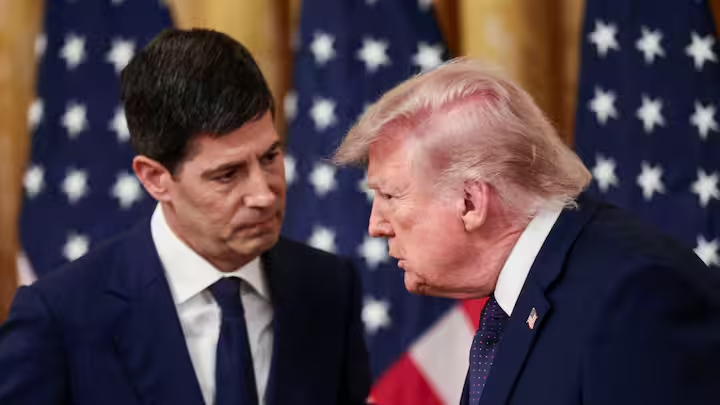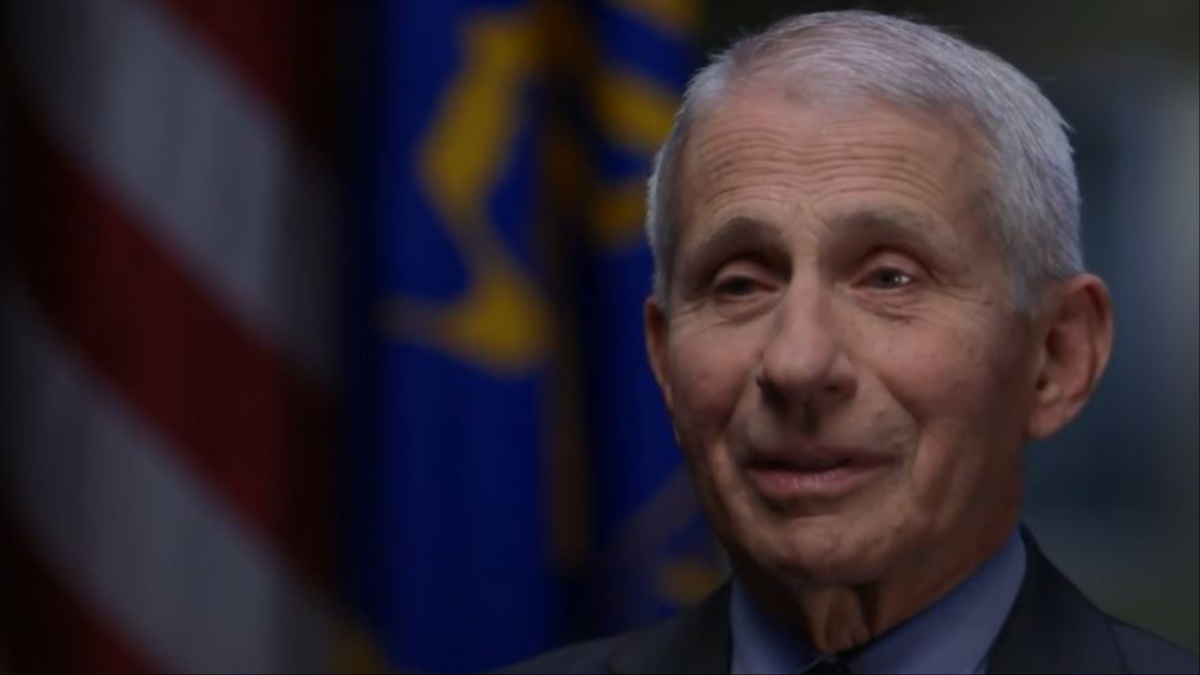
Anthony Fauci is facing renewed legal scrutiny after a U.S. Senate committee voted to hold the former top health official in contempt of Congress for refusing to answer questions 111 times during a hearing on the COVID-19 pandemic on Wednesday, July 29. The move could lead to a Justice Department referral for possible prosecution, though it remains uncertain whether prosecutors will pursue the matter. The latest development adds another chapter to the long-running political battle over the pandemic’s origins and Fauci’s role in the federal response.
Anthony Fauci & Senate Committee Clash Over Hearing Testimony
The Senate committee approved the contempt resolution along party lines after Fauci repeatedly invoked his Fifth Amendment right against self-incrimination during testimony last week. According to lawmakers, he declined to answer questions more than 100 times as Republicans pressed him over decisions made during the pandemic and allegations surrounding COVID-19’s origins.
Committee chairman Sen. Rand Paul argued the vote was about whether a witness could refuse to comply with a congressional subpoena after being directed to answer questions. Ahead of the vote, Paul said, “The chair directed Anthony Fauci to answer. He refused.”
He added that the issue before the committee was not Fauci’s past policies or public statements but whether someone who had received a federal pardon could ignore a committee order “without consequence.”
Instead of sending the measure through the full Senate, Paul opted to bypass that step, saying he did not “want to waste time” with the usual process. Under normal circumstances, contempt resolutions require approval from the full Senate, where 60 votes are needed. Republicans currently hold 53 seats. If referred, the Justice Department will determine whether to pursue a prosecution.
Longstanding COVID Debate Returns to the Spotlight
The hearing once again revived arguments over where the coronavirus originated. Paul has spent years accusing Fauci of concealing information about COVID-19’s origins and has alleged that U.S. funding reached research connected to the Wuhan Institute of Virology in China. Fauci has consistently denied wrongdoing and has long maintained that the available scientific evidence points toward the virus spilling over from animals into humans.
Many virologists and public health researchers continue to support that conclusion. Multiple peer-reviewed studies have found evidence consistent with the virus emerging through infected wildlife sold at a market in Wuhan rather than escaping from a laboratory.
A 2025 World Health Organization report similarly concluded that the strongest available evidence supports zoonotic spillover, while noting that the origins of the virus cannot yet be declared definitive because important information remains unavailable. The WHO also said all plausible theories should remain under consideration until more evidence becomes available.
Fauci’s Legal Team Pushes Back
Fauci’s attorney, David Schertler, sharply criticized the committee’s action, describing it as a “crude political stunt” intended to “punish Dr Fauci for exercising his constitutional right.” Schertler also urged lawmakers to reject what he called “Senator Paul’s meritless and politically-motivated contempt resolution,” arguing that Fauci had committed no crime and was legally entitled to invoke the Fifth Amendment.
Before the hearing, Schertler maintained that his client was on “solid legal ground” in asserting the constitutional protection against self-incrimination. Former President Joe Biden granted Fauci a preemptive federal pardon on his final day in office in 2025, covering actions taken between 2014 and 2025. However, legal experts note that the pardon does not extend to alleged conduct occurring after that period, including a potential contempt of Congress case. It also offers no protection against possible state-level charges.
Contempt prosecutions remain uncommon, although recent years have seen renewed attention on such cases. In 2024, former Trump advisers Steve Bannon and Peter Navarro were convicted and sentenced to prison for contempt of Congress, marking the first convictions of their kind in decades. Whether Fauci ultimately faces prosecution now rests with the Justice Department, which has yet to indicate whether it intends to move forward.