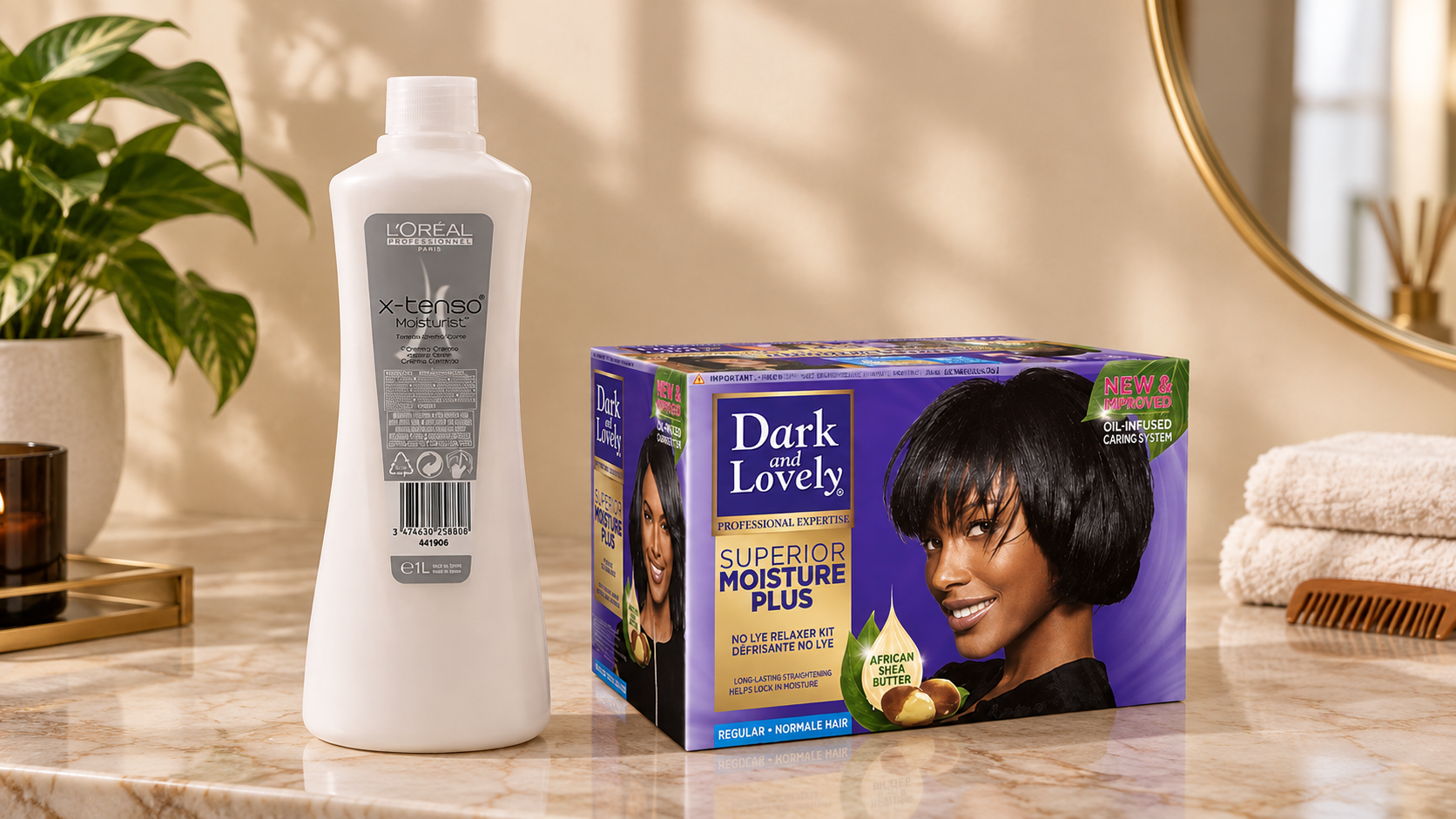
Arizona Attorney General Kris Mayes sued L’Oréal USA and its SoftSheen-Carson unit in September, alleging the companies sold chemical hair relaxers, including Dark & Lovely, without disclosing links to uterine and ovarian cancer. L’Oréal denies the claims and says the suit has no legal or scientific merit. The state filed a consumer fraud action, which opens a path to civil penalties and injunctive relief against products sold in Arizona.
What Arizona Alleges Against L’Oréal
Mayes’s office announced the suit on Friday, Sept. 11. The complaint names L’Oréal USA, its parent company and SoftSheen-Carson. It alleges the companies failed to disclose that their relaxer products contained likely carcinogens and endocrine-disrupting chemicals, including phthalates and parabens, and that users face higher risks of ovarian and uterine cancers.
Accounts differ on the filing date. The attorney general’s office dated its announcement Sept. 11, while BeautyMatter reported that Mayes filed on Sept. 10. AboutLawsuits.com reported Sept. 11. The products named in the complaint include Dark & Lovely, Optimum and Mizani, Consumer Reports reported. Consumer Reports said L’Oréal has sold these relaxers since the 1970s without adequate health warnings, according to the suit. The complaint was filed in Maricopa County Superior Court, AboutLawsuits.com reported.
Mayes said in the announcement that L’Oréal “put profits over the safety of women and children.” The state is asking for civil penalties, restitution, disgorgement and injunctive relief, AboutLawsuits.com reported. BeautyMatter described Arizona as the first state to bring a consumer fraud case against L’Oréal over relaxers.
Who Brings the Case
Mayes’s office is working with the law firm DiCello Levitt, which said in its own Sept. 11 announcement that the case is State of Arizona ex rel. Mayes v. L’Oréal USA, Inc., et al., filed in Maricopa County Superior Court. Founding partner Adam J. Levitt said in the announcement, “We have seen the devastating impact these products can have on women and their families.” The firm’s release says the products were marketed primarily to Black women and, in some cases, to children.
L’Oréal’s Response
An L’Oréal USA representative told Consumer Reports the company is “confident in the safety of SoftSheen-Carson’s products.” The spokesperson told Consumer Reports that all its products are rigorously evaluated for safety and that the company follows regulations in every market where they are sold. The company also said the suit has no legal or scientific merit.
L’Oréal also argues that the research Arizona cites stops short of proving cause. BeautyMatter reported that the company said the cited studies concluded more research was needed and that no causal connection had been made.
BeautyMatter framed the central legal question as a gap between science not proving harm and a company not disclosing what it knew. Arizona’s claim is about disclosure, and the suit says L’Oréal knew of the risks and did not warn customers.
SoftSheen-Carson’s Black-Owned Roots
Soft Sheen Products, the company behind SoftSheen-Carson, was founded in Chicago in 1964 by Edward and Bettiann Gardner and stayed Black-owned until 1998, FundingUniverse’s company history reports. L’Oréal bought it in July 1998, at a price the companies did not disclose and that analysts put above $160 million, according to the same history.
The company’s biggest early hit was Care Free Curl, introduced in 1979, which cut relaxing time from eight hours to two and lifted revenue from $500,000 that year to $55 million in 1982. Optimum Care, one of the relaxers now named in Arizona’s suit, launched in the late 1980s. By 1997 the family-run company had $94.5 million in sales, the history reports. L’Oréal has owned the company behind those products for roughly 28 years.
What the Federal Study Found
The research at the center of most relaxer litigation is a National Institutes of Health study of more than 33,000 women in the Sister Study, which NIH published in the Journal of the National Cancer Institute in 2022. Researchers followed the women for nearly 11 years and counted 378 uterine cancer cases.
Women who never used chemical straighteners had a 1.64% chance of developing uterine cancer by age 70. Women who used them more than four times in the previous year had a 4.05% chance. NIH said frequent users were more than twice as likely to develop the disease.
Those percentages convert to a plainer comparison. At 1.64%, about 1 woman in 61 develops uterine cancer by 70. At 4.05%, the figure is about 1 in 25. The absolute gap is 2.41 percentage points. Most women in either group do not develop the disease. NIH’s release put the numbers in context by describing uterine cancer as “a relatively rare type of cancer.” Alexandra White, head of the Environment and Cancer Epidemiology group at the National Institute of Environmental Health Sciences, led the analysis.
About 60% of the straightener users in the study were Black women, NIH reported. The agency said Black women use relaxers more often and start at younger ages. The study found no link between uterine cancer and hair dyes, bleach, highlights or perms.
The FDA’s Stalled Formaldehyde Rule
The Food and Drug Administration had not published its own rule on formaldehyde in hair straighteners as of the CNN report. CNN reported in January, in a story carried by ABC17 News, that the agency had moved its target date six times, from October 2023 through Dec. 31, 2025. The proposed rule would cover formaldehyde and formaldehyde-releasing chemicals in smoothing and straightening products. CNN reported it remained unpublished, so no public comment period had begun.
The FDA said in a statement that the rule “continues to remain a priority for the Agency.” The NIH study came out in October 2022. The FDA’s target date slipped 26 months, from October 2023 to December 2025, without a published proposal. Arizona sued almost four years after the study. Gabe Knight, senior policy analyst at Consumer Reports, said states “have the ability to go beyond current federal rules.”
Private Lawsuits and What Happens Next
The Arizona case runs alongside a large federal docket. More than 12,000 women are pursuing multidistrict litigation against relaxer makers and retailers, Consumer Reports reported. AboutLawsuits.com reported that Judge Mary Rowland oversees the litigation in the Northern District of Illinois and that the first bellwether trial is scheduled for Sept. 7, 2027.
Arizona residents who believe they were affected can file a complaint through the attorney general’s consumer portal at azag.gov/consumer or by phone at (602) 542-5763 in Phoenix, (520) 628-6648 in Tucson or (800) 352-8431 elsewhere in the state. The allegations have not been tested in court, and L’Oréal has said it disputes them.