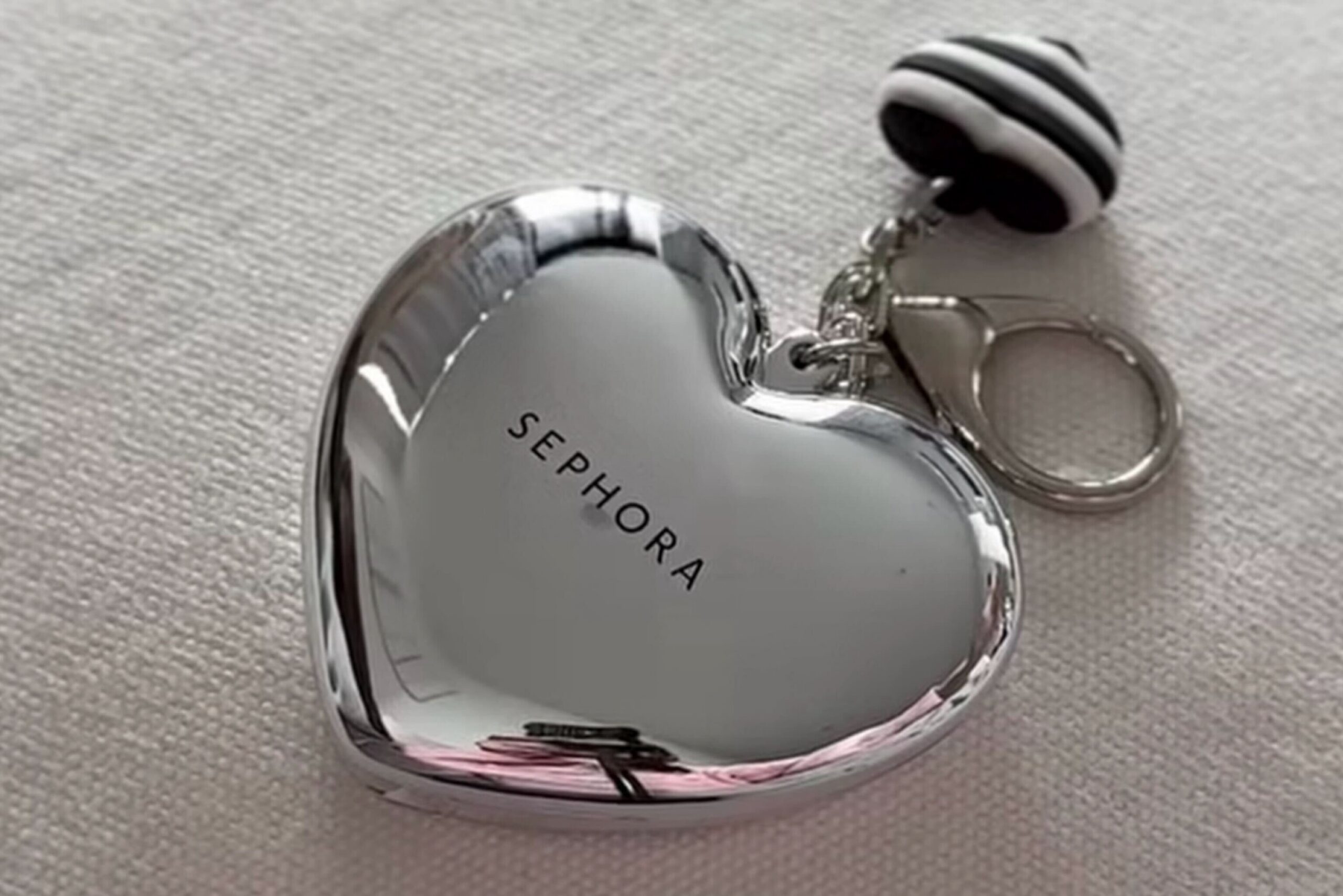
Sephora will donate $1 for every Sephora Collection product sold in the United States on Oct. 9 and 10 to support Project Hearts Not Hate, its first global corporate cause, according to the company’s launch announcement. The US total is capped at $350,000 and carries a stated minimum of $200,000.
Sephora announced the program on Sept. 25 from Paris. The money goes to the nonprofit Right To Be, which Sephora also hired to build a staff training that does not start until 2027.
How the Sephora Donation Works
Every purchase of a Sephora Collection item, the retailer’s own label, on Oct. 9 and 10 triggers a donation. The dates tie to World Mental Health Day. In the US, the money moves through the Sephora US Impact Fund, which Tides Foundation administers, for recommended distribution to Right To Be.
The footnotes in Sephora’s release set the limits. The US cap is $350,000, made up of $300,000 for Sephora’s own stores and $50,000 for Sephora at Kohl’s. The release also sets a minimum US donation of $200,000.
The program runs in 11 Sephora entities. Amounts per product differ by market: €1 in France and much of Europe, £1 in the United Kingdom, CAD $1 in Canada, 20 Mexican pesos in Mexico and 2 New Zealand dollars in New Zealand. In Brazil, Australia and Singapore the money goes to local groups: Instituto Think Olga, Bully Zero and Society for WINGS. Europe has a total cap of €200,000.
What the Ipsos Survey Found
Sephora commissioned Ipsos to survey 20,001 adults online from Aug. 12 to 31, 2026, in Australia, Brazil, Canada, China, France, Mexico, Singapore, the United Arab Emirates, the United Kingdom and the United States. Sephora’s release says seven in 10 adults have experienced appearance-based discrimination or judgment, and 85% of adults ages 18 to 24 have.
Respondents named body type, weight or size (37%) as the most common driver, followed by skin tone, ethnicity or origin (35%) and sexual orientation (29%). Among those affected, 76% restricted their lives in at least one way. Some 55% avoided certain people or groups and 45% avoided situations where they might be looked at.
The release says 82% of respondents believe social media has made these situations more frequent, while almost 90% of incidents happen offline. In the US, 70% reported personal experience, 40% had seen someone targeted in the past 12 months and 21% said someone told them they would look better if they changed something about their appearance.
Right To Be’s Project Hearts Not Hate page lists skin tone and hair texture among the traits that draw appearance-based hate, alongside body size, visible disability, clothing, gender expression, age and religious attire.
Who is Behind the Program
Sephora was founded in 1969 in Limoges, France, and has been part of LVMH since 1997. The release says it has about 55,000 employees, operates in 37 markets and runs more than 3,400 stores. Ipsos, the research firm, was founded in France in 1975 and works in about 90 markets. Each national sample in the survey is representative of that country’s adult population, the release says.
Right To Be says it has worked with 5 million people in more than 40 countries and 20 languages. Its page counts more than 32,000 stories on its Hate and Hope Tracker. The page describes “millions of people” as a goal for its training and gives no measured figure for it.
What the H.E.A.R.T.S. Training Covers
Sephora hired Right To Be, a US-registered nonprofit, to design a training method for prevention, intervention and follow-up for people targeted over how they look. The company says it will deliver the course to employees and local communities across its markets starting in 2027. Right To Be’s page is more specific and says the training “will not be available until October 2027.”
The nonprofit’s page lists six steps: humanize, educate, acknowledge, respond, take care and support. Emily May, Right To Be’s co-founder and president, said in the Sephora release the partnership is a “historic investment,” and on her organization’s page she said the aim is to help people “turn allyship into action.”
Deborah Yeh, Sephora’s global chief marketing officer, said in the release the company is launching the program “to bring visibility to the issue.” She added that it is the start of a long journey.
What the Donation Caps Mean in Product Terms
At $1 a product, the US cap of $350,000 equals 350,000 Sephora Collection items across two days, or 175,000 a day. The $200,000 minimum equals 200,000 items, or 100,000 a day. If sales fall short of that floor, the footnotes say Sephora donates the minimum anyway. If sales pass the cap, giving stops at $350,000. Sephora’s own stores carry $300,000 of the cap and the Kohl’s locations $50,000, so Kohl’s shoppers can account for at most one in seven of the dollars.
The survey’s central finding is about what bystanders do. The release says 57% of respondents have seen someone judged, bullied or excluded for their appearance, and 81% agree people often do not know how to respond. Adélaïde Zulfikarpasic, managing director of the society division at Ipsos BVA, is quoted in the release on the gap between recognizing the problem and knowing how to respond.
The training Sephora is paying for targets that gap. Right To Be’s page puts its availability in October 2027, about a year after the two-day sale that funds the nonprofit’s work.