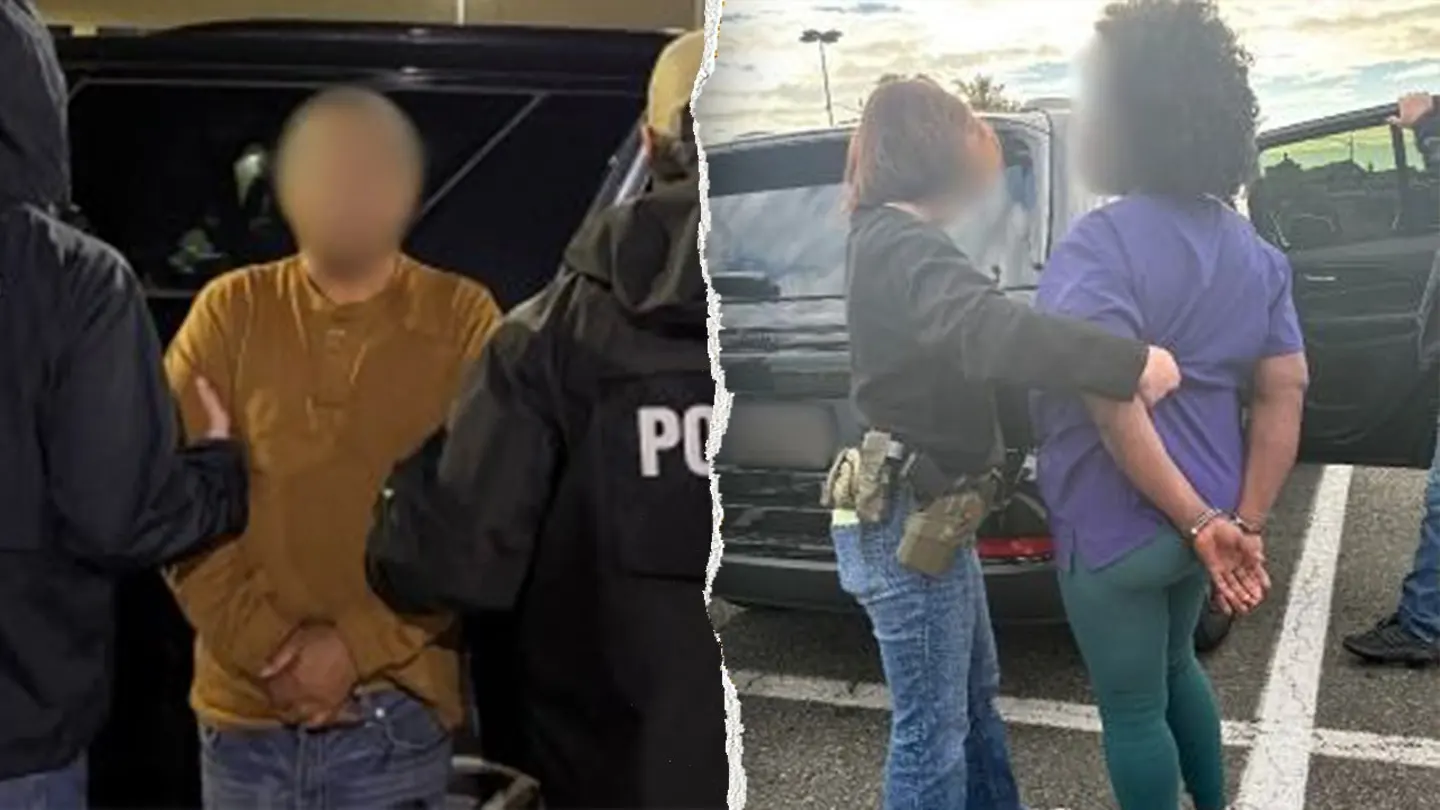
The Justice Department charged 16 people across seven federal districts on Sept. 18 with illegal voting, false citizenship claims and related fraud, a sweep the department says is a small fraction of a far larger nationwide review of suspected cases ahead of the November midterms.
Who Was Charged and Where
Eight of the 16 defendants were charged in the Northern District of Texas, including Moises Anwar Arellano-Alba, 36, of Mexico, and Helen Sayen Adams, 67, of Nigeria, both accused of voting as noncitizens or making false citizenship claims, according to the Justice Department’s own announcement. Additional defendants were charged in the Western District of Texas, the District of Idaho, the Northern District of Georgia, the District of Massachusetts, the Western District of Wisconsin, the District of New Jersey and the Eastern District of Michigan.
Charges include voting by a noncitizen, false naturalization statements and, in one Georgia case involving Analiea Milliscent Eccles, 44, of Venezuela, allegations of voting nine times between 2008 and 2024. All 16 face allegations only; none has been convicted.
The Numbers Behind the Announcement
Assistant Attorney General Colin McDonald said in the announcement, “America’s elections are for Americans.” DHS Secretary Markwayne Mullin, addressing the broader enforcement effort, said the department currently has “300,000 cases we’re looking into right now and 1,620 cases that are under investigation, and 151 arrests,” calling even one improper vote “unacceptable.” No defendant or defense attorney had issued a public statement as of this writing, which is typical at this early stage of a federal criminal case.
What the Numbers Actually Show
Mullin’s own figures reveal how small this week’s action is relative to the scale of suspected cases the administration says it is reviewing. The 151 arrests he cited across the entire enforcement effort to date amount to roughly 0.05% of the 300,000 cases under review, and the 1,620 cases formally under investigation represent about 0.5% of that same total.
That gap between a very large number of suspected cases and a very small number of actual arrests is not addressed in the department’s public statements, and it leaves open whether the 300,000 figure reflects genuine suspected violations or a much broader initial screening pool that will ultimately produce far fewer substantiated cases.
Part of a Larger Pattern This Year
This week’s 16 defendants bring the total number of noncitizens charged with illegal voting under the current administration to 50, according to the Justice Department’s release, meaning this sweep more than doubled the year’s prior total in a single announcement. The charges span a wide range of individual circumstances, from defendants accused of voting a single time to Eccles, whose Georgia indictment alleges a pattern of voting across eight election cycles while holding Deferred Action for Childhood Arrivals status rather than citizenship.
The Charges Beyond Texas and Georgia
Outside the eight Texas defendants and the three charged in Georgia, the remaining defendants span five additional federal districts, each accused of different conduct tied to the same basic allegation of voting without citizenship. In Idaho, a defendant identified as Avila Gomez faces charges that go beyond voting fraud alone, including wire fraud, theft of government funds, passport fraud and firearm charges, making that case the most heavily charged of the 16. In Massachusetts, a Nigerian national is accused of illegal voting in both the 2022 and 2024 elections, while a Michigan defendant, a Russian national, faces a single illegal-voting charge tied to the 2024 election.
In Wisconsin, a Colombian national is charged with making a false citizenship claim on a voter registration form, and in New Jersey, a permanent resident is accused of voting from 2018 through 2024 while separately submitting fraudulent naturalization applications. That spread across seven distinct U.S. attorney’s offices, rather than a single coordinated indictment, reflects how the cases were built independently in each district before being announced together as one national sweep.
How These Cases Typically Come Together
Illegal-voting cases involving noncitizens are often built from data matching rather than from a single tip or complaint: election officials or federal investigators cross-reference voter registration and voting records against citizenship and immigration databases to flag registrations tied to non-citizen status, then refer flagged cases to federal prosecutors for further investigation before any charges are filed.
That process explains why cases like these tend to surface in clusters, as they did this week, rather than trickling in individually, since a single data-matching effort covering multiple states and election cycles can generate several prosecutable cases at once even though each defendant’s specific conduct, and the years in which they allegedly voted, differs from case to case.
What Happens Next
Each defendant faces initial appearances and arraignments in their respective federal districts in the coming weeks. The Justice Department has said thousands of additional cases remain under review, meaning further rounds of charges are likely before the November midterms. How many of the 300,000 reviewed cases ultimately result in charges, and how that final number compares to this week’s 16, will be the clearest test of whether the administration’s stated review pool reflects the scale of prosecutable conduct it has publicized.