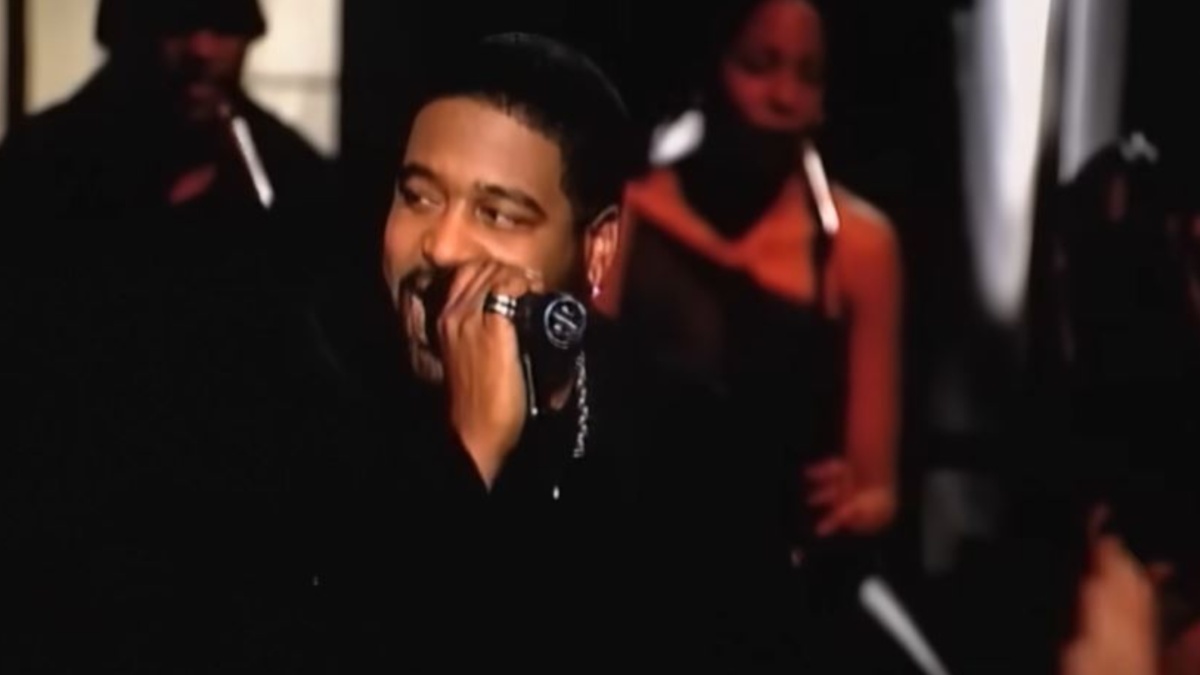
Gerald Levert built a career that earned him recognition as one of R&B’s defining voices. He achieved this first as a member of LeVert and later as a successful solo artist. His rich vocals, heartfelt songwriting, and collaborations with some of the biggest names in soul music made him a favorite among fans. But in 2006, the singer’s life came to a sudden end at just 40 years old. This left behind unanswered questions, a grieving family, and a legacy that continues to resonate throughout R&B.
How Did Gerald Levert Die?
Questions surrounding how Gerald Levert died have continued for years because of the unexpected circumstances surrounding his passing.
On November 10, 2006, Gerald died at his home in Cleveland, Ohio, at the age of 40.
Following an autopsy, the Cuyahoga County Coroner ruled that his death was accidental. The official report, per Billboard, determined he died from acute intoxication. This was caused by a combination of prescribed narcotic pain medications, Xanax, and two over-the-counter antihistamines.
The coroner also found that Gerald had pneumonia when he died, which contributed to his condition.
According to reports at the time, the medications had been prescribed as he recovered from shoulder pain. He was also recovering from surgery to repair a torn Achilles tendon. Investigators concluded that the interaction of the medications ultimately proved fatal.
The news stunned fans and fellow musicians alike. Gerald had remained professionally active, making his sudden death particularly difficult for the R&B community to process.
His passing also brought renewed attention to the dangers of combining prescription medications. This is especially true during recovery from surgery or chronic pain treatment.
Born on July 13, 1966, in Canton, Ohio, Gerald Edward Levert grew up in a household where music was part of everyday life. His father, Eddie Levert, was already becoming a household name as the lead singer of The O’Jays. This gave Gerald an early look at both the rewards and challenges of a career in entertainment.
Rather than relying on his father’s success, Gerald carved out his own path. In the early 1980s, he teamed up with his younger brother, Sean Levert, and friend Marc Gordon to form the R&B trio LeVert.
The group quickly became one of the genre’s standout acts, blending soulful harmonies with contemporary production. Their success was reflected in four of their seven studio albums earning gold certification. Meanwhile, hits like “Casanova” helped establish them as fixtures on the R&B charts.
As his profile grew, Gerald successfully transitioned into a solo career. He proved he could thrive beyond the group that launched him. He released a string of well-received albums while also earning respect as a songwriter and producer. Additionally, he collaborated with numerous artists across the R&B landscape.
His career reached another milestone when he joined forces with Keith Sweat and Johnny Gill to create the supergroup LSG. The trio brought together three of the genre’s biggest voices. They produced another successful chapter in Gerald’s career and earned a Grammy nomination for their self-titled debut album.
Known for songs that explored love, heartbreak and life’s personal struggles, Gerald became one of R&B’s most recognizable voices. His emotional delivery and versatility helped him build a loyal fan base that followed him throughout his career.
Even during his final years, Gerald remained committed to making music. He completed his final studio album, In My Songs, shortly before his death. Released posthumously on February 13, 2007, the album became both a farewell to fans and one of the defining works of his career.
Eddie Levert Endured an Unimaginable Family Tragedy
Gerald’s death marked the beginning of an incredibly painful chapter for the Levert family.
For Eddie Levert, 84, losing his eldest son was a devastating personal blow. Music had connected father and son throughout Gerald’s life, from childhood inspiration to recording together as adults.
The family’s heartbreak deepened less than two years later.
In 2008, Gerald’s younger brother, Sean Levert, also died at age 39. Sean reportedly died after being denied needed prescription medication while in the custody of officials in Ohio.
The loss of both sons within such a short period became one of the most heartbreaking stories in modern R&B.
Despite those tragedies, Eddie continued performing with The O’Jays. He honored both Gerald and Sean’s memories through the music they created together.
Years later, the family suffered another devastating blow when Eddie’s daughter, Ryan Levert, died in 2024. Though Eddie has remained active as the longtime voice of The O’Jays, his family story has become one marked by extraordinary triumph alongside heartbreaking loss.
Gerald Levert’s Legacy Lives Beyond His Final Days
The R&B legend’s artistry continued to receive recognition after his passing. In December 2006, he earned two Grammy nominations, including Best R&B Performance by a Duo or Group with Vocals for “Everyday (Family Reunion).” This was his collaboration with Chaka Khan, Yolanda Adams and Carl Thomas from Tyler Perry’s Madea’s Family Reunion soundtrack.
He also received a nomination for Best Traditional R&B Vocal Performance for In My Songs. Ultimately, he won the award at the 50th Annual Grammy Awards in February 2008. His brother Sean accepted the Grammy on his behalf, making it one of the most emotional moments of the ceremony.
Throughout his career, Gerald also received nominations and honors from the American Music Awards, BET Awards, NAACP Image Awards and Soul Train Awards. This reflected the respect he earned from both fans and the music industry.
Years later, his legacy was further cemented when he was inducted into the Rhythm and Blues Music Hall of Fame in 2013 alongside The O’Jays. This recognized the lasting impact he made on R&B music.
In 2003, Gerald was romantically linked to singer Kandi Burruss. He was also the father of three children: LeMicah, Camryn and Carlysia.
His influence also lives on through his family. As the son of Eddie Levert, Gerald helped continue one of soul music’s most celebrated family legacies. At the same time, he created one that was uniquely his own.
Though the Levert family endured unimaginable heartbreak, their contributions to R&B remain an enduring part of American music history.