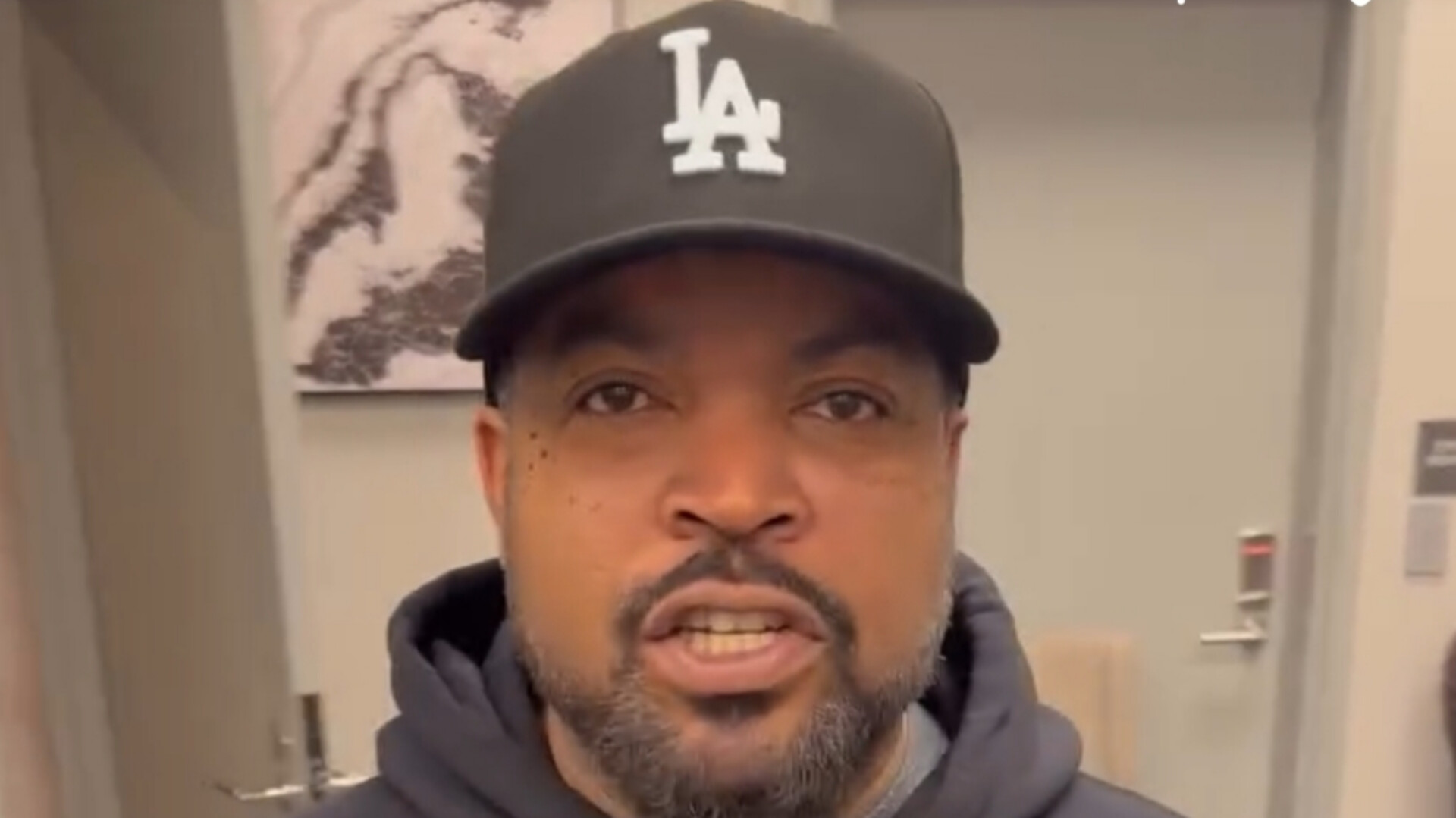
“Last Friday,” the new film starring Ice Cube, won a California film tax credit on Oct. 7 as one of 35 projects Gov. Gavin Newsom’s office announced. The round covers $1.08 billion in direct production spending, and New Line Cinema is the studio on the film.
What the Governor’s Office Announced
Newsom’s office announced on Oct. 7 that the California Film Commission awarded credits to 35 films under the expanded Film & Television Tax Credit Program. The release lists “Last Friday” from New Line Cinema, a Lionsgate project with the working title “Michael 2,” an untitled Paramount crime thriller, “Leaves of Glass,” “Pure,” “American Wolf,” an untitled Mike Mills film, and further projects from Warner Bros. Studios and Pixar.
Ice Cube is the star, writer and producer of “Last Friday,” according to the release, and the story is set in South Los Angeles. Ice Cube said in the same release, “I’m thrilled to produce Last Friday right here in Southern California.”
Newsom said in a release statement, “California is the home of entertainment, full stop.” Colleen Bell, the film commission’s director, said the round stands out for “the mix of independent filmmaking and iconic stories,” according to the governor’s release. The release counts 28 of the 35 films as independents. Eight of those independents have budgets over $10 million and 20 have budgets under $10 million.
The Numbers for This Round
The governor’s office reported these totals for the 35 films:
- $1.08 billion in direct production spending in California
- $635 million in qualified spending, including $423 million in qualified wages
- 5,453 cast and crew jobs
- 24,842 background performer jobs, measured in days worked
- 1,049 shooting days in California, 457 of them out of zone
Dividing those totals by 35 films gives averages. Each film averages about $30.9 million in direct California spending, about $18.1 million in qualified spending, about 156 cast and crew jobs and about 30 shooting days. About 44% of the shooting days (457 of 1,049) are out of zone. Wages make up about 67% of qualified spending ($423 million of $635 million). These are calculations from the governor’s figures.
The averages can be compared with the previous film round, which the governor’s office announced April 23. That release covered 38 films, 5,316 cast and crew jobs, 1,019 shooting days (463 out of zone), $554 million in qualified spending and $373 million in qualified wages. Dividing by 38 gives about 140 jobs, about 27 shooting days and about $14.6 million in qualified spending per film.
By that measure the October films are larger. Jobs per film are about 11% higher, and qualified spending per film is about 24% higher. The share of shooting days outside the studio zone barely moved, from about 45% in April to about 44%, and wages held at about two-thirds of qualified spending in both rounds.
The two releases headline different totals: April used $796 million in “economic activity” and October uses $1.08 billion in “direct production spending.” Those figures measure different things and this article does not compare them.
What the Program Does
The credit comes from the expanded program. The April release said the expansion raised annual funding from $330 million to $750 million and made animated features eligible for the first time. The program also includes workforce diversity provisions, added money for the Career Pathways Training Program and what the state calls the nation’s first Safety on Production Pilot Program.
The October release added a new item: a recently signed law that creates a tax credit for postproduction work. The release said it supports editors, visual effects artists, musicians and other creatives. The state also reports a return on each credit dollar. For every $1 of credit awarded, the April release said, the program generates $24.40 in economic output, $16.14 in gross domestic product and $8.60 in wages.
Which Projects Got Credits
The October release quotes producers from several films about why they are shooting in California. Producers Victoria Alonso and Tom Culliver said “Leaves of Glass” will show “a side of Los Angeles rarely seen on camera.” The film is set in Los Angeles’s Chicano communities. Danny De Lillo, the president and founder of Sweet Humans, which made “American Wolf,” said it is “a powerful story about identity, resilience, and finding where you belong.” The release also credits Kaylon Hunt with the vision for the film.
The April round included “Black Is Blue” from Black is Blue LLC, which the release listed beside films from Will Ferrell’s Gloria Sanchez Productions and Artists Equity. The April release does not describe the film’s plot or budget. The October release does not describe any project as Black-led. It names Ice Cube’s role on “Last Friday” and the film’s setting but does not report the race of any producer or director, and this article does not either.
What the Program Totals Show
The October release also reported totals since July 2025 (governor’s release): 179 projects, $7.2 billion in direct production spending, $4.7 billion in qualified spending, $2.87 billion in qualified wages, nearly 38,000 cast and crew jobs and 237,000 background performer days. Dividing $7.2 billion by 179 projects gives about $40 million per project, and nearly 38,000 jobs across 179 projects works out to about 212 jobs each.
Those are calculations from the governor’s figures, and the program’s name covers film and television. The release does not say how many of the 179 are television projects. Other state figures do not line up cleanly with that total. The film commission’s July release said the fiscal year from July 1, 2025, to June 30, 2026, produced 34,921 cast and crew jobs and $6.6 billion in direct production spending.
Adding the October round’s 5,453 jobs and $1.08 billion gives about 40,400 jobs and $7.68 billion. The October release says nearly 38,000 jobs and $7.2 billion. Neither release explains the difference. The April release gave a third version: 147 productions approved since the expansion, with 21,504 jobs and $5.5 billion in economic activity. Three releases from the same office describe the same program with different project counts and job totals, and none of them reconciles the numbers.