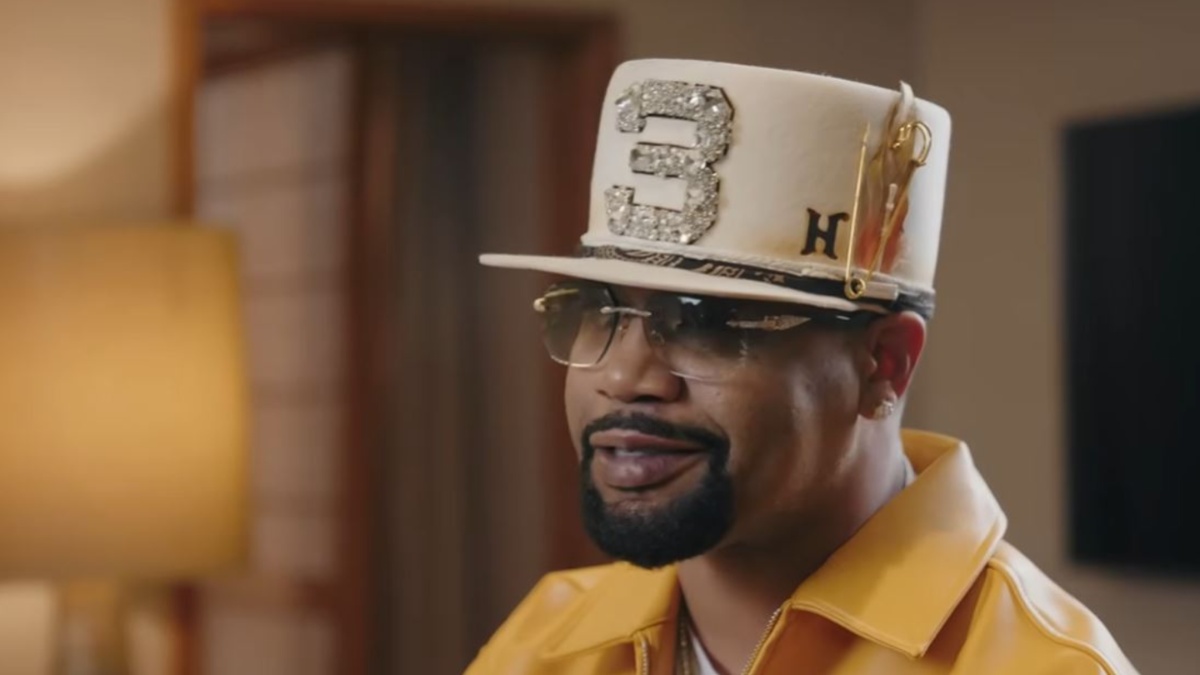
Juvenile’s career is one of Southern rap’s influential success stories, but his estimated fortune tells a more complicated tale. The New Orleans rapper turned local bounce records into platinum albums, national hits, and a place in hip-hop history. Yet reports place Juvenile’s net worth at roughly $500,000-$2.5 million, a range that contrasts with the scale of his catalog. His journey spans Cash Money triumphs, label disputes, independent releases, business ventures, and a recent creative revival.
From the Magnolia Projects to Cash Money
Born Terius Gray in New Orleans in 1975, Juvenile grew up in the Magnolia Projects, Uptown New Orleans, and began rapping as a child. His stage name came from a neighborhood nickname, while appearances on DJ Jimi records introduced him to the city’s bounce scene. He later released “Being Myself” through Warlock Records, finding regional support without a national breakthrough.
Creative disagreements led him away from the label, and he briefly worked at a gas processing plant. His direction changed after meeting Cash Money co-founder Bryan “Baby” Williams, popularly known as Birdman. Juvenile reportedly freestyled for him, then performed for Williams and Mannie Fresh before joining the growing New Orleans company.
“Solja Rags,” released in 1997, expanded his audience. That same year, he joined B.G., Turk, and Lil Wayne in the Hot Boys, whose records, clothing, slang, and hometown identity helped Cash Money build a loyal following.
“I think we kind of changed the whole dress code and created a following like none other,” Juvenile told REVOLT while recalling the group’s white T-shirts and jeans.
Juvenile Turns 400 Degreez Into a Breakthrough
Cash Money’s distribution partnership with Universal gave “400 Degreez” the national promotion Juvenile’s earlier work had lacked. Released in 1998, the album delivered “Ha” and “Back That Azz Up,” carrying his New Orleans drawl and street storytelling into mainstream rap.
The album eventually earned quadruple-platinum certification and remains his defining commercial release. Its success also established Mannie Fresh’s production as a major part of the Cash Money sound.
Juvenile has admitted that he did not know how listeners outside Louisiana would respond. “I didn’t know what the fans wanted from me then, not on a national scale,” he told REVOLT. “Mannie Fresh, on the other hand, was thinking totally different.”
The momentum continued with “Tha G-Code,” “Project English,” and the Hot Boys’ platinum album “Guerrilla Warfare.” Those releases brought album sales, touring money, publishing revenue, performance fees, and later streaming income.
His relationship with Cash Money became unstable, with departures and returns tied to business and creative disagreements. Even so, the label partnership produced another major moment with “Juve the Great.” Its Soulja Slim collaboration “Slow Motion” reached No. 1 on the Billboard Hot 100 in 2004.
Juvenile has always credited the late rapper for the song. “It was all Slim’s idea,” he said while explaining how the track ended up on his album. It remains Juvenile’s only Hot 100 chart-topper.
Departures, Setbacks and Life After the Label
After leaving Cash Money again, Juvenile signed with Atlantic Records and released “Reality Check” in 2006. The album debuted at No. 1 on the Billboard 200, his only project to lead the chart. Its material reflected Hurricane Katrina and his frustration with the government response to the disaster.
Later albums, including “Cocky & Confident,” “Beast Mode,” “Rejuvenation,” and “The Fundamentals,” did not equal the commercial reach of “400 Degreez.” Some arrived independently or through smaller partnerships, offering greater control but less major-label promotion. He also formed UTP Records with manager Aubrey Francis and his brother Corey.
The reported $500,000 – $2.5 million estimate appears surprisingly modest beside his platinum records.
Juvenile’s history also includes legal expenses and child-support disputes. He was arrested in 2017 over unpaid support, although reports differed on the amount. Earlier incidents included drug charges, an assault allegation involving his barber, and another support case resolved after paternity was established.
He also endured devastating personal loss. His daughter Jelani, her mother Joy Deleston, and Jelani’s half-sister were killed in 2008. Juvenile stayed away from the funeral because he feared his presence would attract media attention and distract from the ceremony.
Record sales alone rarely reveal what an artist keeps. Management fees, label recoupment, touring costs, taxes, legal bills, family obligations, and master ownership can sharply reduce the money attached to a successful career.
New Ventures and a Lasting Catalog
Juvenile announced another Cash Money reunion in 2014 and later released “Just Another Gangsta” with Birdman. His catalog received renewed attention in 2023 after fans persuaded him to perform an NPR Tiny Desk concert. His first response was memorable: “WTF is a Tiny Desk and no!” He eventually reconsidered, and the performance became a celebrated showcase of his biggest records.
The experience also encouraged him to make more music. Discussing “Boiling Point,” he told REVOLT that the fan response created a sense of responsibility. “Truthfully, I feel like I owe it to them,” he said.
His income now extends beyond recording. Juvenile launched the Made by Juvie furniture company, partnered with Urban South Brewery on Juvie Juice, and started the “Still 400” podcast with Mannie Fresh.
“We pretty much didn’t get along, but at the end of the day, we always had our mindset on the same thing, making hit records,” Juvenile said of their earlier studio relationship. Their podcast turns that history into a new platform and another possible revenue source.
The $500,000 – $2.5 million 2024 estimate does not fully capture Juvenile’s commercial position. He continues to perform, earns from a durable catalog, and can generate money through streaming, publishing, licensing, podcasting, merchandise, and private ventures.
More importantly, his records have survived major changes in hip-hop and the music business. “That’s just unreal,” he said of hearing crowds respond to songs decades later. Younger artists continue to reference his work, longtime fans still fill venues, and digital platforms keep introducing his music to new audiences.
Juvenile’s wealth may be debated, but his place in Southern rap history is not.