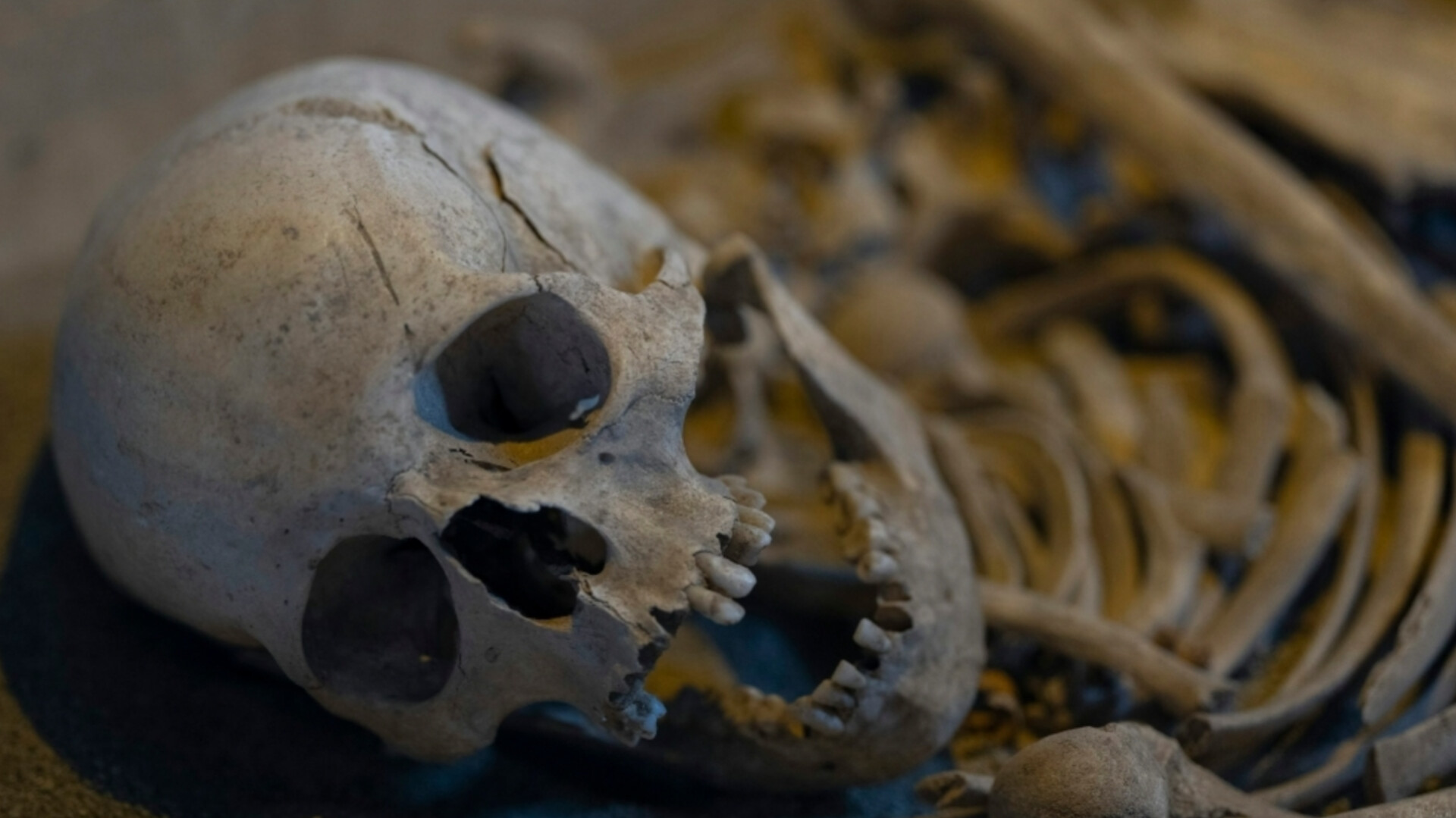
Eating freshwater fish can make a person’s bones radiocarbon-date hundreds of years older than they are, and six of 27 skeletons from Danish medieval monasteries are wrongly dated because of it, the University of Southern Denmark said on Nov. 10. The study appears in npj Heritage Science. Some of these people, by their lab dates, died before the monasteries they were buried in existed. The researchers say the cause is what they ate.
How a Fish Diet Skews Radiocarbon Dating
Freshwater in limestone-rich areas carries old, dissolved carbon. Fish take it in, and people who eat a lot of fish take it into their bones. The lab then reads that bone as older than it is. The team found that a fish from the Rhine can look up to 1,300 years older than a land animal from the same time. In human remains, the effect can range from zero to 1,000 years, according to the release.
In the North Sea, the comparable marine effect is about 400 years and easier to correct. “The particular problem with freshwater is that the effect varies enormously,” said Kaare Lund Rasmussen, professor emeritus at the University of Southern Denmark.
The Danish Monastery Skeletons
One skeleton from Svendborg, labeled III9B, dated to between A.D. 1100 and 1155. The town’s Franciscan monastery was founded in 1236. A skeleton from Viborg has a latest possible date of A.D. 976, more than 200 years before its monastery existed. Three burials from the Cistercian monastery at Øm show the same problem.
“We can say with certainty that another five of the 27 skeletons we re-examined have also been incorrectly dated,” Rasmussen said. Six of 27 is 22% of the sample, a calculation from the release’s figures. Denmark had about 140 medieval monasteries, according to the release, so the team checked burials from a small share of them.
Richard III and the Radiocarbon Gap
The release points to a famous case where the right answer is known. Radiocarbon dating placed Richard III’s death sometime between 1412 and 1460. He died in battle in 1485, at least 25 years after the end of that range, a calculation from the dates.
That is the original angle on the study. Richard III’s date is a control, a case with a known answer that shows the error is real and large enough to matter for a king whose death is recorded to the day. For people with no written record, the bone date may be all there is. The release also cites remains from Dorestad with a 250-year gap and Danube burials that look 300 to 500 years older than the bone arrowheads found in them.
“The difference can amount to several hundred years and can vary considerably,” Rasmussen said. The fair limit on the finding is that it does not overturn radiocarbon dating. It says the method needs a dietary correction where people ate freshwater fish. The paper, “Words of warning about radiocarbon dating medieval human bones,” is published in npj Heritage Science.