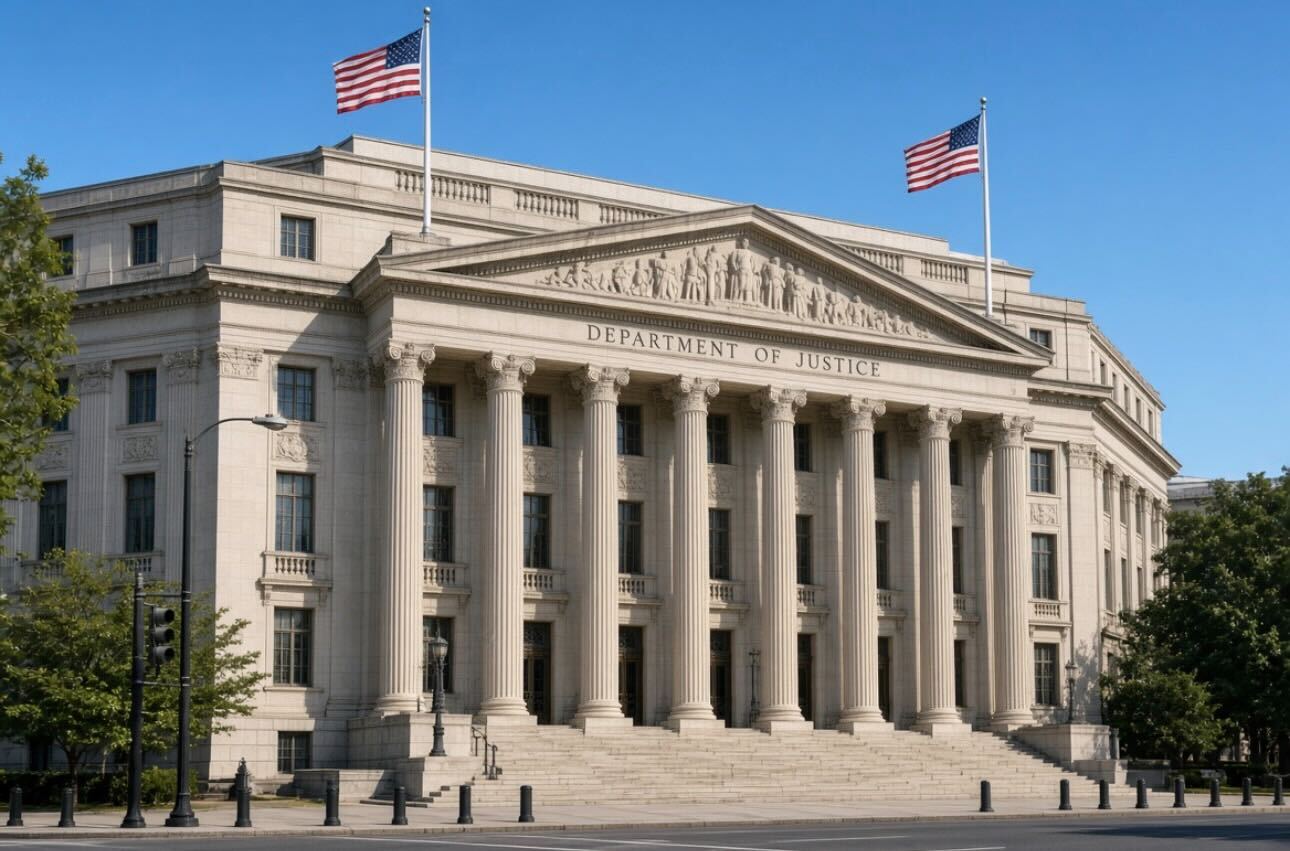
The Justice Department, the Agriculture Department and the department’s inspector general said Oct. 21 that a surge from Sept. 1 to Oct. 21 produced actions against more than 40 defendants over nearly $45 million in alleged intended losses, nearly $42 million of it in SNAP benefits.
What the First National USDA Benefits Fraud Surge Covered
The announcement calls it the first National USDA Benefits and Program Fraud Enforcement Surge. The Justice Department’s National Fraud Enforcement Division led it with 13 U.S. attorney’s offices and the Utah Attorney General’s Office. Partners included the Agriculture Department’s Office of Inspector General, the FBI, Homeland Security Investigations, IRS Criminal Investigation, the Social Security Administration’s inspector general, the Postal Inspection Service, the Secret Service and several state and local agencies.
One case involved attempted fraud against a USDA crop-insurance program, so the nearly $45 million covers more than SNAP. The surge ran 51 days, counting both end dates, which works out to about $880,000 in alleged intended losses a day. That is a calculation from the department’s figures. The release’s title describes the effort as a surge “involving suspected illegal aliens.” The release says the case descriptions are allegations and the defendants are presumed innocent.
Alleged Fake SNAP Sales in the Ohio Indictment
The largest case is U.S. v. Jorag Yaseen and Rami Kanaan in the Southern District of Ohio, Case No. 3:26-cr-00099. The release lists a $29.7 million alleged intended loss. Prosecutors indicted both men on charges of conspiracy to commit wire fraud, wire fraud and conspiracy to commit money laundering. The release alleges fake SNAP sales at stores in Chicago, Illinois, using stolen Ohio and other EBT data.
That one indictment accounts for about 71% of the nearly $42 million in SNAP losses, a calculation from the release. The other cases together make up the remaining 29%, or about $12 million. The release does not include responses from Yaseen or Kanaan.
Skimming, Phone Attacks and Cash-for-Benefits Cases
A second large case, U.S. v. Mercedes New in the Northern District of Georgia, Case No. 26-CR473, carries a $4.4 million alleged intended loss. Prosecutors indicted New on Oct. 7, and authorities arrested her in Las Vegas on Oct. 13. The charges are food stamp fraud, mail fraud, access device fraud and aggravated identity theft. The release alleges attacks on the SNAP EBT phone system that hit hundreds of accounts.
In Michigan, prosecutors in the Western District charged Mohinder Singh, a Lansing convenience store owner, with theft or conversion of public money and nine counts of SNAP fraud. The release lists a $1,089,949 intended loss and alleges Singh traded cash for SNAP benefits at 50 cents per dollar. At that rate, a loss of that size implies roughly $545,000 in cash paid out, a calculation that assumes every dollar traded at the alleged rate.
In the Northern District of Ohio, a complaint filed Oct. 6 charges six people with SNAP fraud, wire fraud and conspiracy to commit wire fraud over about $1 million. In Massachusetts, a complaint alleges Rodolfo Armando Fernandez Guzman used a stolen identity to obtain $22,402 in SNAP benefits along with MassHealth and Section 8 benefits.
The Utah Attorney General’s Office filed an information against Besmulla Yaqoobi over cashfor-SNAP trading at a market in Taylorsville. The release lists a $5,994.89 intended loss and says surveillance showed transactions totaling $5,429.89. It does not explain the $565 difference.
Sentences and Pleas Already on the Docket
Some cases have reached sentencing. In Oregon, 17 people were indicted in October 2024 in U.S. v. Dumitru et al., Case No. 3:24-cr-00383. The release says a judge sentenced Ana Patricia Escalante on Sept. 9 to 27 months in prison and $2.4 million in restitution. Twelve defendants have been sentenced, to 157 months combined, and the release says the stolen SNAP benefits bought infant formula.
In Michigan’s Eastern District, Kirk Deshaun Woodley pleaded guilty Sept. 22 to conspiracy to commit wire fraud and aggravated identity theft, and a judge sentenced co-defendant Chantel LaShawn Peavy on Oct. 20 to 18 months. The release says they used the identities of more than 650 victims in a $1.1 million alleged scheme.
How Intended Loss Differs from Actual Loss
The release uses two measures. Most cases list an intended loss, the amount a scheme was designed to take, and a few list an actual loss. The only actual-loss figure is the crop-insurance case, U.S. v. Mark Frisbie in the Middle District of Florida, Case No. 2:26-cr-00251. Frisbie pleaded guilty Sept. 29 to a false crop-insurance claim, admitted underreporting crop sales from 2019 to 2024 and caused about $1.75 million in indemnities.
The release lists a $3.2 million actual loss and says he agreed to about $1.5 million in restitution to the Farm Service Agency. Because intended loss counts what a scheme was built to take, the $45 million is not a count of money taxpayers lost. The release does not say how much of it was paid out.
What Officials Said
Secretary of Agriculture Brooke Rollins said in the release that “every instance of SNAP fraud has two victims.” Attorney General Todd Blanche said the schemes took millions from taxpayers. Colin McDonald, the assistant attorney general who leads the fraud division, said they harm American families. John Walk, the USDA inspector general, said the surge is only the beginning of the effort. The release does not include statements from the defendants, and it names no defense attorneys.