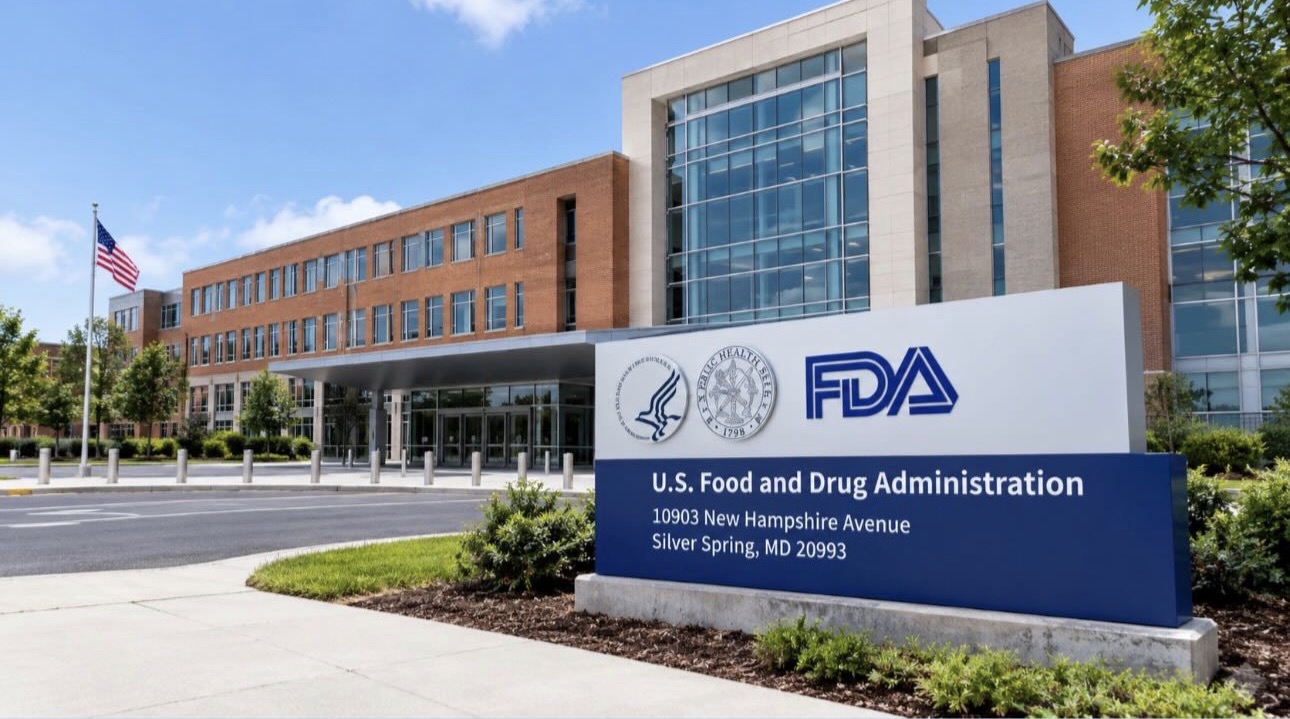
The FDA on Oct. 19 granted accelerated approval to Jemperli, an immunotherapy drug, as a stand-alone treatment for some adults with newly diagnosed rectal cancer. In the main trial, almost three-fourths of patients did not need surgery, radiation or chemotherapy, the agency said.
The approval covers a narrow group. Patients must have stage II or stage III locally advanced rectal cancer that has not spread to distant organs. Their tumors must also carry a genetic feature called mismatch repair deficiency (dMMR) or microsatellite instability-high (MSI-H), identified by an FDA-authorized test.
What the FDA Approved for Rectal Cancer
Jemperli is the brand name for dostarlimab-gxly, a drug made by GSK. It targets PD-1, a protein on immune cells. By blocking PD-1, the drug interferes with a signal that lets cancer cells hide from the immune system.
The FDA approved it for adults who have not yet received treatment for their locally advanced rectal cancer. Patients receive up to nine doses, one every three weeks over six months. GSK has said each dose is 500 mg given by intravenous infusion. Nine doses at that level add up to 4,500 mg over the course of treatment, a calculation based on the two figures.
The agency said the application received Priority Review and Breakthrough Therapy designation. It was the 11th approval under the FDA’s Commissioner’s National Priority Voucher pilot program. Kyle Diamantas, the acting FDA commissioner, said the review finished nearly four months ahead of schedule. He said that pace could mean some patients preparing for surgery, radiation or chemotherapy may now have a different conversation with their doctors.
How Standard Rectal Cancer Treatment Differs
The FDA described the usual treatment for locally advanced rectal cancer as chemotherapy and radiation before surgery. The agency said those treatments can affect bowel, bladder and sexual function and fertility. Surgery carries its own risks, including wounds that fail to heal, leaks where the bowel is reconnected and, in some cases, a permanent colostomy.
Angelo de Claro, M.D., director of the FDA’s Oncology Center of Excellence, said in the release: “Standard treatment for rectal cancer has major life-changing effects.” He said the approval offers a major option for certain patients while further studies are needed to confirm lasting benefit.
That is the reason for the accelerated status. The FDA gives accelerated approval on the strength of an early measure that is reasonably likely to predict benefit. GSK must keep following patients to confirm that the benefit lasts.
What the AZUR-1 Trial Showed
The approval rests on interim results from AZUR-1, a phase 2 study of 154 patients registered as NCT05723562. According to the FDA, patients received Jemperli for up to six months. After a median follow-up of more than two years, nearly three-fourths had not needed surgery, radiotherapy or chemotherapy.
The FDA said that longer follow-up is needed to learn how long responses last and how often the cancer returns. The trial has no comparison group, so the results show what happened to treated patients and do not measure the drug against standard care directly.
GSK described the design in an Aug. 24 announcement. The company said AZUR-1 is a global, open-label, single-arm registrational trial. Its main endpoint was sustained clinical complete response at 12 months, meaning no detectable cancer one year or more after treatment. That announcement gave no numerical result and said full data would go to a scientific meeting later in 2026.
The FDA also pointed to an earlier study at Memorial Sloan Kettering Cancer Center (NCT04165772). Fifty patients in that study showed no detectable cancer after treatment, and 93% stayed cancer-free for at least 12 months. Of 27 patients followed for at least three years, one had a recurrence, in the same area.
Side Effects and Safety Warnings
Jemperli can cause the immune system to attack healthy organs and tissues, the FDA said. Those reactions can be severe or fatal. The most common side effects, reported by at least 15% of patients, were fatigue, rash, diarrhea and itching.
Patients and doctors weigh those risks against the effects of conventional treatment. The FDA did not say any patient should choose the drug over standard therapy outside the approved population, and the label limits use to tumors with the dMMR or MSI-H feature.
How Many Patients Qualify
The FDA and GSK give different figures for how common the biomarker is. The FDA said published estimates put dMMR or MSI-H tumors at about 3% of locally advanced rectal cancers. GSK’s August announcement said roughly 5% to 10% of rectal cancers are dMMR or MSI-H. The two sources do not explain the gap in the pages cited here. The figures may reflect different patient groups, since the FDA number refers to locally advanced disease and GSK’s refers to rectal cancers broadly.
The National Cancer Institute’s SEER program estimates 158,850 new colorectal cancer cases in the United States in 2026, covering both colon and rectal tumors. It does not publish a separate rectal total on that page. A calculation shows the range: 3% of 158,850 is about 4,800, and 10% is about 15,900. Those are arithmetic bounds on all colorectal cases and not a count of eligible patients, because the approval applies only to locally advanced rectal disease at diagnosis.
The FDA said why the feature matters. Both dMMR and MSI-H reflect a faulty DNA repair system. Mistakes build up in the tumor cells and produce proteins the immune system can recognize, which makes these tumors more responsive to immunotherapy.
Where Jemperli was Already Approved
Before this decision, Jemperli had three U.S. uses, according to GSK. It is approved with carboplatin and paclitaxel for primary advanced or recurrent endometrial cancer. It is approved alone for certain dMMR recurrent or advanced endometrial cancers after platinum-based treatment. It also holds an accelerated approval for dMMR solid tumors that progressed after earlier treatment when no satisfactory alternatives exist.
The rectal cancer use is the first in patients who have not yet received any therapy for the disease.
Timeline of the Review
GSK announced on Aug. 24 that the FDA had accepted the application for Priority Review. The company said the target decision date was February 2027 and that the Commissioner’s National Priority Voucher program could bring an earlier decision. The FDA acted on Oct. 19. That is 56 days after the acceptance announcement, a calculation from the two dates.
Diamantas said in the release that the FDA is committed to closing the gap between scientific progress and patient access. The agency has not announced a launch date or price, and GSK’s pages cited here do not list one. Patients who think they may qualify would need the FDA-authorized tumor test before a doctor could prescribe the drug for this use.