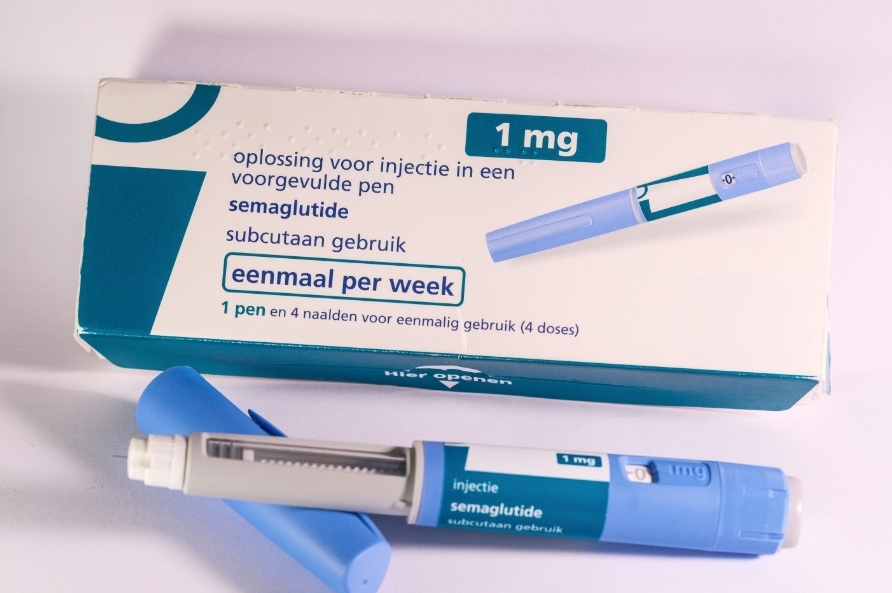
The Food and Drug Administration is requiring makers of every GLP-1 drug, including Ozempic, Wegovy, Mounjaro and Zepbound, to add a warning about a rare eye condition that can cause sudden vision loss, the agency said in a Nov. 9 Drug Safety Communication. The FDA describes a “potential increased risk.”
The FDA chose its words with care. The label change tells patients what to watch for without saying the drugs cause the condition.
What the GLP-1 Vision Loss Warning Says
The condition is non-arteritic anterior ischemic optic neuropathy, or NAION. It causes sudden, painless vision loss in one eye, and the loss can be permanent. The warning goes into the Warnings and Precautions section of the labels.
The warning applies across the class, including the newest member, Foundayo, the oral drug orforglipron approved this year. The drugs covered include exenatide, Victoza and Saxenda, Trulicity, Xultophy, Soliqua, Ozempic, Rybelsus, Wegovy, Mounjaro, Zepbound and Foundayo.
“Patients should contact their health care professional right away if they have any of these symptoms,” the FDA said. It told clinicians that if NAION is suspected, they should “promptly refer the patient to an ophthalmologist for evaluation.”
The Numbers Behind the FDA Decision
The FDA reviewed 126 randomized trials with 134,253 patients. Across 288,879 person-years, there were 15 probable NAION cases, 10 on GLP-1 drugs and five on placebo. That is 6.4 cases per 100,000 person-years on the drugs and 3.8 on placebo.
The difference is 2.6 cases per 100,000 person-years, or roughly one extra case for every 38,500 years of patient use, a calculation from the FDA’s figures. That is the original angle on the warning. The risk ratio looks large, and the absolute risk is very small, and the whole trial finding rests on 15 cases.
The FDA also ran a study in its Sentinel system of adults with type 2 diabetes. Compared with SGLT-2 inhibitors, the hazard ratio was 1.19, which was not statistically significant. Compared with DPP-4 inhibitors, it was 1.43, which was. The diabetic group had 26 to 32 cases per 100,000 person-years, while the background rate in adults over 50 is 2.3 to 10.2 per 100,000 a year. Diabetes itself raises the risk, which makes the drugs’ share hard to isolate.
What Novo Nordisk and Eli Lilly Said
Novo Nordisk, which makes Ozempic and Wegovy, disputed a causal link. “Novo continues to believe the data do not establish a cause-and-effect relationship,” Liz Skrbkova, a company spokesperson, said in a statement to ABC News. An Eli Lilly spokesperson told ABC News, “We are carefully evaluating the update and will respond to FDA promptly.” Lilly makes Mounjaro, Zepbound and Foundayo. The FDA said animal studies found no mechanism. The drugmakers must now submit revised labels to the agency.