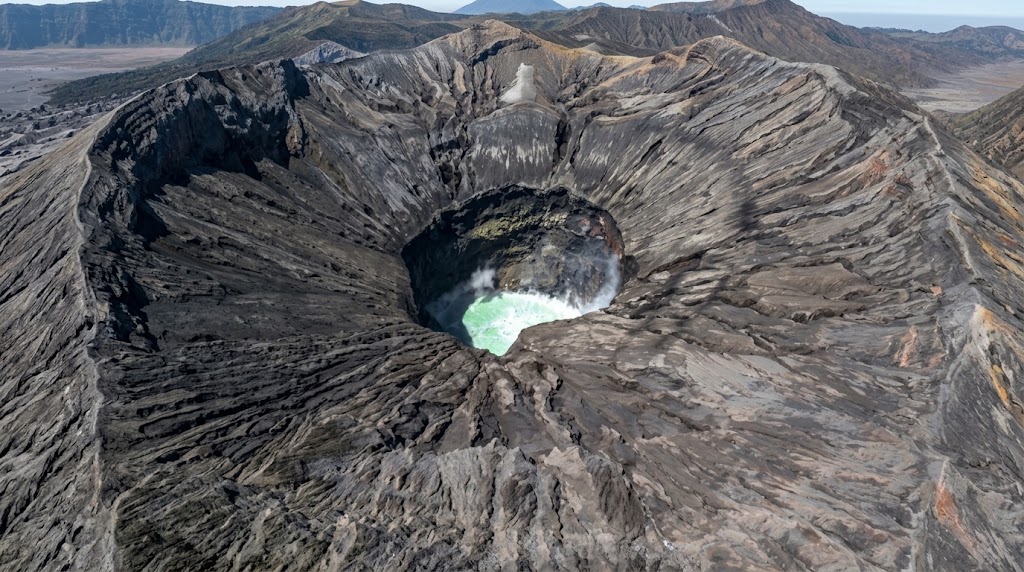
A newly confirmed impact crater near Lake Marsal in Quebec’s Côte-Nord region spans 25 kilometers (16 miles) across, making it the largest impact structure confirmed on Earth since the 31-kilometer Hiawatha crater turned up in Greenland in 2018.
How Scientists Confirmed a 390 Million-Year-Old Impact
Gordon Osinski, a planetary geologist at Western University, led a team to the site in October 2025 after Joël Lapointe, an amateur astronomer, flagged an odd circular depression to researchers in Europe and North America. The group flew in by floatplane, waded 50 meters (165 feet) through open water to reach shore, then pushed through terrain Osinski said amounted to “deep, twisty, gnarly vegetation.” Despite fieldwork on six continents, Osinski described the site as among the toughest ground he has covered.
Once the team reached exposed rock, they found shatter cones, the branching fracture patterns that form only under the extreme pressure of a cosmic strike. Osinski said the cones represent “the only unequivocal evidence of an impact event that you can see in the field with the naked eye.”
The structure shows a central uplift and columnar jointing consistent with a large, complex impact crater, and rock dating places the strike at roughly 390 million years old, long before dinosaurs existed. Researchers have proposed the name Uhackatik for the structure, reached after consultation with the Innu Council of Ekuanitshit, the Indigenous community whose territory includes the site.
An Amateur Astronomer Who Trusted an Odd Shape on a Map
Lapointe was not hunting for craters. He was scouting campsites in Quebec’s remote Côte-Nord region on satellite maps in 2024 when he noticed a nearly perfect circle stamped into the landscape near Lake Marsal. Rather than dismiss it, he brought the image to specialists. French researchers raised the possibility at a 2024 Meteoritical Society meeting, and that presentation eventually drew in Osinski’s team.
The pattern is becoming familiar. Free, high-resolution satellite imagery from services such as Google Earth now covers nearly the entire planet, and people scanning it for unrelated reasons, camping routes, hiking trails or farmland, are increasingly spotting geological features that trained scientists have no particular reason to search for on their own.
A geologist hunting impact structures typically starts from a narrow set of clues: gravity anomalies, magnetic surveys or existing reports of strange rock. An amateur browsing a map for an entirely different purpose carries no such filter, and in this case that lack of a filter is what caught the crater.
Lapointe said he felt “over the Moon” when Osinski’s team confirmed the structure was real, and he had direct advice for anyone who notices something odd outside their own training. “I encourage everyone to not ignore intuition or an observation, even if it isn’t part of your field of expertise,” he said.
One of Roughly 200 Confirmed Impact Craters on Earth
The find is rare by any measure. Scientists have confirmed roughly 200 impact structures across the planet, a small fraction of what shows up on the Moon or Mars, because wind, water, vegetation and shifting tectonic plates erase most craters within a few hundred million years. Canada’s Canadian Shield, thickly forested and sparsely populated through the Côte-Nord region, is exactly the kind of terrain where a 25-kilometer scar could sit unnoticed for 390 million years.
The size puts the new structure ahead of every impact crater confirmed since the 31-kilometer Hiawatha crater, found beneath the Greenland ice sheet through radar surveys in 2018. A strike that size releases catastrophic energy, and Osinski said a comparable impact today would cause “regional devastation on a scale that would wipe out major cities and have global climate impacts.”
Osinski’s team also believes the impact predates a documented surge in Earth cratering by about 100 million years, a surge some researchers have linked to collisions within the asteroid belt that sent debris toward the inner solar system. Confirming that connection will require more fieldwork at a site that remains difficult to reach and largely unmapped at ground level.
What Happens Next
Osinski’s team plans to submit the discovery for formal recognition at the next Meteoritical Society committee meeting, the standard process for adding a structure to the official record of confirmed impact craters. The proposed name Uhackatik will move through that same review, building on the consultation already completed with the Innu Council of Ekuanitshit.
Researchers also want to test whether the crater ties into the broader Devonian-period cratering surge, work that will mean more rock sampling at a site reachable only by floatplane and a wade through open water. Osinski’s group continues to track confirmed impact structures through Western University, and Lapointe’s discovery has already renewed interest in combing public satellite archives for other circular features that formal surveys have missed. For now, the crater near Lake Marsal stands as evidence that a major geological find can start with someone looking for nothing more than a good place to pitch a tent.